

Time Surfing: Experience History.

Historical Backdrop
Frances Anne “Fanny” Kemble was 29 years old, English, and famous. She came from Britain’s greatest theatrical family, packed houses in London and Philadelphia, and quit the stage in 1834 to marry Pierce Mease Butler, a charming Philadelphian she believed was simply rich. He was rich because his grandfather had built an empire in the Altamaha River delta: rice on Butler Island, Sea Island cotton at Hampton on St. Simons, corn and cattle at Woodville — and roughly 700 enslaved men, women, and children who made it all run.
Fanny hated slavery in the abstract before she ever saw it. Pierce told her the family’s people were well fed, never sold, and content, and he hoped the winter of 1838–39 would cure her of her opinions. Instead, from late December to April she walked the dikes, sat in the plantation “infirmary,” and listened. She wrote long letters to her friend Elizabeth Sedgwick in Massachusetts — and hid the pages. The day below is a composite drawn from those letters.
Date/time and location: Thursday, 17 January 1839, 5:45 a.m. — the overseer’s cottage on the river dike, Butler Island rice plantation, Altamaha River delta, one mile below Darien, McIntosh County, Georgia
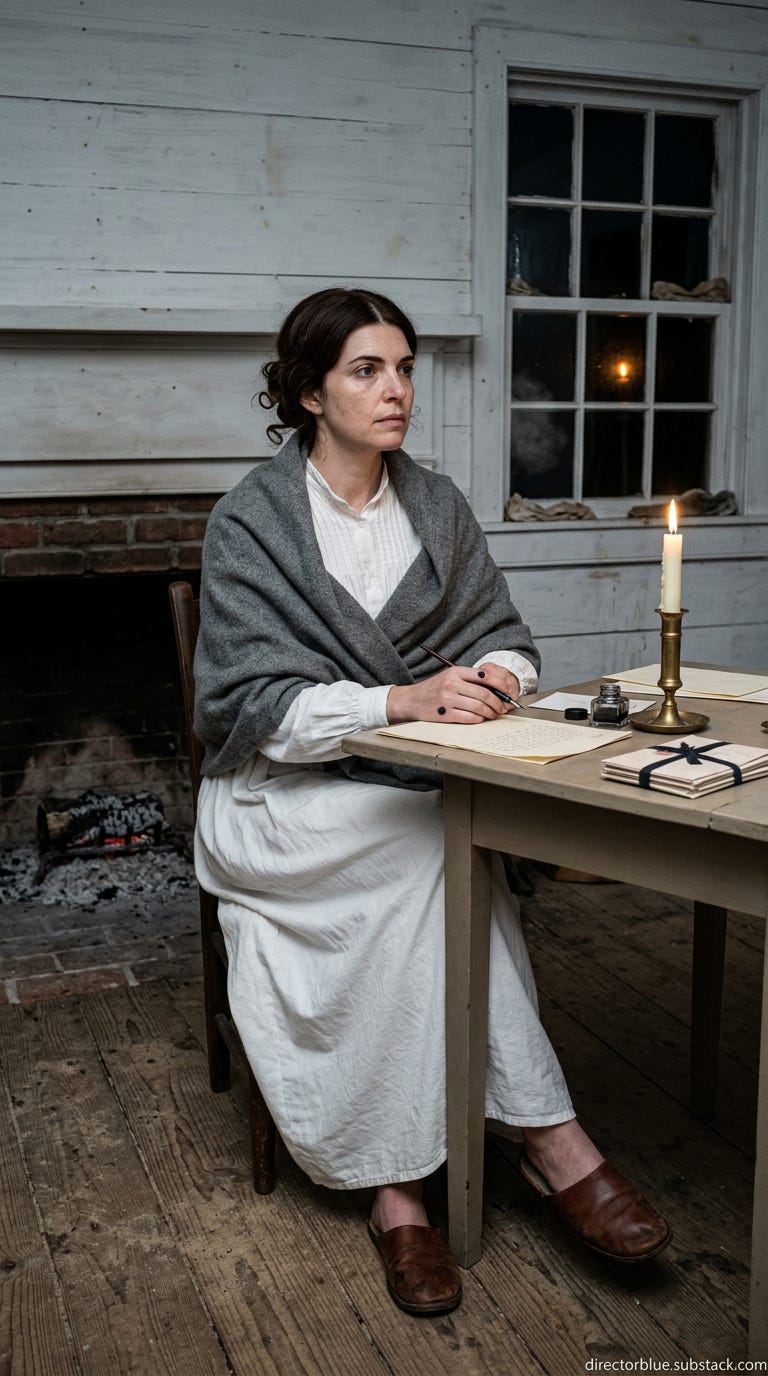
You wake in the dark because the cold has crawled up through the plank floor into the bed. The room is barely a room — whitewashed boards, a brick chimney sucking most of the heat straight up and out, gaps at the window sash stuffed with rag. River damp on everything. Your shawl is clammy. You strike a match, light the tallow candle, and the smell of burning fat mixes with woodsmoke and the low green stink of the marsh outside. Somewhere down the dike a bell starts and then a conch horn. Feet begin moving in the settlement, dozens of them, bare on frozen mud. You sit at the deal table in your nightgown and shawl and write two lines before your fingers stop working.
Date/time and location: 6:50 a.m. — the main dike and mustering ground, Butler Island
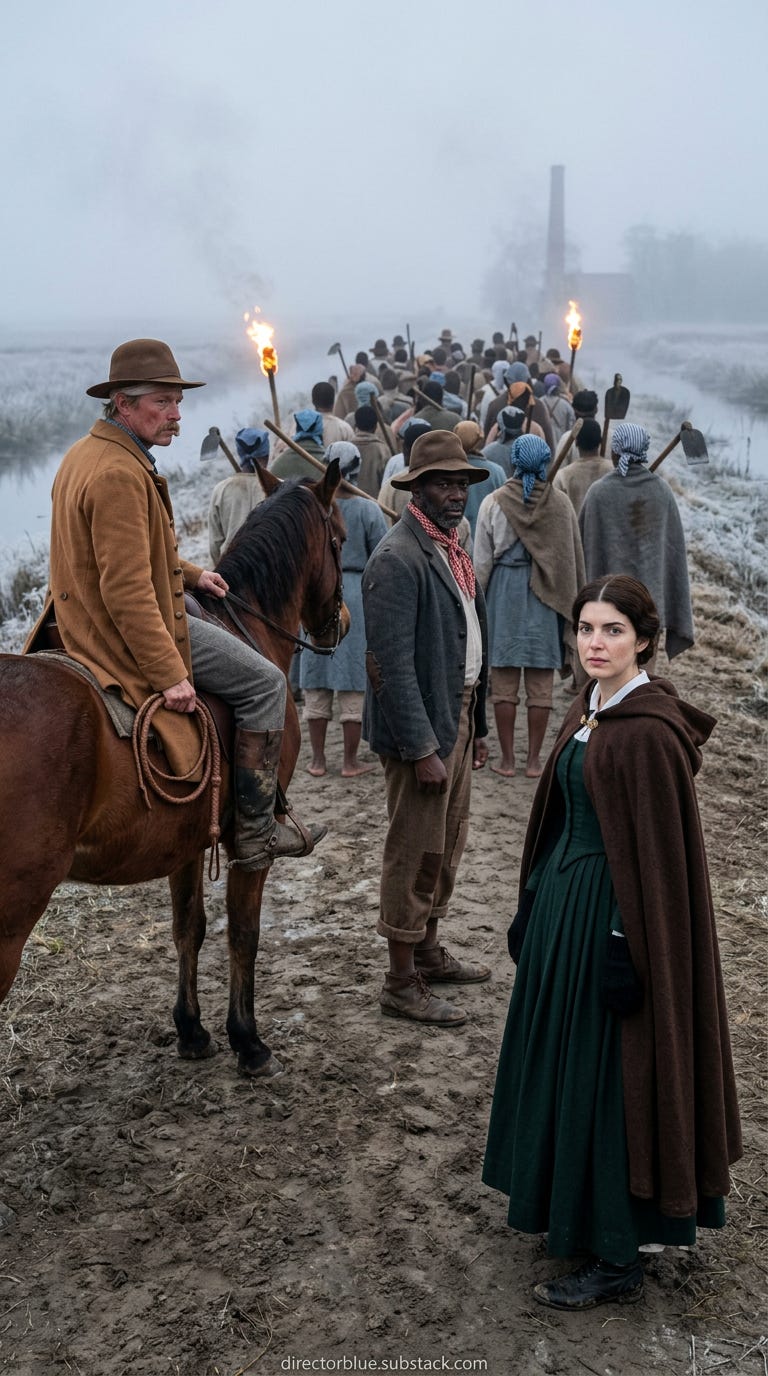
You put on your green wool gown, your brown cloak, and your boots, and you go out into a world made of fog. The Altamaha is a grey wall thirty feet away and you can hear it moving. Two hundred people stand on the dike in the last of the dark, hoes and spades on shoulders, wrapped in blankets and sacking, breath steaming. Pine-knot torches hiss. Head man Frank calls names in a low carrying voice and people answer. The overseer sits his horse above them, whip coiled in his fist, saying almost nothing. Nobody looks at you directly, but you feel every eye. When the gangs move off toward the ditches, the sound is a hundred bare feet in cold mud, and no talking at all.
Date/time and location: 7:40 a.m. — the front room of the cottage
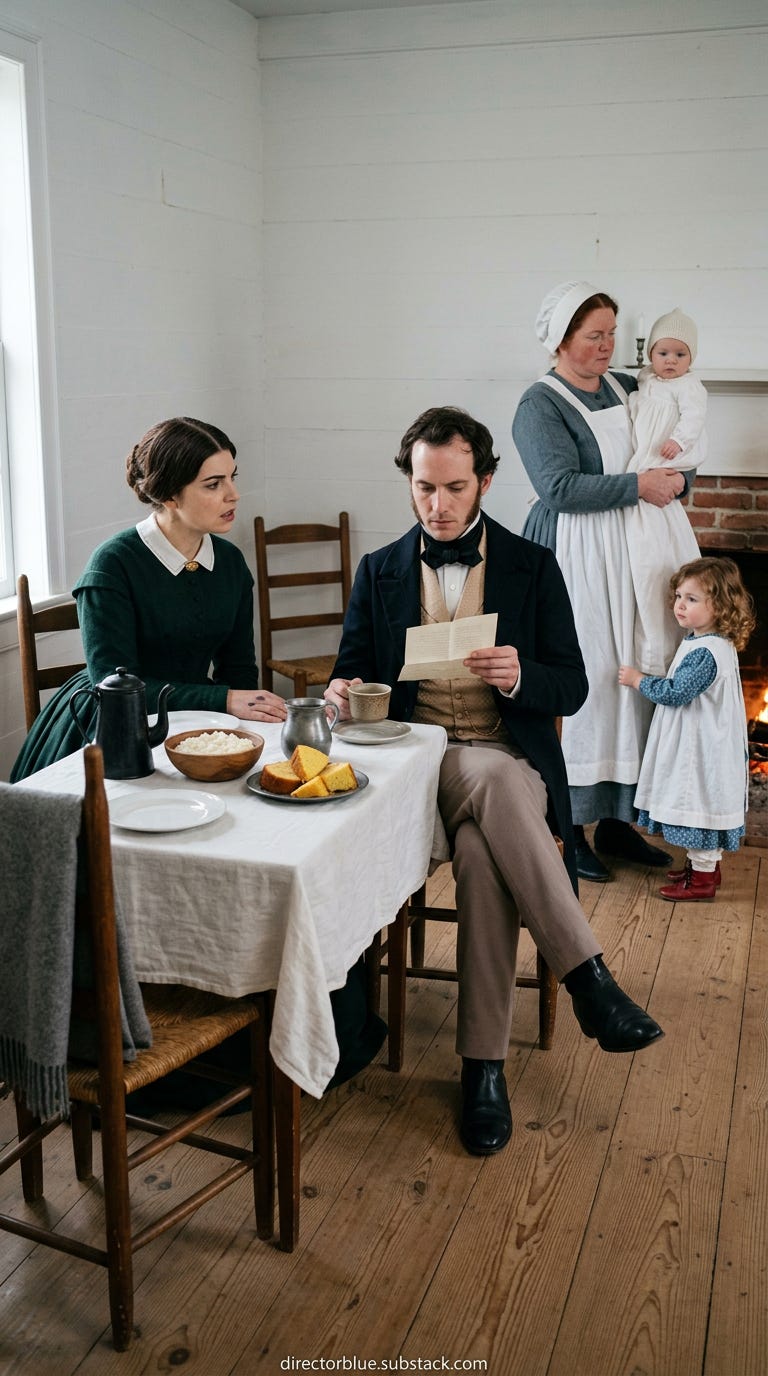
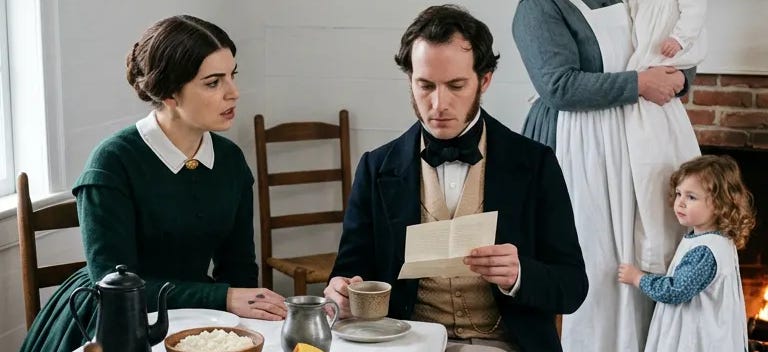
Breakfast is hominy, rice, cornbread, and coffee that tastes of scorched grain. Pierce eats fast and reads letters from Philadelphia, one boot crossed over the other, perfectly pleasant. Margery brings the baby through and Sally trails after her, already talking, already giving orders to the boy who carries the wood. You mention the swing that Frank built for her yesterday in four minutes flat, a dozen children lining up to push little missis. You say a child should not learn to command before she learns to obey. Pierce says you make too much of things. The fire smokes. Outside, someone is scraping mud off the doorstep, and nobody comes in without knocking twice.
Date/time and location: 8:25 a.m. — the threshing barn and steam rice mill, Butler Island
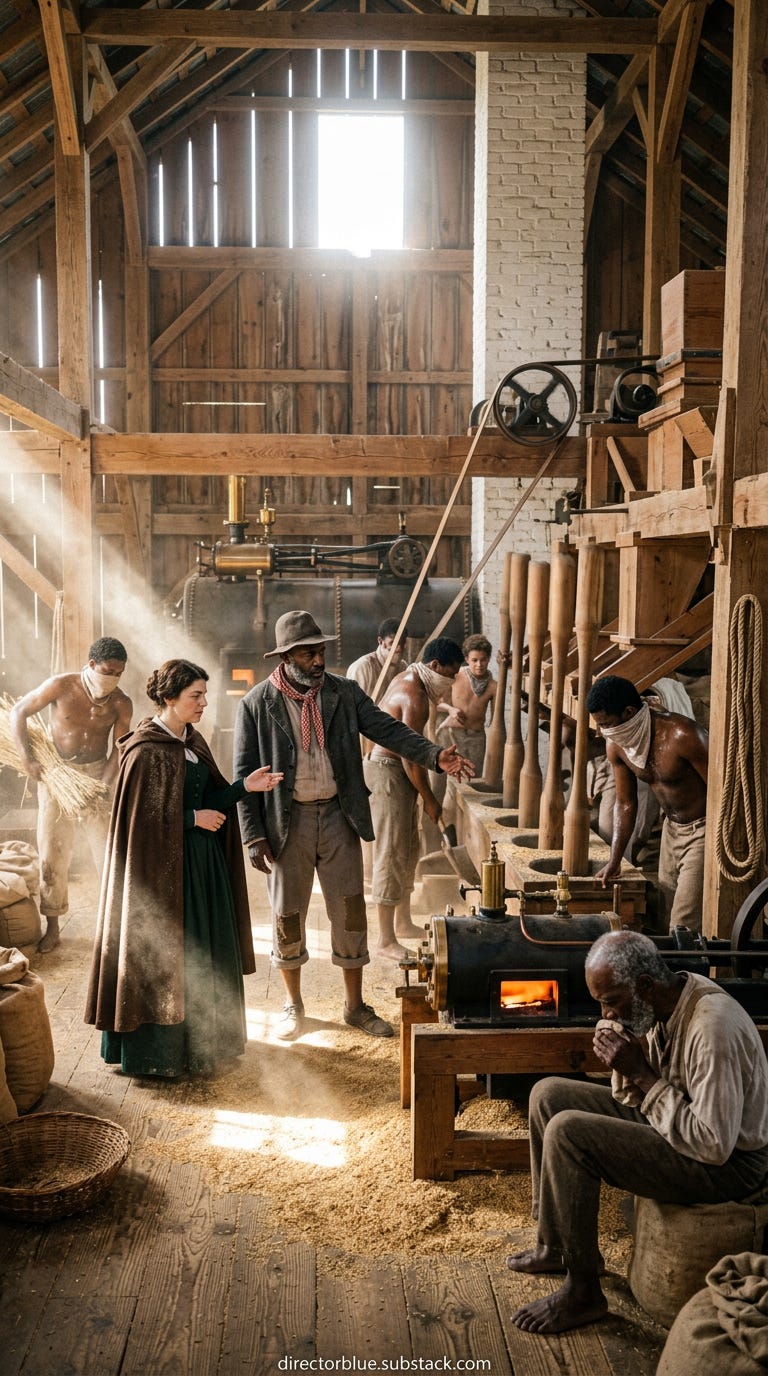
The mill is the loudest place you have ever stood in that wasn’t a theatre. A steam engine hammers away under a tall brick chimney, belts slap, wooden mortars pound the rice, and the whole building shakes in your bones. The air is white with chaff and rice dust. It coats your cloak, your eyelashes, the inside of your mouth. Men and boys move in it half-blind, feeding sheaves, shoveling grain, chests bare and glistening in January because the mill runs hot. One old man coughs in a way you recognize and don’t want to. Frank shows you the machinery with real pride. You cannot hear a word he says, only watch his mouth and nod.
Date/time and location: 9:20 a.m. — the plantation infirmary, Butler Island
