

Time Surfing: Experience History.

Historical Backdrop
Two months after Lexington and Concord, some 15,000 New England militiamen ringed Boston, penning up General Thomas Gage’s professional army inside the town. When word leaked that the British meant to seize the high ground around Boston, the colonial council of war ordered Colonel William Prescott to fortify the Charlestown peninsula. On the night of June 16, about 1,200 men marched out with picks and shovels and dug a dirt fort on Breed’s Hill — closer to Boston, and far more exposed, than the Bunker Hill they’d been sent to hold.
Our subject is Corporal Amos Farnsworth, twenty-one years old, a farmer’s son from Groton and a cousin by blood to Colonel Prescott. He was devout to the bone and kept a diary, which is the source of this account.
Date/time and location: June 16, 1775, about 11:30 p.m. — the waterfront by the Town House, Charlestown, Massachusetts
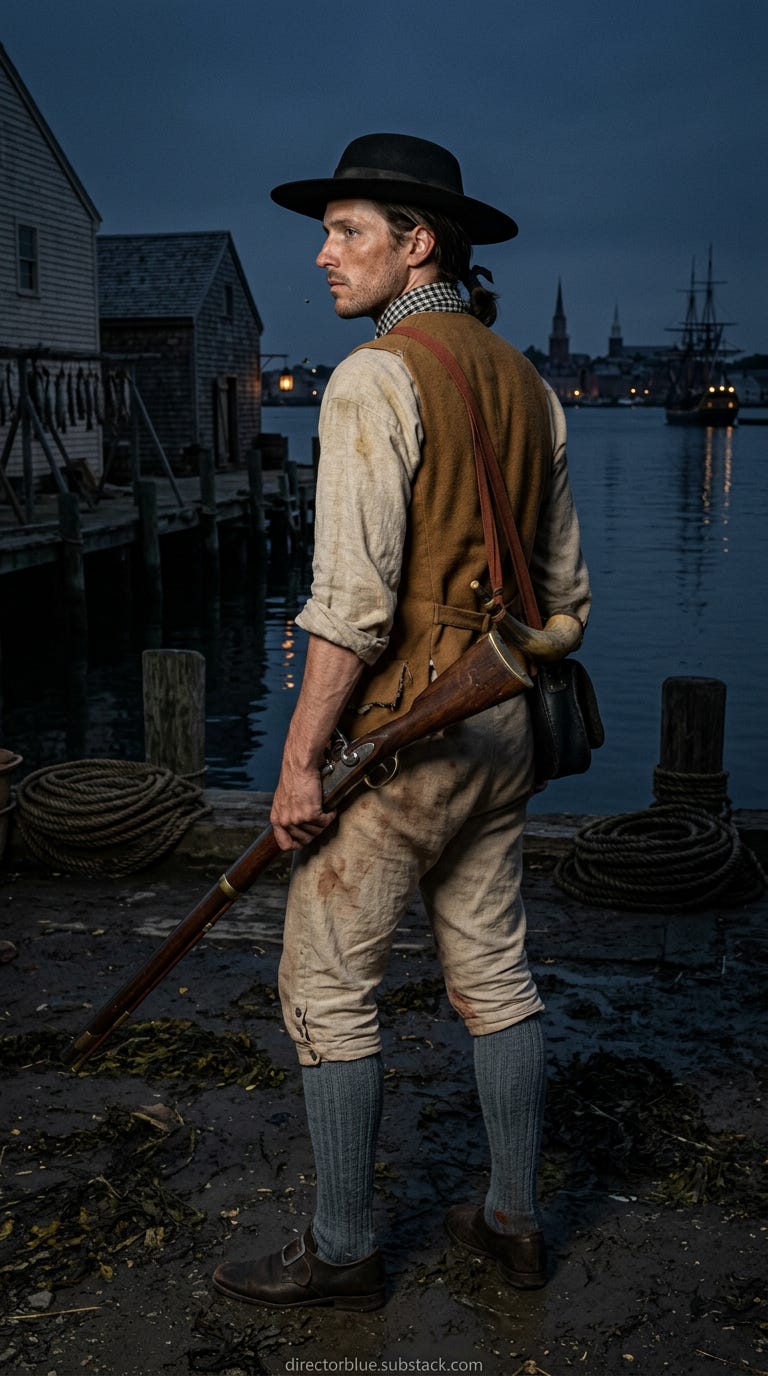
You were pulled out of the column with sixty others before it turned up the hill, and now you are a sentry in a ghost town. Charlestown’s people fled weeks ago. Doors hang open. Across 400 yards of black water, Boston’s steeples show against a low haze, and you can hear the ship’s bell on a man-of-war and the watch calling “All’s well” — enemy voices, close enough to answer. Behind you, up the hill, comes the steady chuck of two hundred shovels in clay. Your musket is cold. Your stomach is empty. You pray under your breath.
Date/time and location: June 17, 1775, about 4:00 a.m. — the redoubt on Breed’s Hill
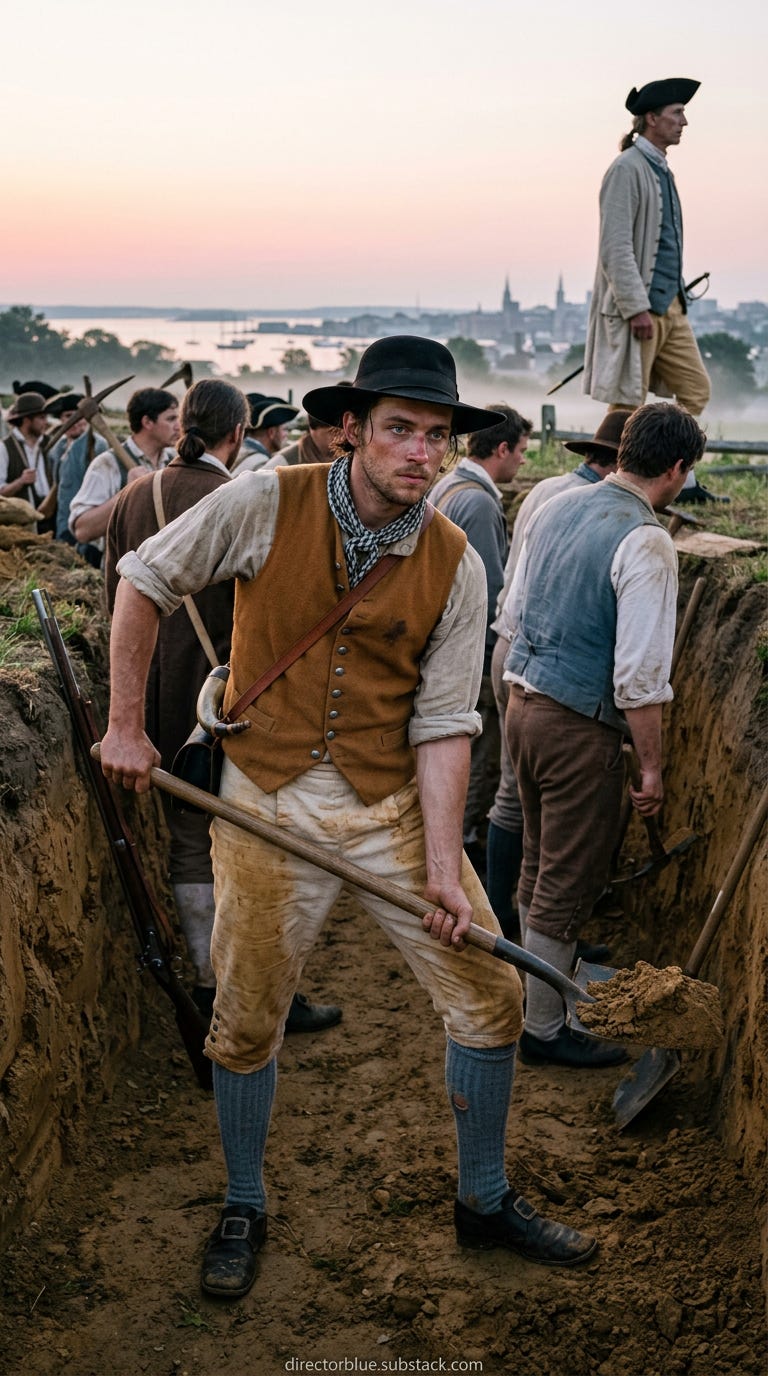
You climb the hill in the gray light and stop. In one night your regiment has thrown up a dirt fort a hundred thirty feet on a side, walls to your chin, a firing step of planks inside, a ditch out front. Men are still swinging mattocks, stripped to their shirts, plastered head to foot in yellow clay, faces gray with exhaustion. Nobody has eaten since yesterday’s supper. Nobody has water. From up here you can see everything: Boston laid out below like a map, the ships riding at anchor with their gunports shut, gulls working the harbor, the Mystic River flat as a pewter plate. Colonel Prescott is walking the wall in a light loose coat, telling men to dig faster. The eastern sky goes pink. The sun is coming up and the enemy is going to see you.
Date/time and location: June 17, 1775, about 4:20 a.m. — the redoubt, Breed’s Hill
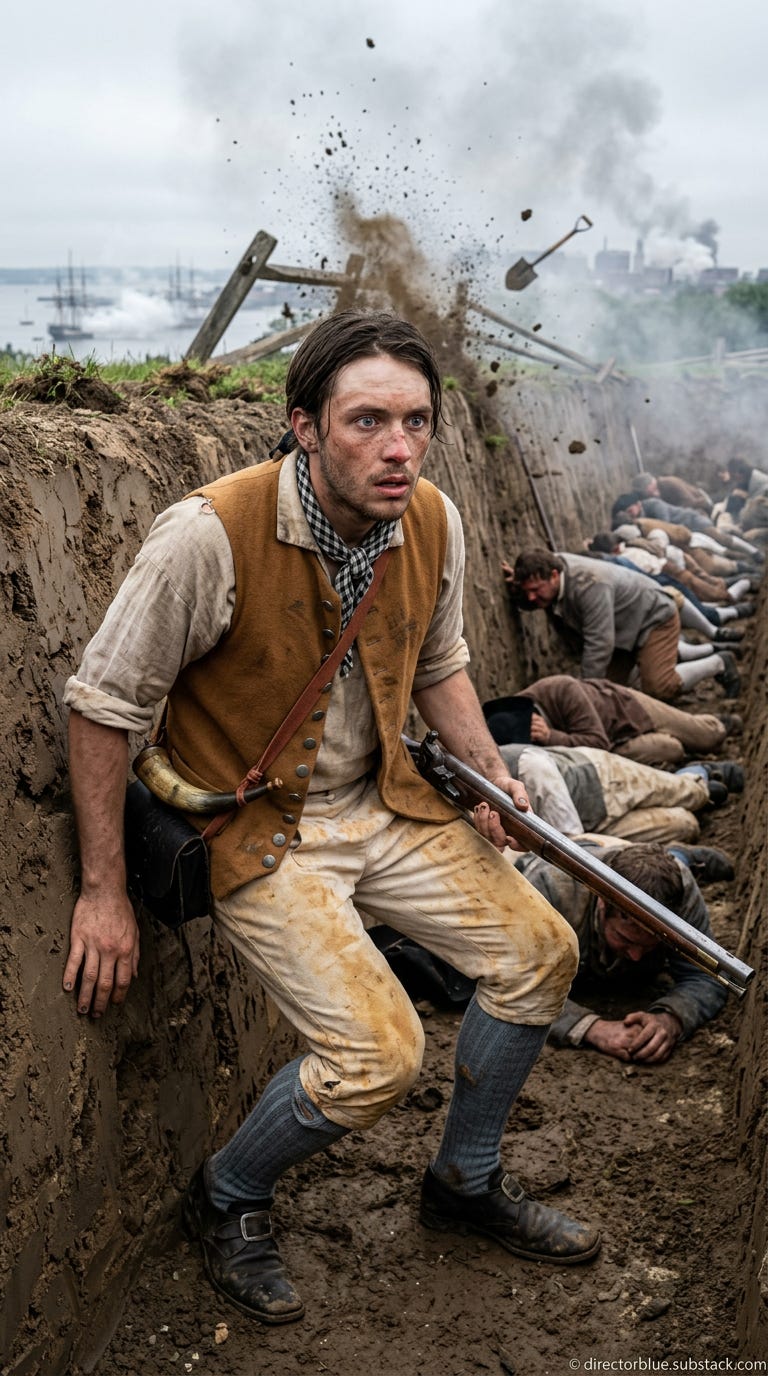
A gunport opens on the sloop lying nearest, and the world cracks apart. The first ball from HMS Lively goes overhead with a sound like a wagon tearing through canvas. Then more ships wake up, and then the two big guns on Copp’s Hill in Boston start. A round shot skips up the slope and takes a fence post to splinters. Men drop flat in the ditch. You crouch with your back against wet clay, hat in your fist, and feel each concussion in your teeth and in the soles of your feet. Prescott shouts at the men to stand up and keep digging.
Date/time and location: June 17, 1775, about 6:00 a.m. — outside the redoubt, Breed’s Hill
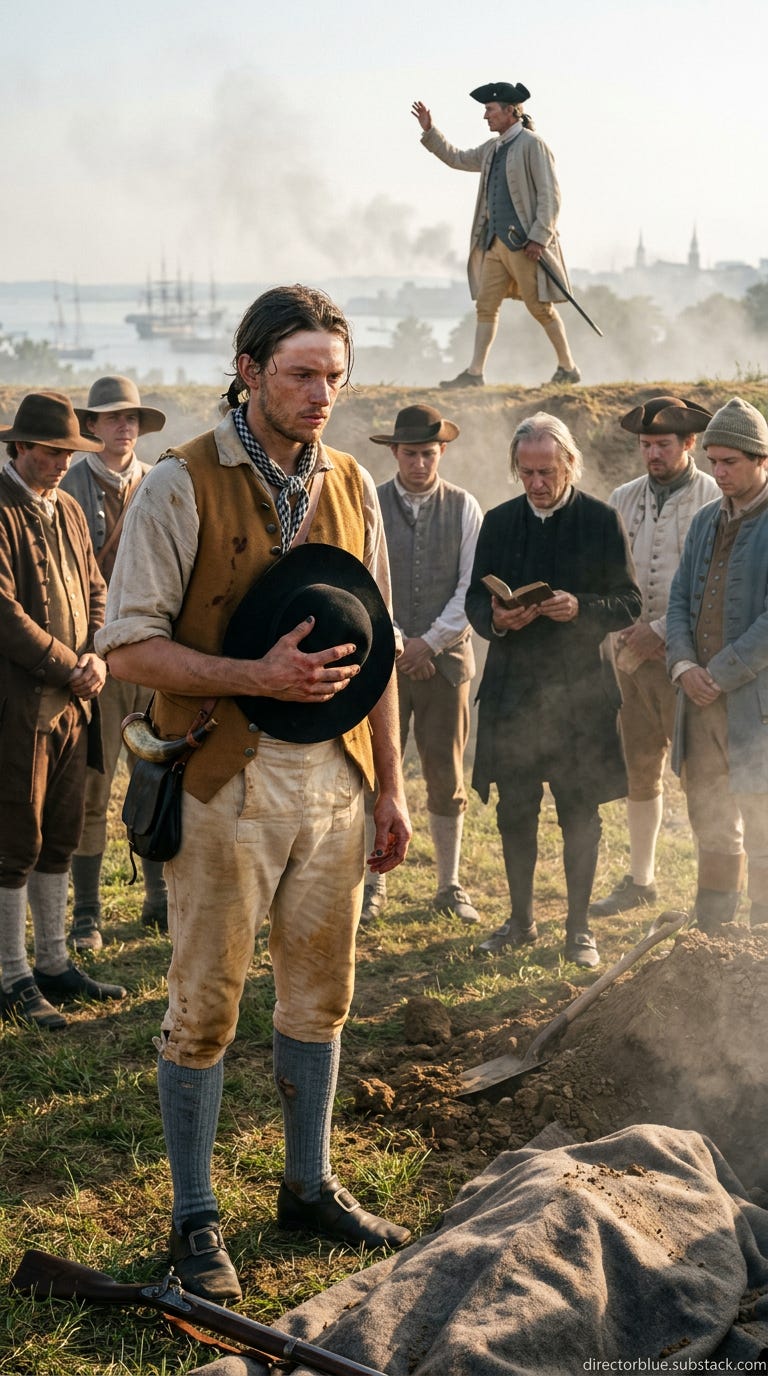
A ball comes in low and finds Asa Pollard of Billerica while he’s turning sod. There isn’t much left of the man above the shoulders. The men crowd around, silent, and then a chaplain wants to pray over him, and Prescott says bury him and get back to work, before the whole regiment loses its nerve. Two of you take him by the ankles and the shirt and drag him into a shallow trench in the loose clay while the ships keep firing. Prescott climbs up on the parapet in plain sight, in that light coat, and walks the whole length of it, and somehow that steadies you more than any prayer.
Date/time and location: June 17, 1775, about 8:30 a.m. — the breastwork below the redoubt
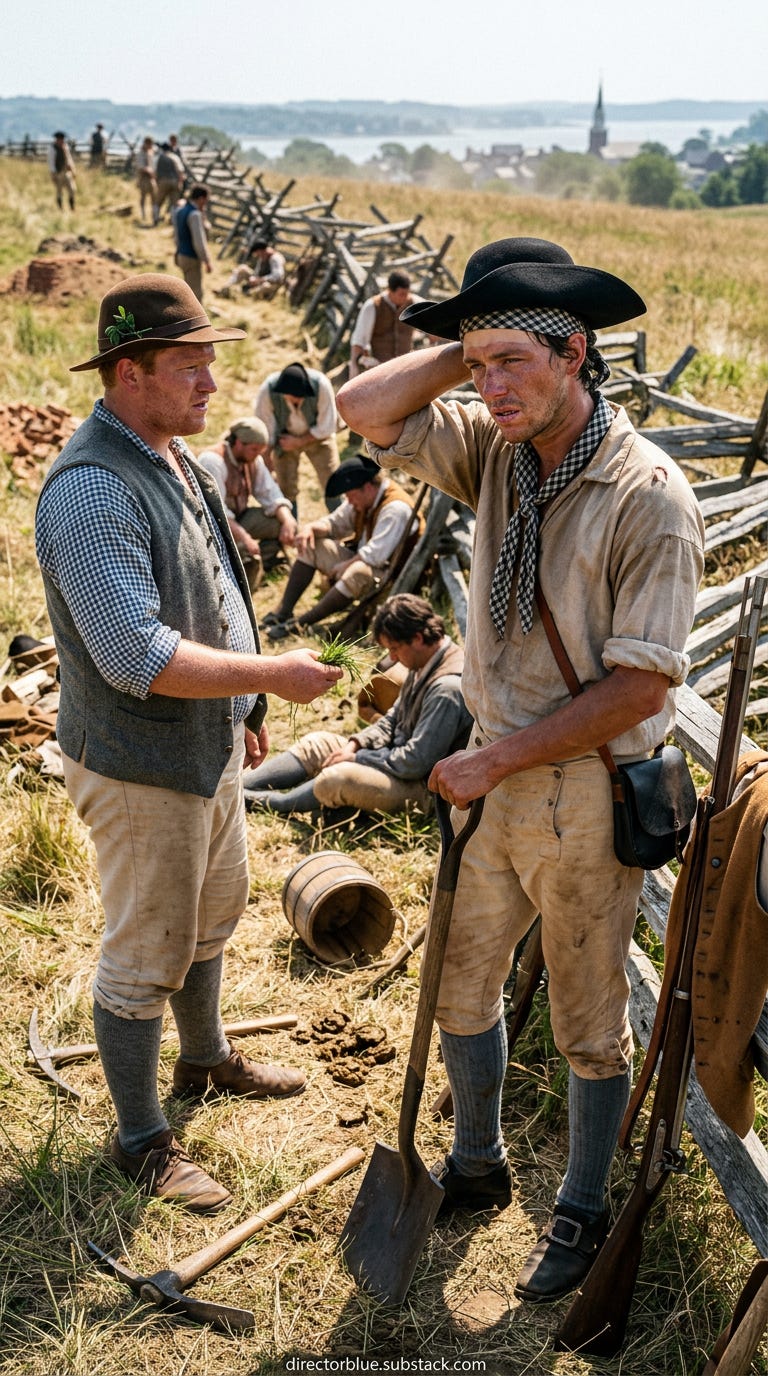
The sun is up hard and the day turns into an oven. You are extending a breastwork downhill toward the Mystic, prying rails, filling with dirt, and there is no water. Not a drop on the hill. Your tongue sticks to your teeth. The clay dust cakes in the corners of your mouth and cracks when you talk. Men are dropping in the ditch with the heat, and some have gone off toward the Neck for water and haven’t come back. You have been awake since Thursday morning. Your hands are blistered raw between thumb and finger and the blisters have broken and the shovel handle is slick. Every so often a ball comes over and everyone ducks and then nobody bothers ducking. Phineas Hubbard hands you a fistful of green grass to chew for the wet in it. It tastes like nothing. You chew it anyway.
Date/time and location: June 17, 1775, about 12:45 p.m. — the parapet of the redoubt
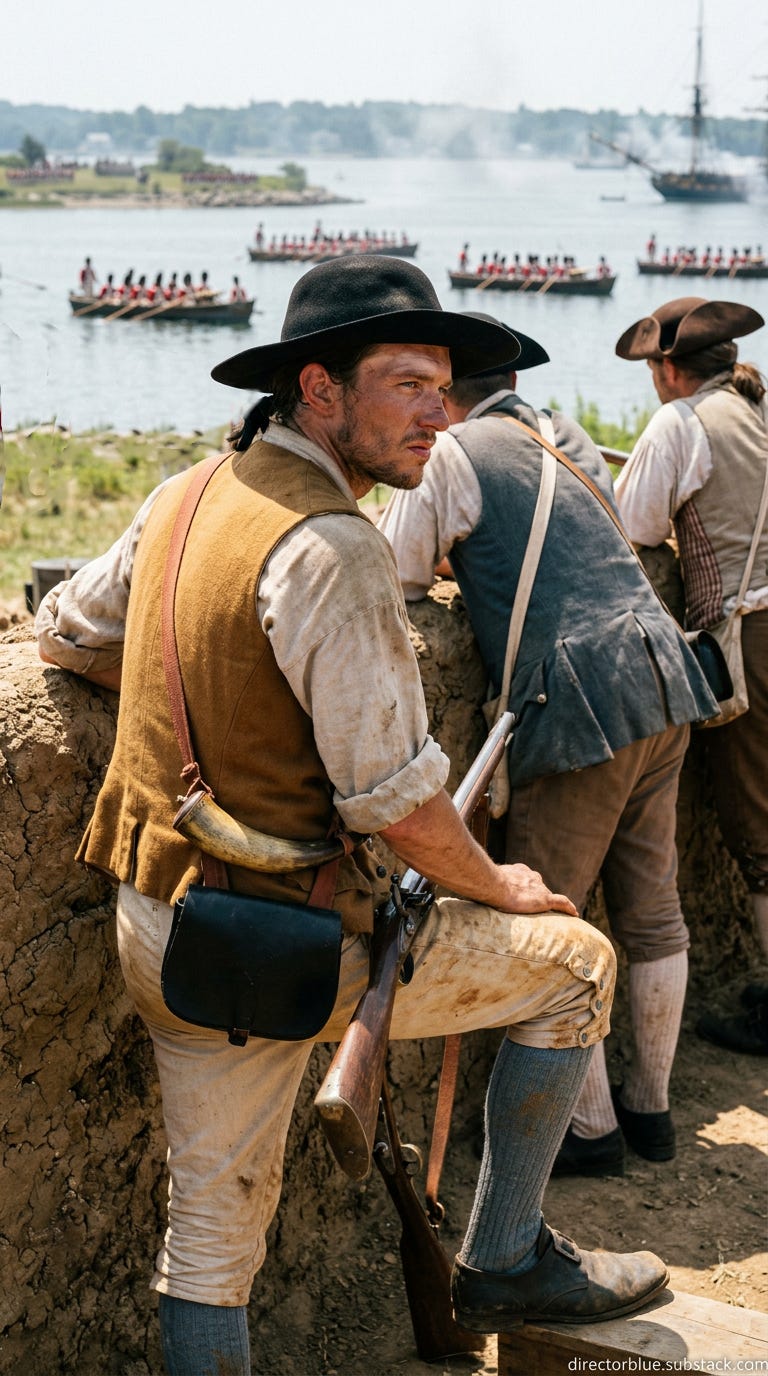
They come across the water in flatboats, and it is the most beautiful and terrible thing you have ever seen. Two long lines of barges, oars going together, and the sun off the water and off polished barrels and brass. Scarlet coats packed shoulder to shoulder, tall black caps on the grenadiers, field pieces in the bows. They land on the point east of you, a mile off, and instead of coming straight on they form up in blocks on the grass and stack their packs and — you can hardly believe it — they sit down and eat their dinner where you can watch them. You have eaten nothing in a day and a half. Somebody down the line says there must be three thousand of them.
Date/time and location: June 17, 1775, about 2:15 p.m. — the redoubt, Breed’s Hill
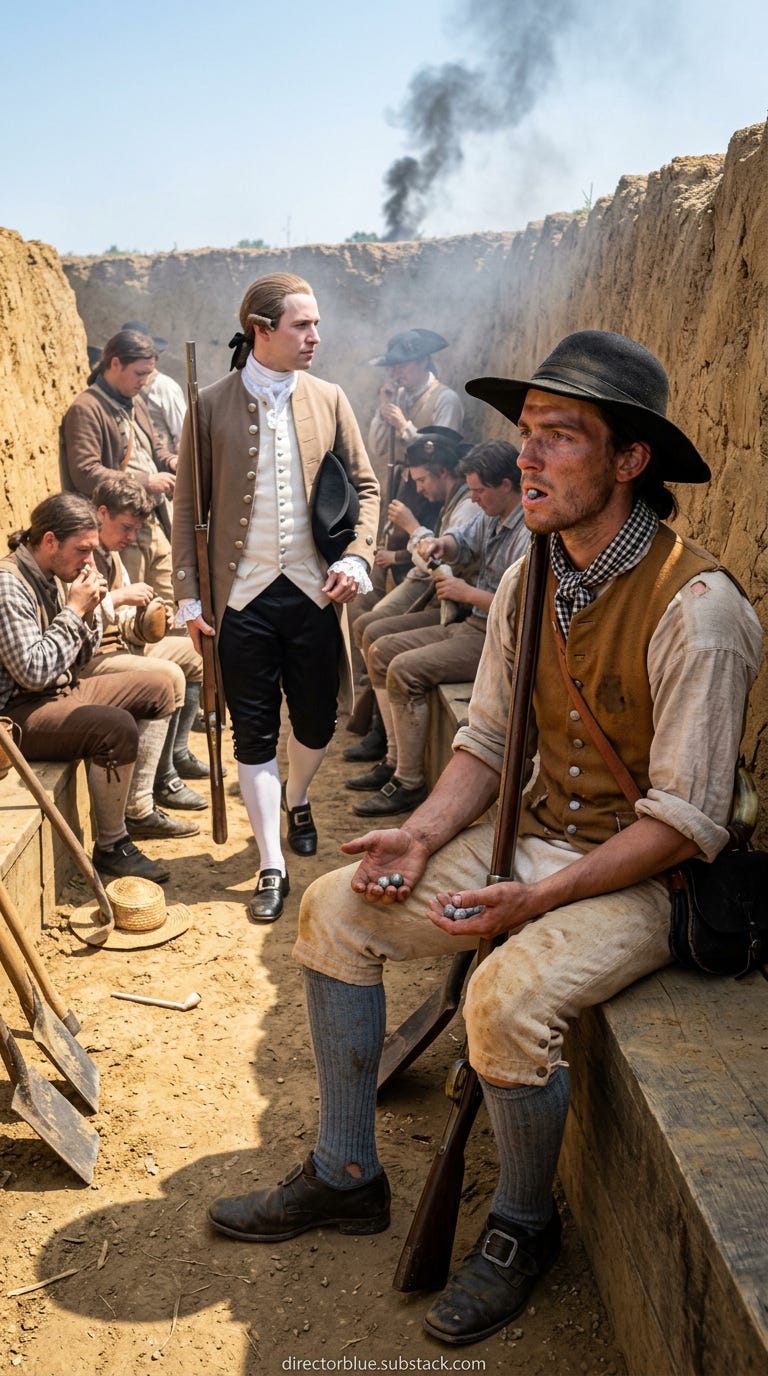
Word runs along the wall that Doctor Warren is come, and there he is, walking in among the clay-covered farmers in fine clothes and silver buttons, a musket in his hand like anybody else. He is the biggest man in the province next to the generals, and he has refused command and taken a place in the line as a volunteer. Men straighten up. You do too. He asks a boy near you how his powder holds. The answer is bad — most men have a horn half full and a handful of loose balls, some too big for the bore, some too small, and no cartridges to speak of. You bite three balls to see which will run down your barrel. You knock the dirt out of your flint and reseat it. You wipe your hands on your breeches and wait, and the waiting is the hardest work of the day.
Date/time and location: June 17, 1775, about 2:45 p.m. — the redoubt, looking down on burning Charlestown
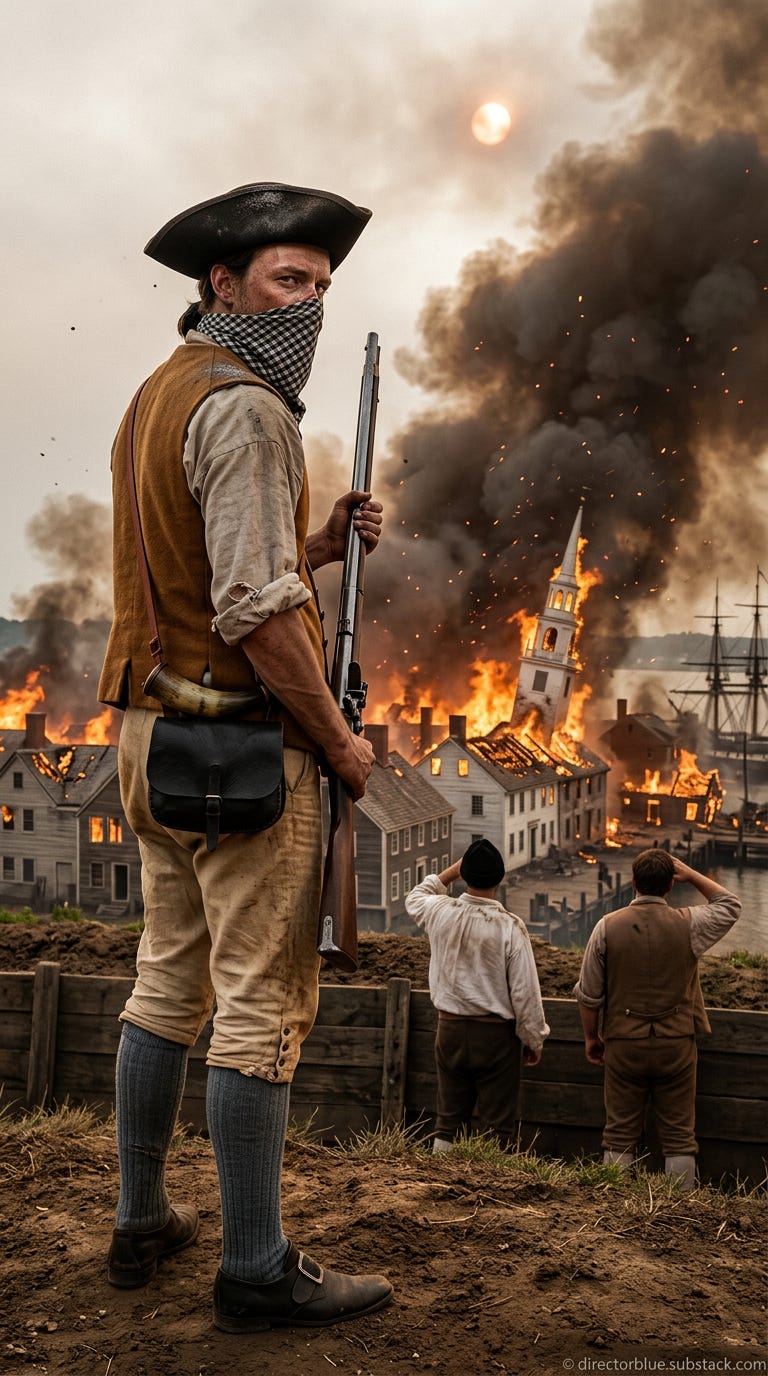
The ships and the Copp’s Hill battery start throwing heated shot and carcasses into Charlestown, and the town where you stood sentry last night begins to burn. It goes fast. Shingle roofs catch like kindling. The meeting-house steeple stands in flame like a torch and then folds into itself, and the sound of it carries up the hill — a long tearing roar with cracks inside it. The wind pushes the smoke straight at you, thick and brown, full of hot ash that stings your neck and burns pinholes in your shirt. Then the drums start.
Date/time and location: June 17, 1775, about 3:10 p.m. — the redoubt wall, first British assault
