

Time Surfing: Experience History.
Historical Backdrop
On the first day of September, A.D. 100, the Roman Senate met in the Curia Julia so that the new consul, Gaius Plinius Caecilius Secundus — Pliny the Younger — could deliver a formal vote of thanks to the emperor Trajan. Rome was barely four years past the assassination of Domitian, an emperor who had executed senators and whose name was now being chiseled off monuments all over the city. Trajan, a tough Spanish-born general in his second year of rule, was something new: a ruler who talked about restraint. Pliny’s speech, later expanded and published as the Panegyricus, invented the phrase that would define him — optimus princeps, “the best prince.”
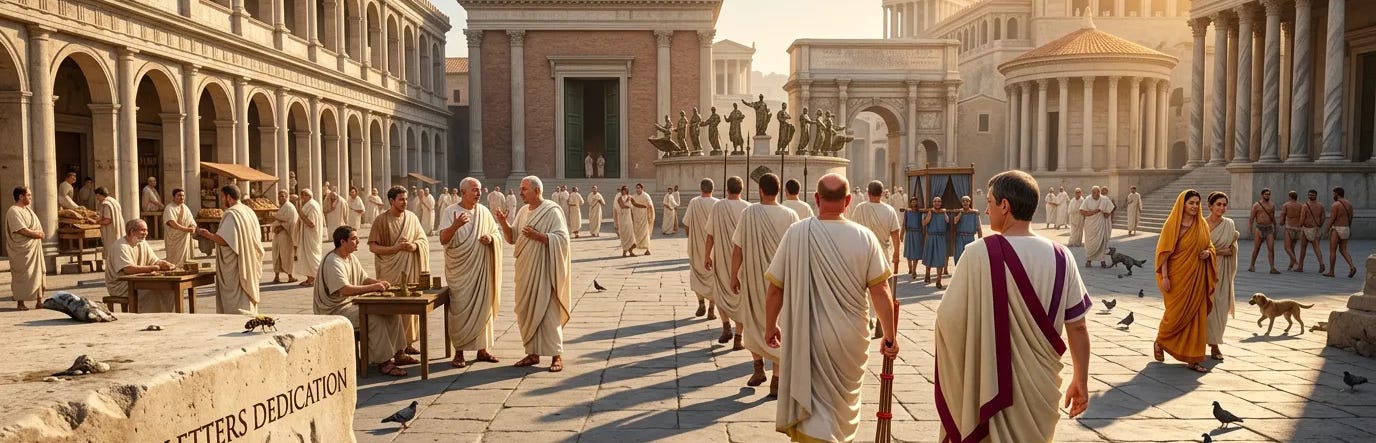
Our subject is Encolpius, a real person: Pliny’s Greek-born slave lector and copyist, about 25, the young man Pliny would later write about with real affection and real fear, because Encolpius read aloud for a living and had begun to cough blood. He carries the tablets. He hears the speech. And he will sit up that night turning it into a book, while a city of insulae, baths, markets, and amphitheaters roars outside the door.
Date/time and location: 1 September, A.D. 100 — fourth watch of the night, roughly 4:50 a.m. — slave quarters off the service corridor of Pliny’s townhouse, upper slope of the Esquiline Hill, Rome
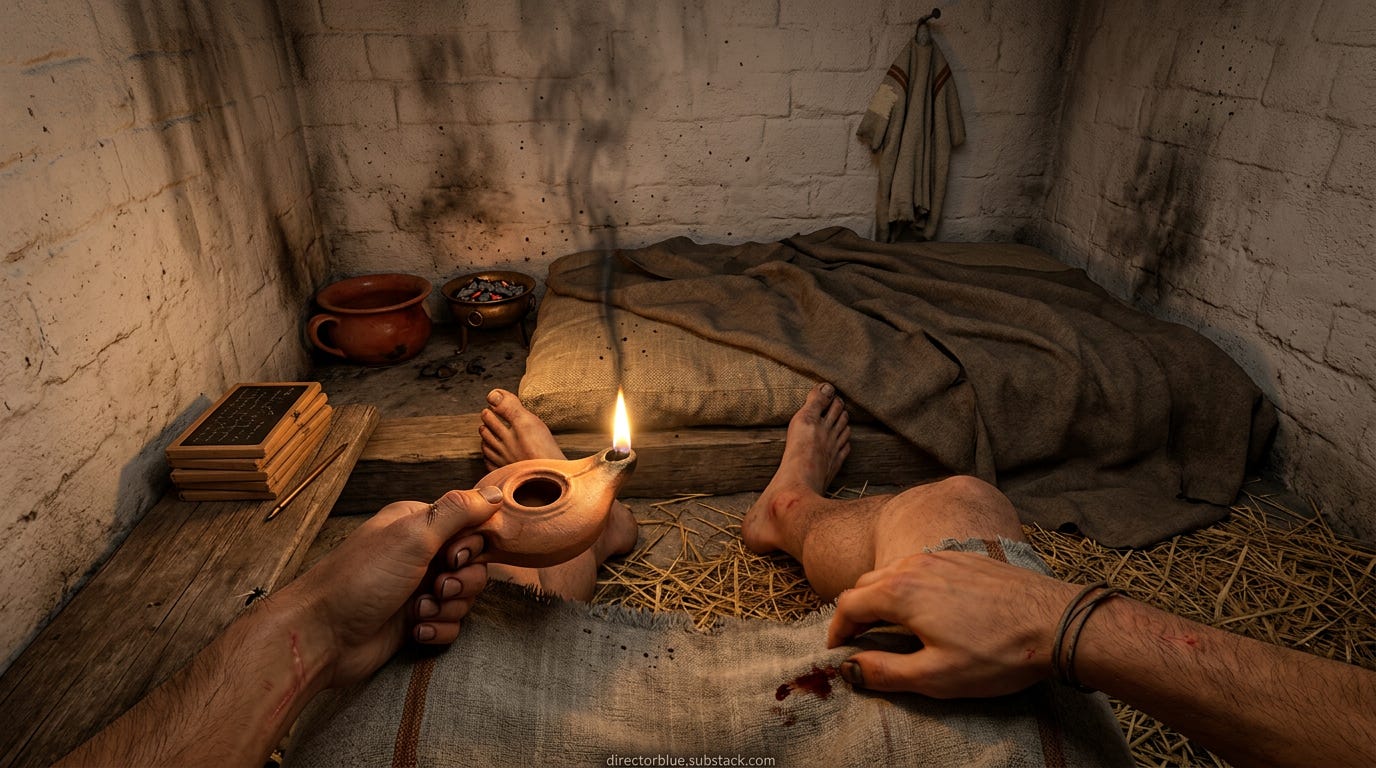
Your ribs hurt before your eyes open. You cough into your fist, twice, three times, and taste the iron; you wipe it on the wool and light the clay lamp from a coal in the brazier, and the little flame shows you the cell: eight feet by five, no window, whitewash gone grey with soot, your master’s speech tablets stacked against the wall where the damp cannot reach them. Somewhere below, the kitchen slaves are already breaking kindling, and the mosquito that has been whining at your ear all night finally lands on your wrist.
Date/time and location: 1 September, A.D. 100 — first light, about 6:15 a.m. — atrium and street vestibule of Pliny’s house, Esquiline Hill
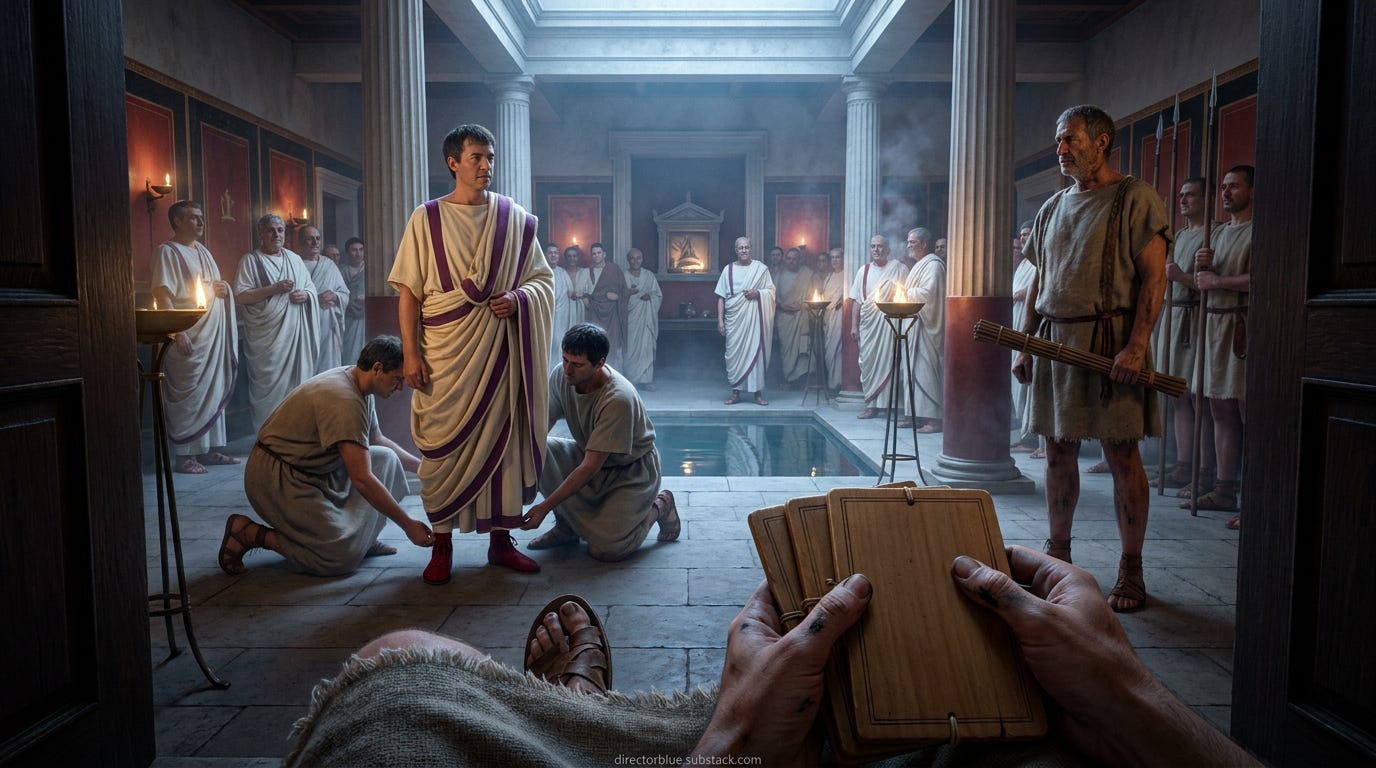
Twelve lictors are standing in the vestibule with their rod bundles, and the house smells of wet chalk. The fullers have brought the consul’s bordered toga back overnight and two dressers are still setting the folds while forty clients crowd the atrium in their own best wool, waiting to be greeted by name. Your job is to wait at the doorkeeper’s post with the tablets, keep your mouth shut, and not let anyone touch them.
Date/time and location: 1 September, A.D. 100 — first hour, about 6:45 a.m. — Clivus Suburanus, descending through the Subura toward the Forum
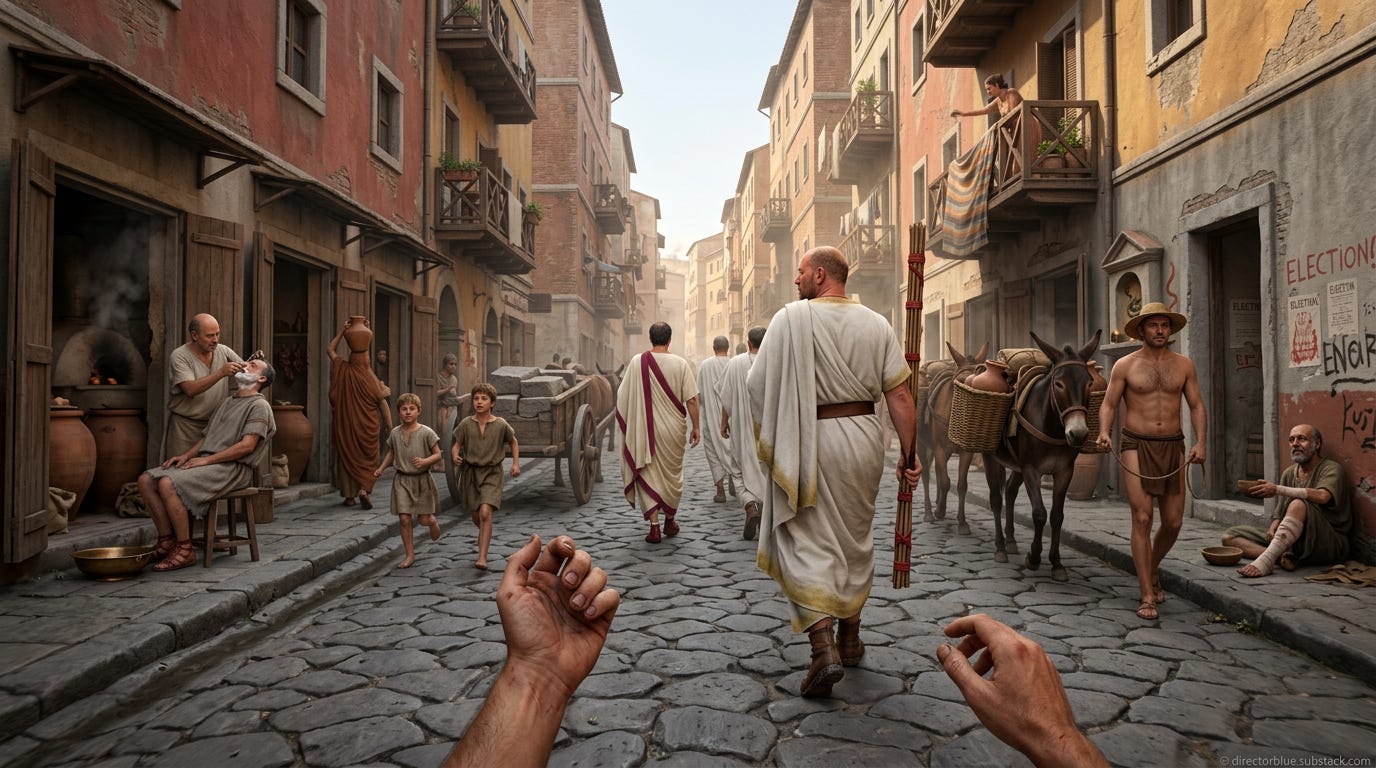
The lictors go first and the crowd opens like water. Delivery mules and iron-tired carts are still clearing the streets before the daylight ban bites, so you walk in a river of dung, spilled lime, cabbage leaves, and the runoff of last night’s chamber pots, past six-story apartment blocks whose balconies almost touch overhead. A barber is shaving a man on a stool in the street, a school is already chanting letters behind a curtain, and someone above you is shaking a rug over the alley.
Date/time and location: 1 September, A.D. 100 — second hour, about 7:10 a.m. — the Argiletum, passing the Forum of Nerva into the Forum Romanum
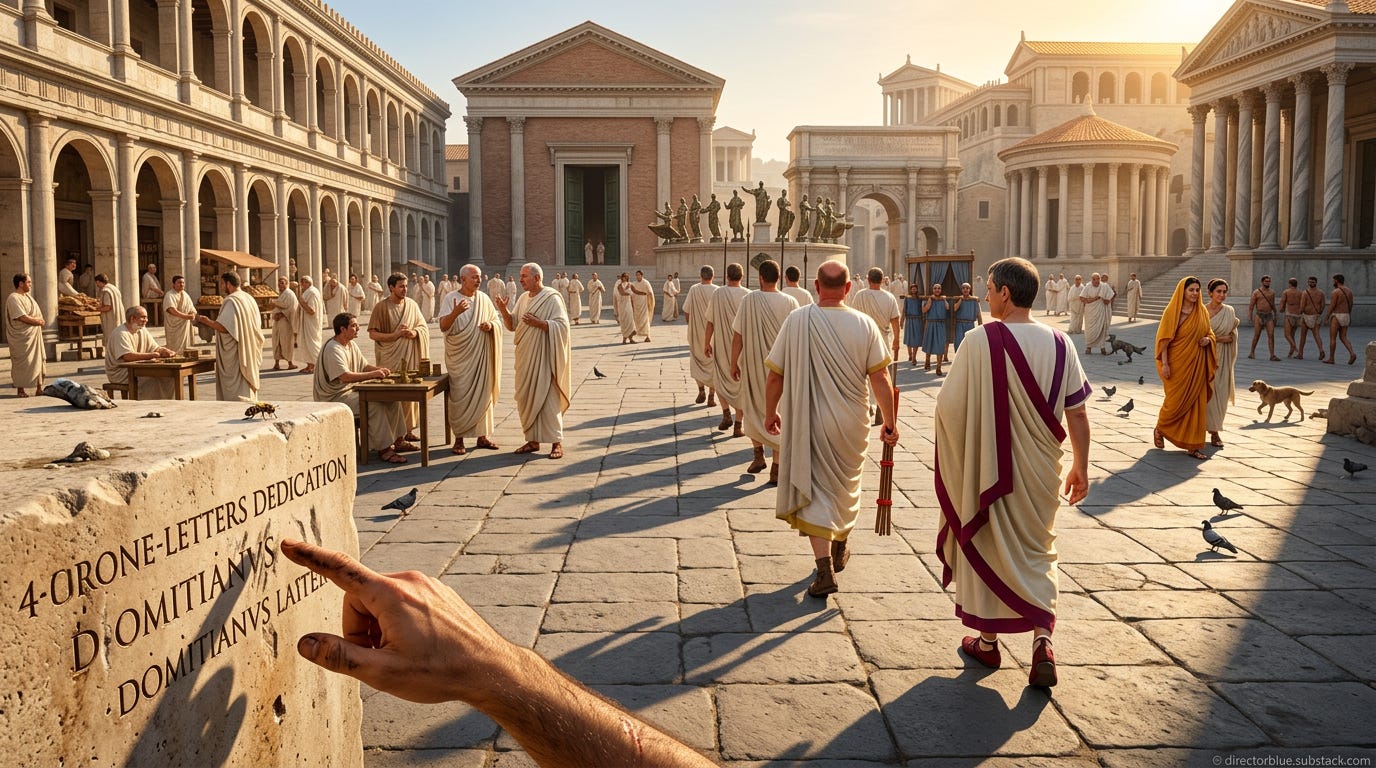
You come out of the alley into marble and stop breathing for a second. Ahead the Forum opens up — Saturn’s temple on its high podium, the Rostra, the Basilica Julia’s arcades, gilded bronze roof tiles catching the new sun — and on three walls you pass, the dead emperor’s name has been hacked out of the stone, leaving raw white gouges that nobody has bothered to fill. The pavement is already crowded with litigants, moneychangers’ tables, and men shouting for a hearing.
Date/time and location: 1 September, A.D. 100 — second hour, about 7:40 a.m. — threshold of the Curia Julia, Forum Romanum
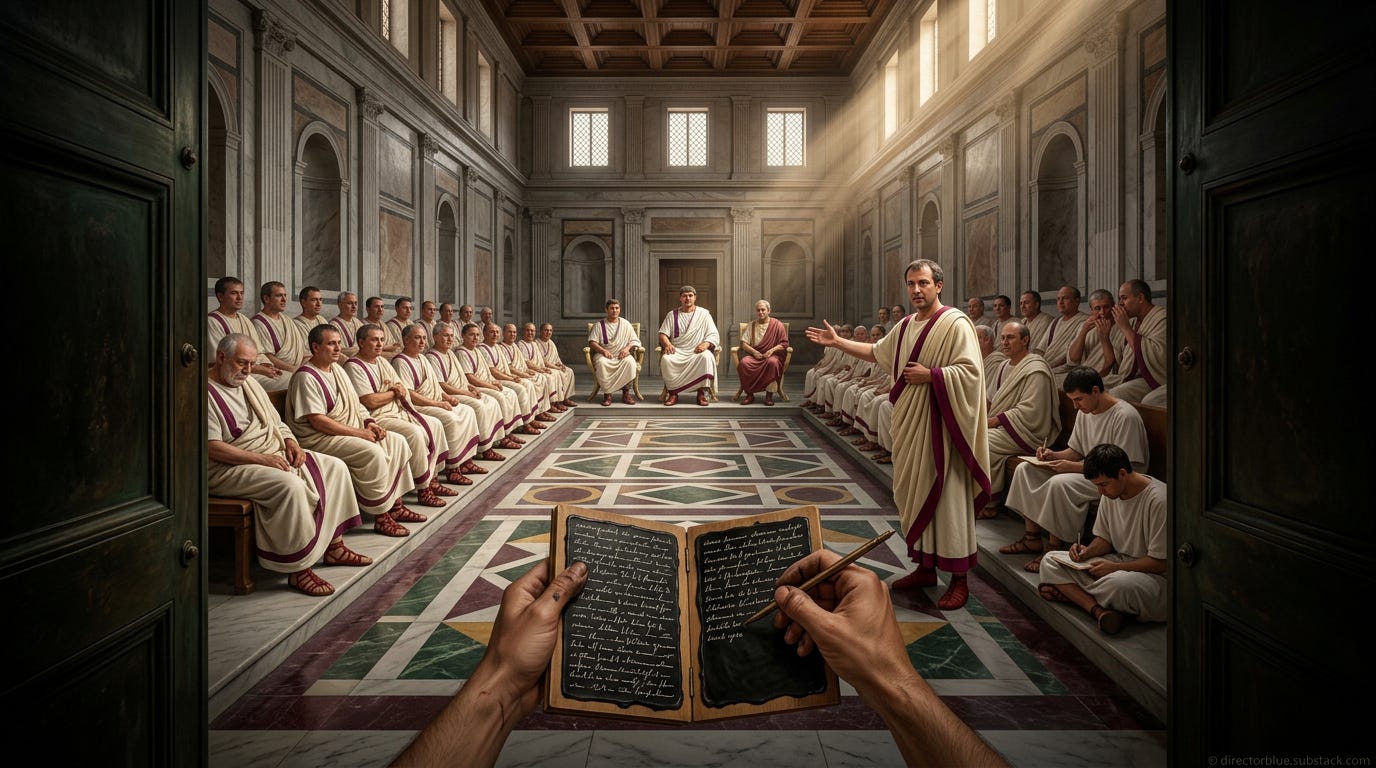
You stand where the bronze doors let you stand and no farther. Inside, three hundred senators are packed on the tiered benches, the emperor sits between the two consuls on the tribunal, and your master’s voice starts thin and then finds its floor: optimus princeps. The Senate’s own shorthand men are writing on the low step below him, styluses ticking; you press your tablets to your chest and try not to cough.
Date/time and location: 1 September, A.D. 100 — fifth hour, about 11:05 a.m. — steps of the Curia Julia and the Comitium, Forum Romanum
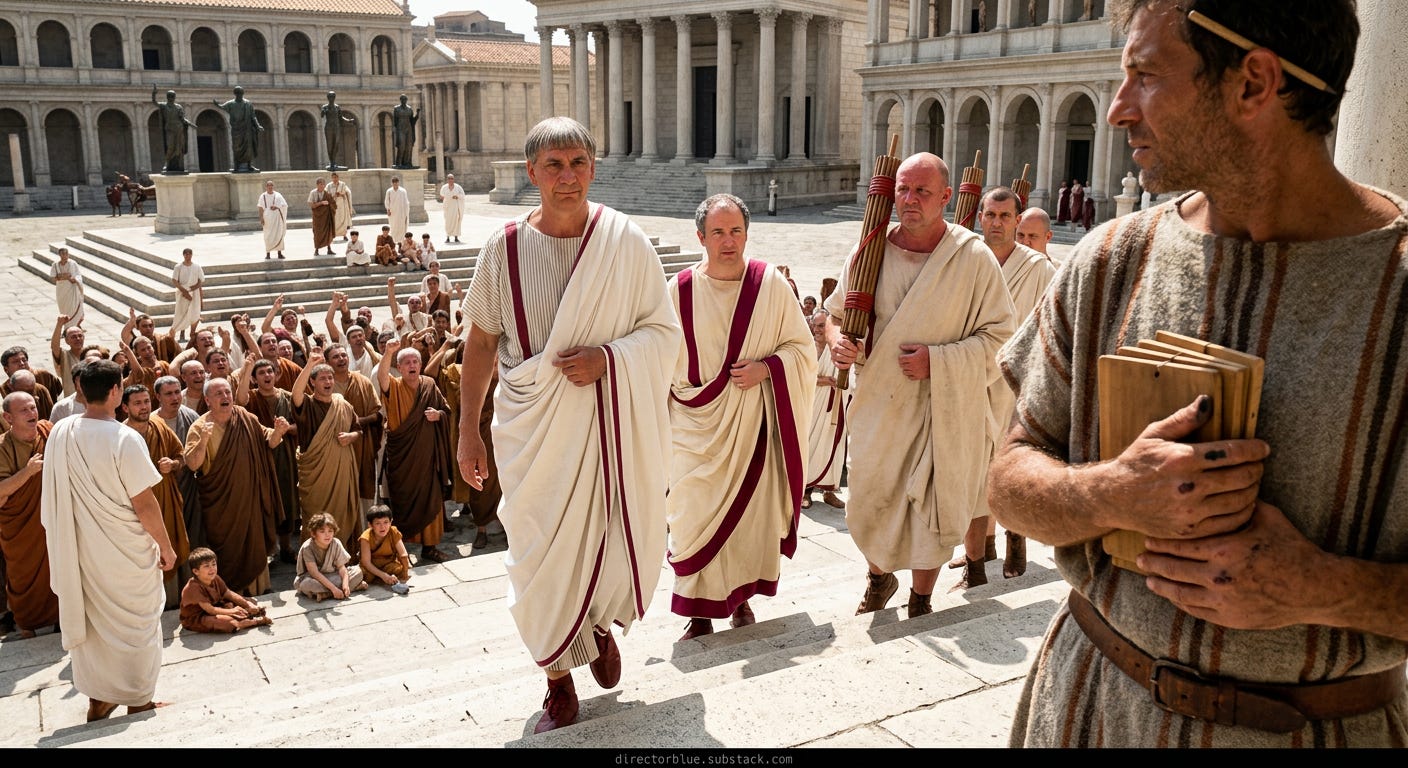
The doors open and the heat comes off the pavement like a wall. The emperor comes out ten feet from you, close enough that you see the sweat line where his toga meets his neck and the white scar on the back of his right hand, and the crowd on the Forum floor starts a rhythmic chant they have clearly rehearsed. Your master’s tablets are damp where you have been holding them.
Date/time and location: 1 September, A.D. 100 — sixth hour, about 11:40 a.m. — the Clivus Palatinus and the Domus Flavia, Palatine Hill
