

Time Surfing: A Guide to History.
Historical Backdrop
May 1945. Germany surrendered three days ago. Japan has not. Americans have been fighting on Okinawa for a bloody six weeks, and the US Navy has anchored offshore for support. Japan answers with Kikusui, which means “Floating Chrysanthemums.” They mean mass suicide air attacks. Hundreds of planes fly one way, and each pilot is meant to die.
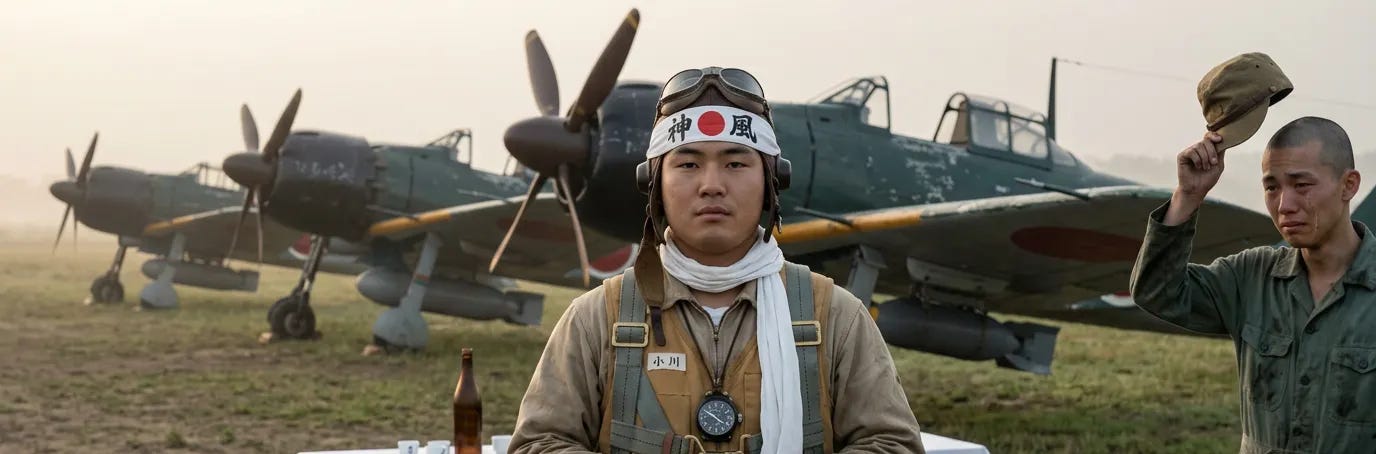
Kiyoshi Ogawa is 22. He comes from Gunma Prefecture and studied at Waseda University. He was an athlete and a joker. In 1943 the government ended draft deferments for college students and put him in uniform. He trained as a reserve naval aviator, and his instructors beat him for small mistakes, as they beat all the student pilots. He became an ensign in the 306th Fighter Squadron at Kanoya, then joined the 7th Shōwa Special Attack Unit. Officially he volunteered. In practice, saying no was not possible. His flight leader is Sub-Lieutenant Seizō Yasunori, 21, a farm boy from Akō. Their target is Task Force 58 and its flagship, the carrier USS Bunker Hill. That ship has been at sea and in combat for 58 straight days.
Date/time and location: Thursday, May 10, 1945, about 9:30 p.m. Pilots’ billet in a requisitioned wooden schoolhouse near Kanoya Naval Air Base, Ōsumi Peninsula, Kagoshima Prefecture, Kyushu, Japan.
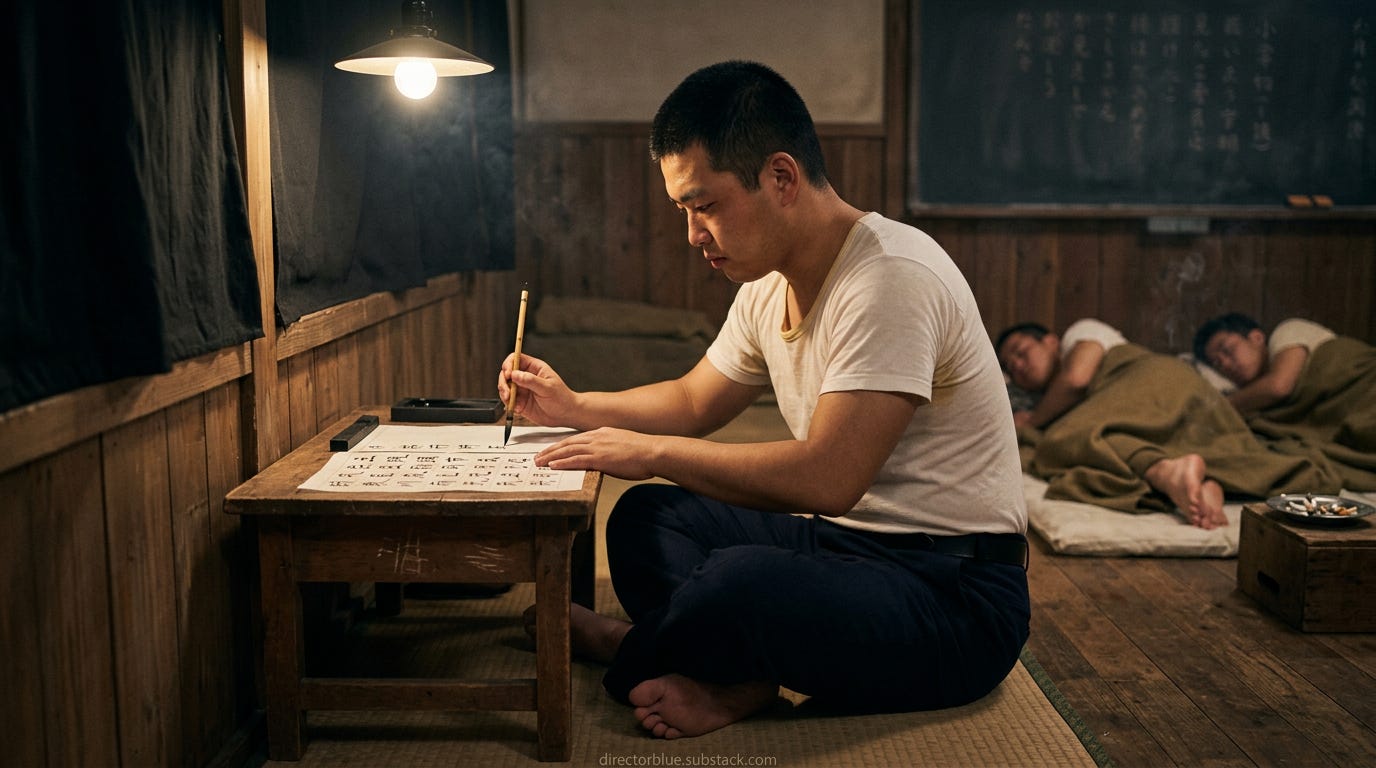
The blackout cloth is pinned tight, and the only light is a shaded bulb over a child-sized desk. You sit cross-legged on a plank floor with a brush and an inkstone. The room smells of wood, mildew, cigarette smoke and bodies that have not bathed. You write to your father and mother. You thank them for raising you. You tell them you will fly over calm clouds with a peaceful heart, that you can think about neither life nor death, and that you will go to the front smiling. You fold the paper into thirds and slide it into your flight-suit pocket, not the mail tray. You want this with you.
Date/time and location: Thursday, May 10, 1945, about 11:45 p.m. Same pilots’ billet near Kanoya Naval Air Base, Kagoshima Prefecture, Japan.
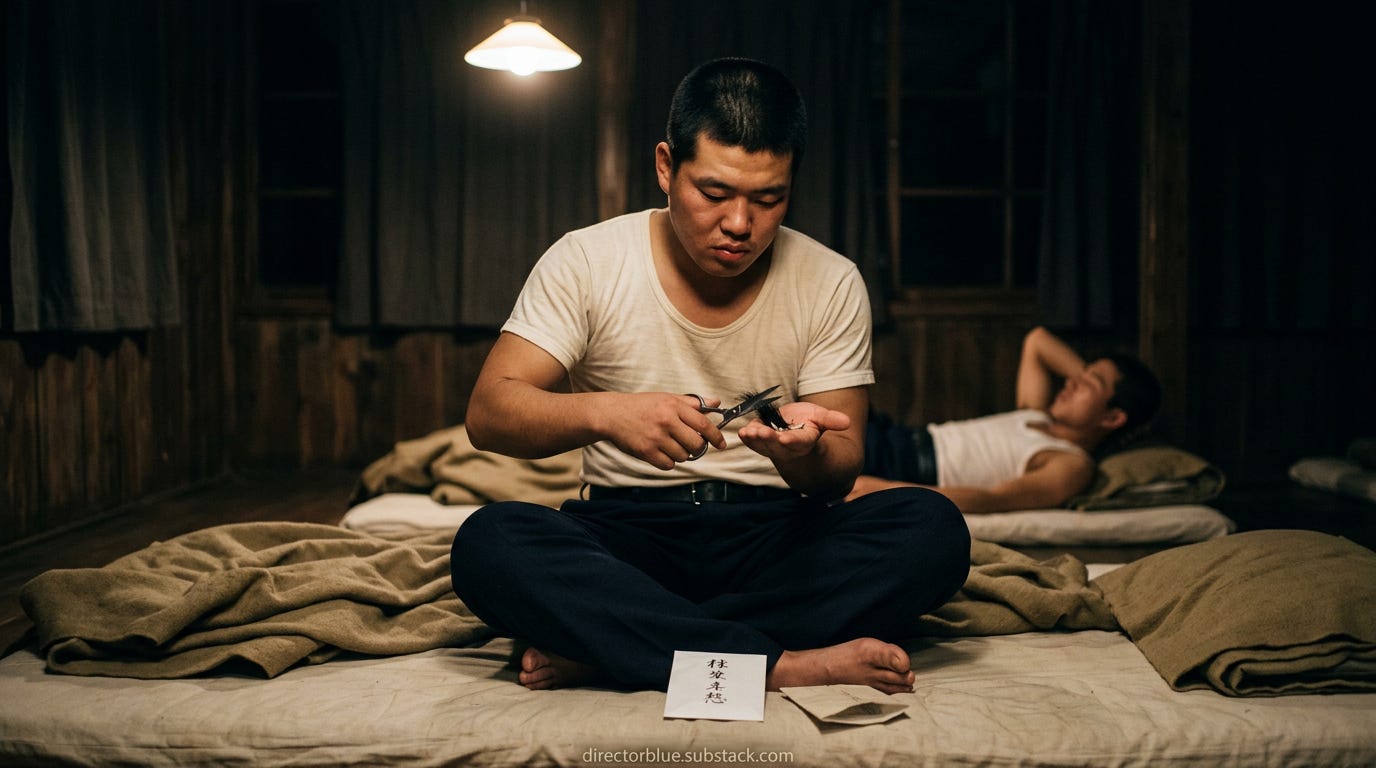
You can’t sleep. Few of you can. A pilot two futons over hums a folk song from home, just under his breath. You take out small scissors and cut your fingernails over a sheet of paper, one nail at a time. Then you snip a lock of your short black hair. You fold both into a white envelope and write your family’s address on the front. It is the custom. If nothing of your body comes home, this will. Frogs croak outside, loud and steady. Far off, an engine is being run up for testing. You lie back and stare at the ceiling beams.
Date/time and location: Friday, May 11, 1945, about 4:30 a.m. Outdoor concrete washing trough behind the schoolhouse billet, near Kanoya Naval Air Base, Kagoshima Prefecture, Japan.
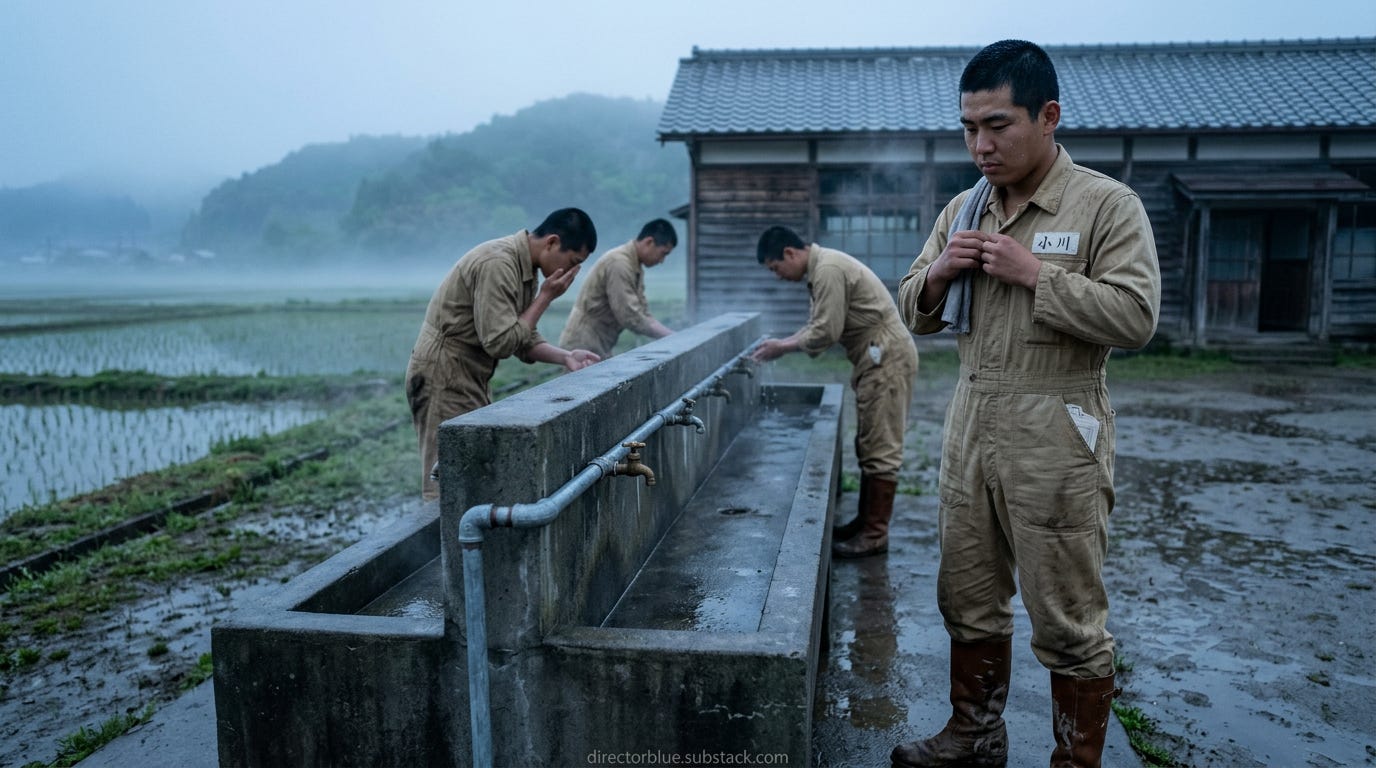
The air is cool and wet, and the sky over the hills is going from black to gray. You splash cold water on your face from a long concrete trough and brush your teeth with salt. The water smells of iron. Around you, the other pilots are silent. Nobody jokes. You dry off with a thin cotton towel and step into your khaki flight suit, then button it to the throat. Your fingers find the letter in the chest pocket, then the photographs. They’re still there. Out on the airfield, mechanics are warming up engines, and you hear a rough, coughing roar through the mist.
Date/time and location: Friday, May 11, 1945, about 5:15 a.m. Officers’ mess hut, Kanoya Naval Air Base, Kagoshima Prefecture, Japan.
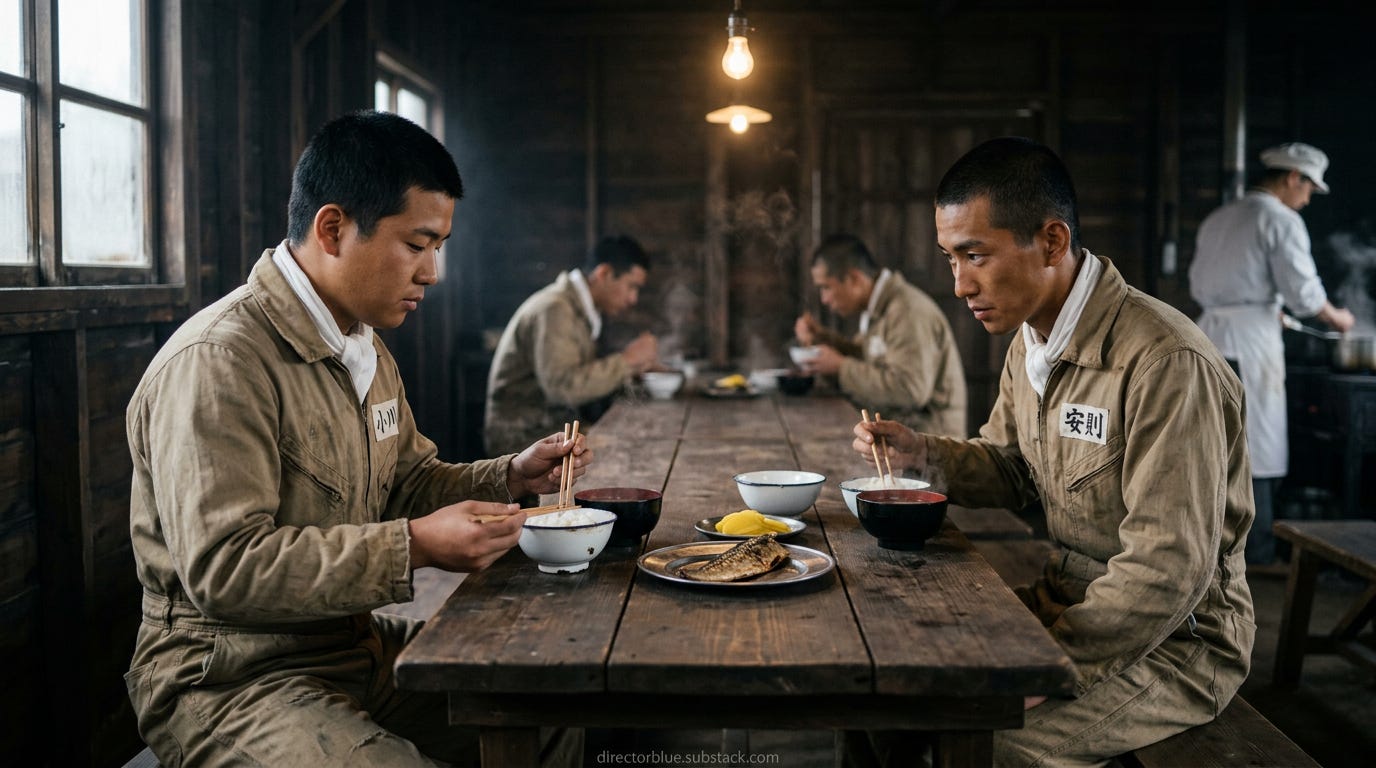
Breakfast is better than usual. You notice and know why. White rice instead of barley mix, plus miso soup, pickled daikon, and a decent piece of grilled fish. Across the rough table sits your flight leader, Sub-Lieutenant Yasunori, eating fast with his head down like the farm boy he was. He looks up once and nods. You nod back.
Date/time and location: Friday, May 11, 1945, about 5:50 a.m. Sandbagged command post beside the flight line, Kanoya Naval Air Base, Kagoshima Prefecture, Japan.
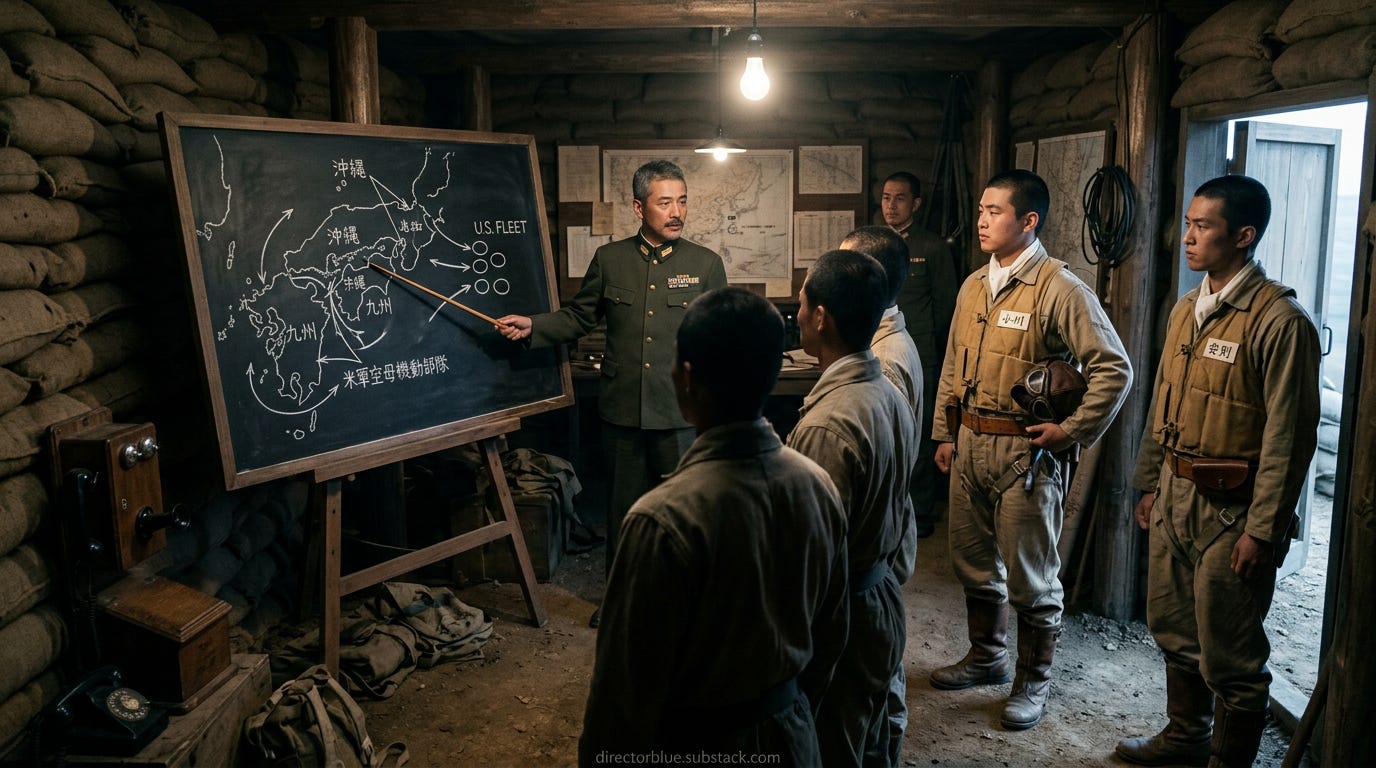
The briefing is short. A staff officer taps a chalkboard map with a pointer. American carrier groups were spotted east of Okinawa, about 350 miles south. There will be broken clouds, which is good cover. Stay low over the water to get under radar, then climb into the clouds near the target. Go for carriers. Aim for the flight deck at the base of the island, where it is most fragile. Drop the bomb at the last second, then hit. Nobody asks questions. You stand at attention with the others, helmet under your arm. Behind you, engines roar and sputter on the field. The officer ends with a bow, not an order.
Date/time and location: Friday, May 11, 1945, about 6:20 a.m. Flight line, Kanoya Naval Air Base, Kagoshima Prefecture, Japan.
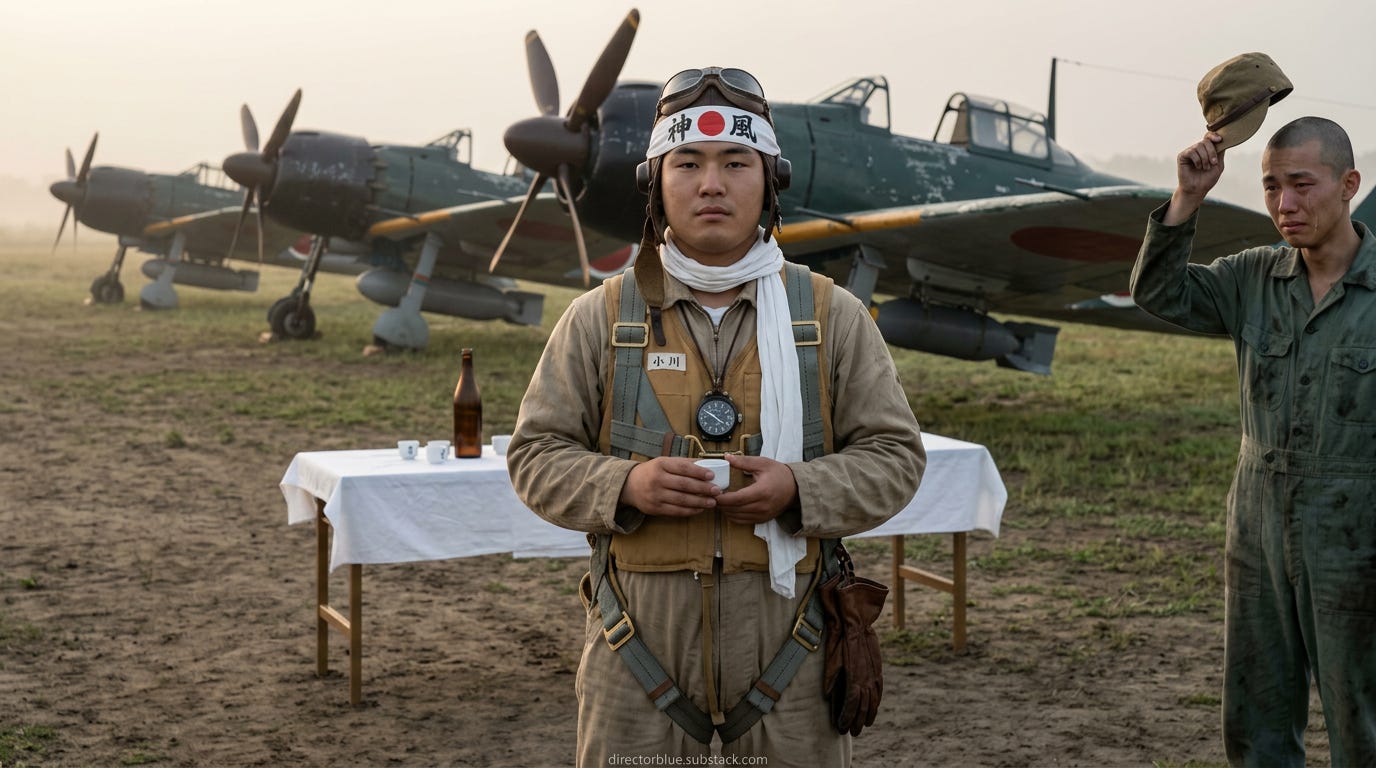
A folding table covered with a white cloth stands on the dirt by the runway. On it are small white cups and a bottle. The senior officers pour. You take your cup in both hands, raise it, and drink. It’s cold and tastes like nothing. A ground crewman ties a white hachimaki headband around your helmet, with a red sun in the middle and “Divine Wind” brushed on either side. The line of Zeros waits behind you, dark green and dripping with dew, each with a dull gray bomb slung under its belly. You salute and turn toward your plane. Mechanics wave caps. Three are crying.
Date/time and location: Friday, May 11, 1945, about 6:45 a.m. Cockpit of an A6M5 Zero fighter on the runway, Kanoya Naval Air Base, Kagoshima Prefecture, Japan.
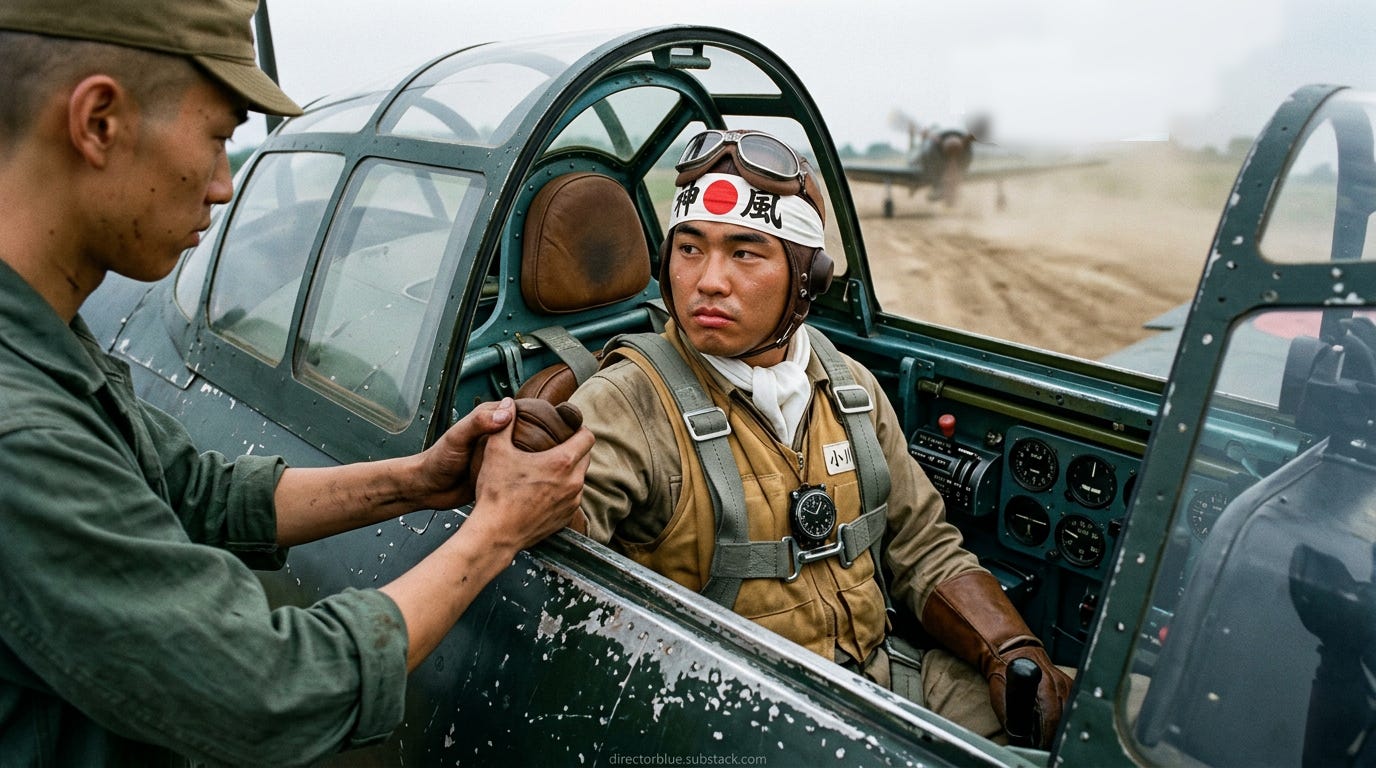
The cockpit smells of gasoline, hot oil, and sweat soaked in the seat. The engine shakes the whole airframe. Your mechanic stands on the wing root, leans in, and grips your gloved hand with both of his. He shouts something you can’t hear over the engine. You nod. He slides down. You check the gauges and fuel, then check the bomb release handle one more time. Yasunori’s plane lifts off ahead of you, heavy and slow. You push the throttle forward. The Zero sluggishly bounces down the strip, weighed down by a quarter-ton of explosive. Then the wheels leave the ground.
Date/time and location: Friday, May 11, 1945, about 7:15 a.m. At about 1,500 feet over the southern tip of Kyushu, near Mount Kaimon, Kagoshima Prefecture, Japan.
