

Time Surfing: Experience History.

Historical Backdrop
In early April 1862, a Union army under Ulysses S. Grant camped along the Tennessee River at Pittsburg Landing, waiting for reinforcements before pushing south into Mississippi. The camps were spread loosely across farm fields and oak woods near a small log church called Shiloh Meeting House. Confederate General Albert Sidney Johnston marched 44,000 men up from Corinth to hit Grant first. At dawn on Sunday, April 6, they did.
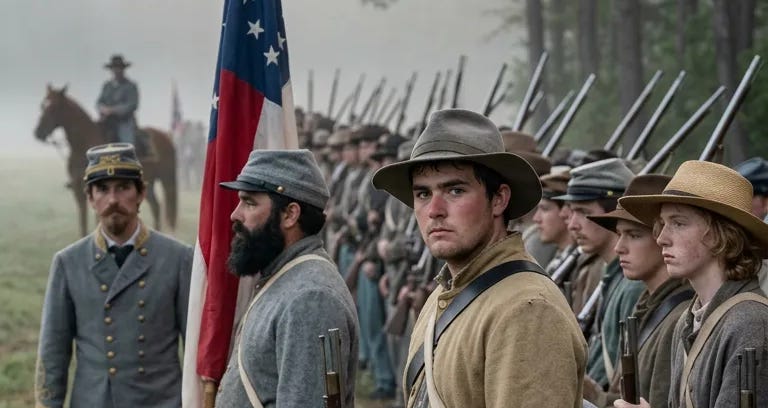
Our subject is a 21-year-old private named Henry Morton Stanley, raised in a workhouse, shipped to New Orleans as a cabin boy, and working as a store clerk in Cypress Bend, Arkansas, when the war came. A local girl mailed him a woman’s petticoat, an insult meaning coward. Shamed, he enlisted in the “Dixie Grays,” Company E, 6th Arkansas Infantry. Shiloh was his first battle.
Date/time and location: Sunday, April 6, 1862 — 3:40 a.m. — Confederate bivouac in the woods near Fraley Field, three miles southwest of Shiloh Church, Hardee’s Corps
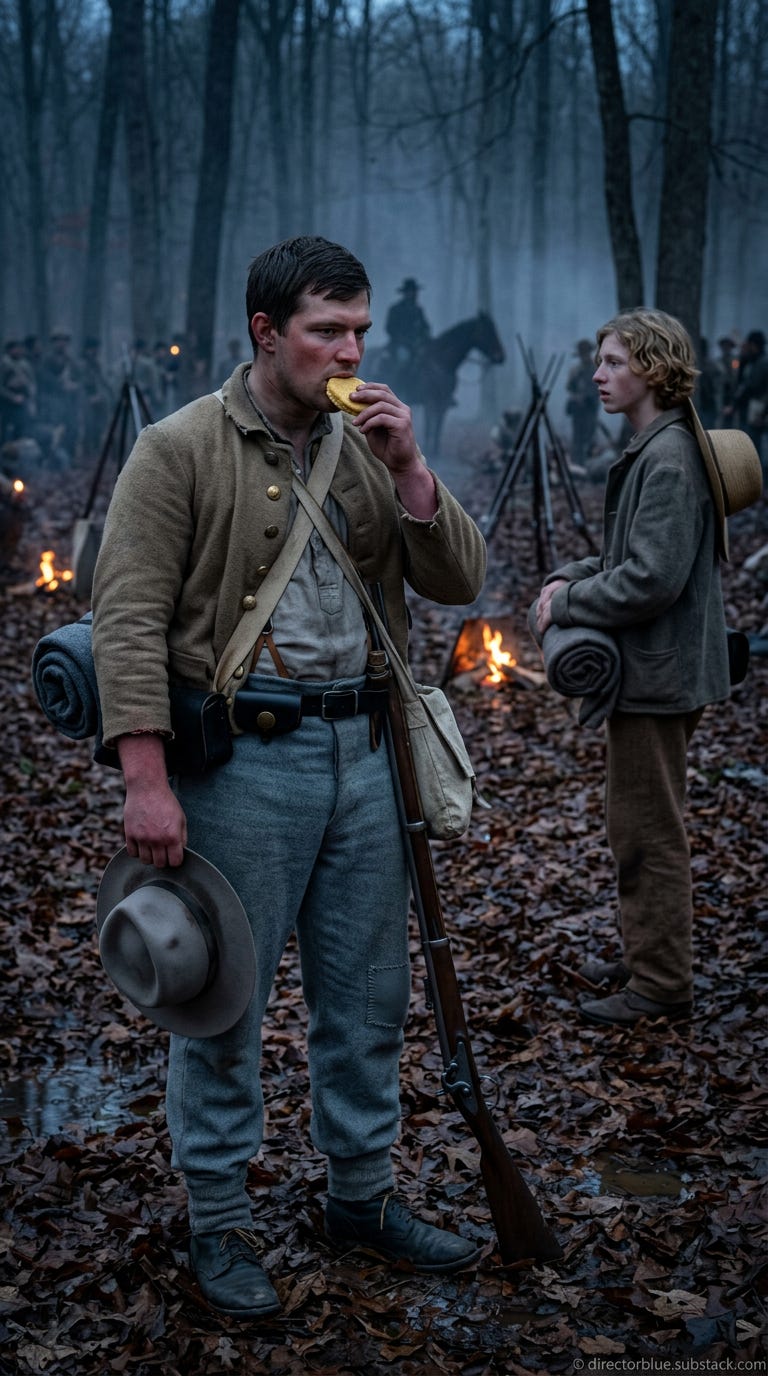
You wake to a boot nudging your ribs. No bugle, no drum — orders came down that noise means the enemy hears you coming. The ground is soaked from last night’s rain and your blanket has drunk it up. Your jacket is cold and heavy on your back. Around you, three thousand men rise out of the wet leaves like something turning over in a grave. Men whisper. Somebody’s teeth chatter. You chew a hard corn cake and drink brown water from a tin canteen and it tastes like the inside of the cork. Sergeants move down the line checking cartridge boxes by feel in the dark. Forty rounds. Twelve extra in your trouser pocket. Somewhere off to the right a horse stamps and a man curses it quiet. You can smell wet oak leaves, wool, unwashed men, and the faint sulfur of a struck match shielded under a hat.
Date/time and location: April 6, 1862 — 4:55 a.m. — forming line of battle at the edge of Fraley Field
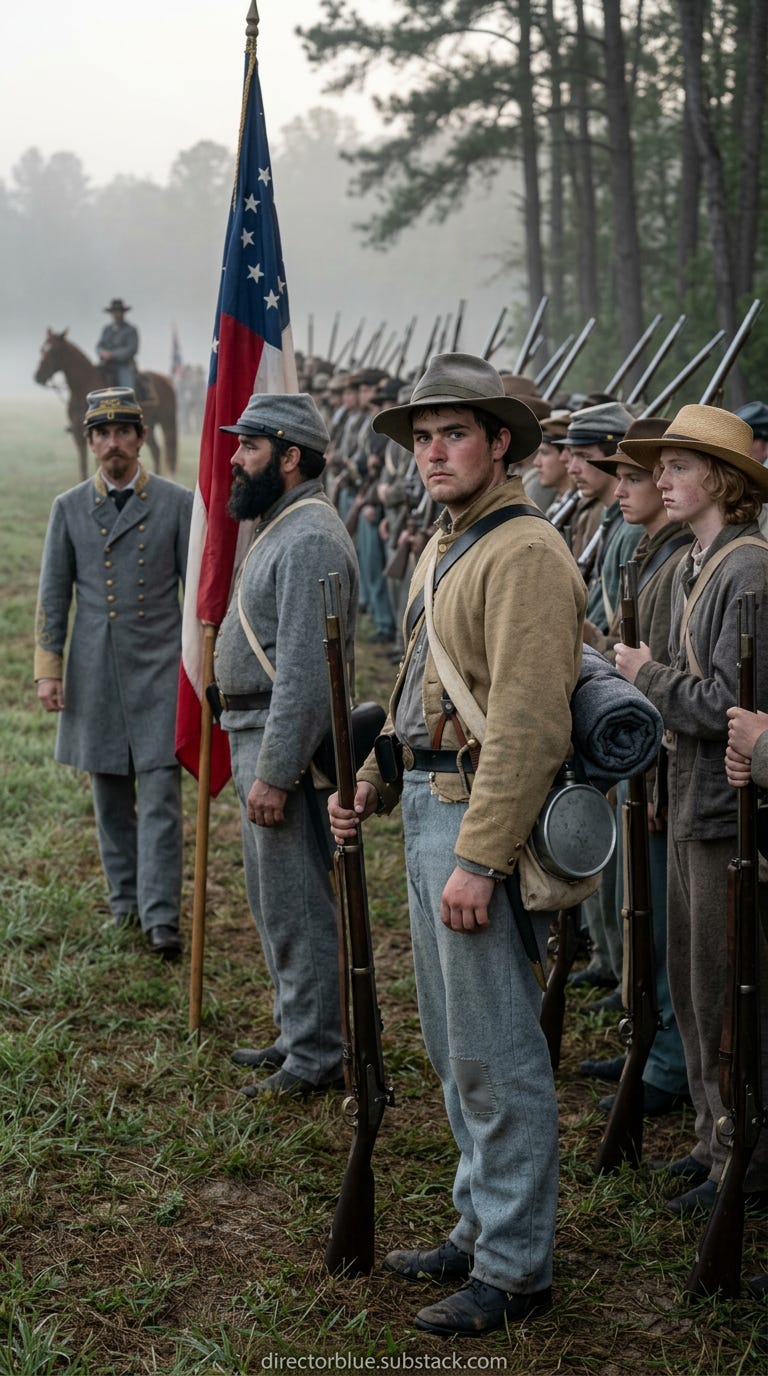
The sky goes from black to gray to pearl. Captain Smith walks the front of the company with his sword still sheathed and tells you to aim low, at the belt, because men fire high when they’re scared. You cap your musket and the little copper cone sits there like a bead of blood on the nipple. Big Newton Story shakes out the flag and the damp silk cracks once in the air. Nobody cheers. A man two files down is praying out loud and nobody tells him to stop. Off to the front, in the gray, you hear the first shots — flat, thin pops, like somebody snapping green sticks. Skirmishers. The sound goes through the line and every man’s face changes at once. Your mouth is so dry you can’t spit.
Date/time and location: April 6, 1862 — 6:05 a.m. — advancing through woods and a peach orchard toward Rhea Field
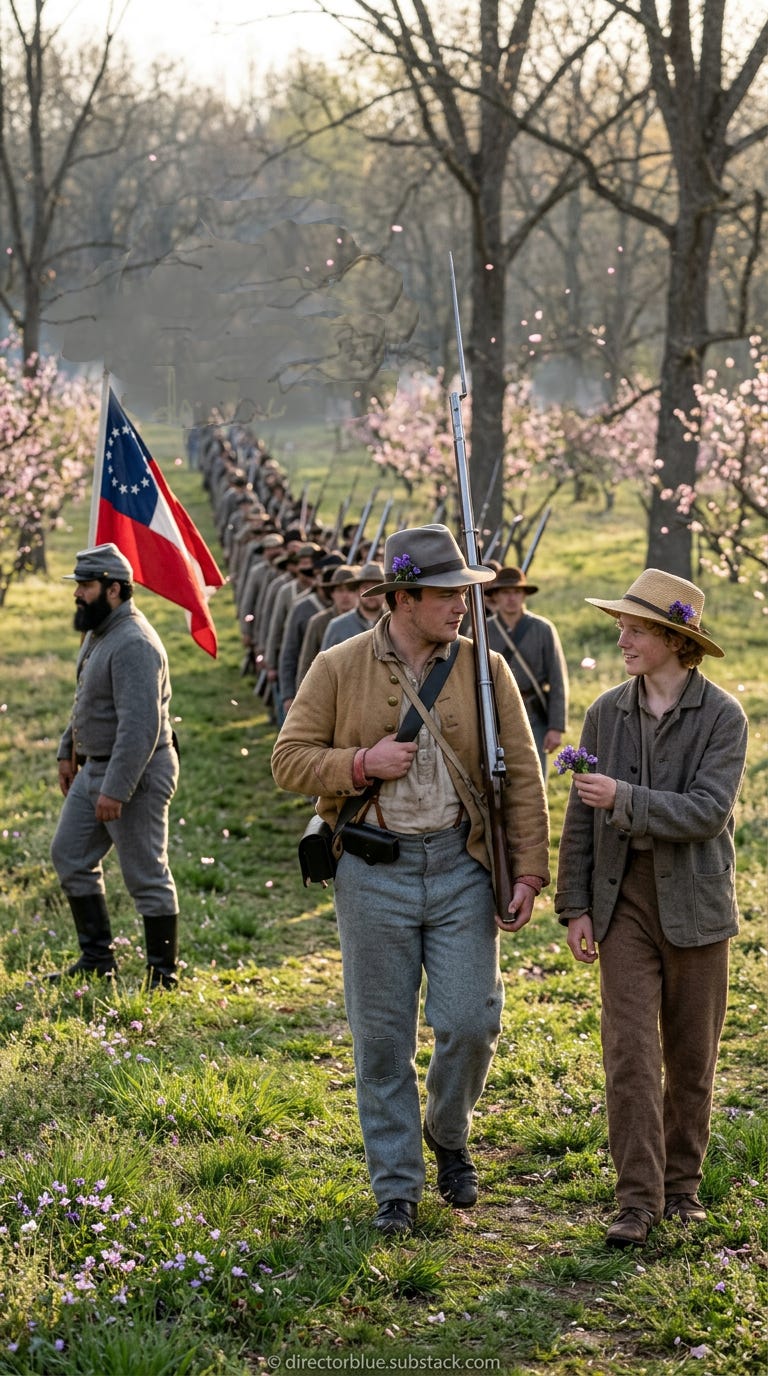
You step off. Eight thousand feet crushing wet leaves sounds like a slow river. The woods are full of April — dogwood white as bone, violets in the grass, peach blossoms coming down in the light wind like pink snow. Henry Parker stoops without breaking step and comes up with a fistful of violets and grins at you and says put these in your cap, maybe the Yankees won’t shoot us. You laugh at him. Then you take some anyway and stick them in your hatband. The line dresses right. Somebody’s canteen bangs a musket barrel and a sergeant hisses.
Date/time and location: April 6, 1862 — 6:20 a.m. — the first Union volley, edge of Rhea Field
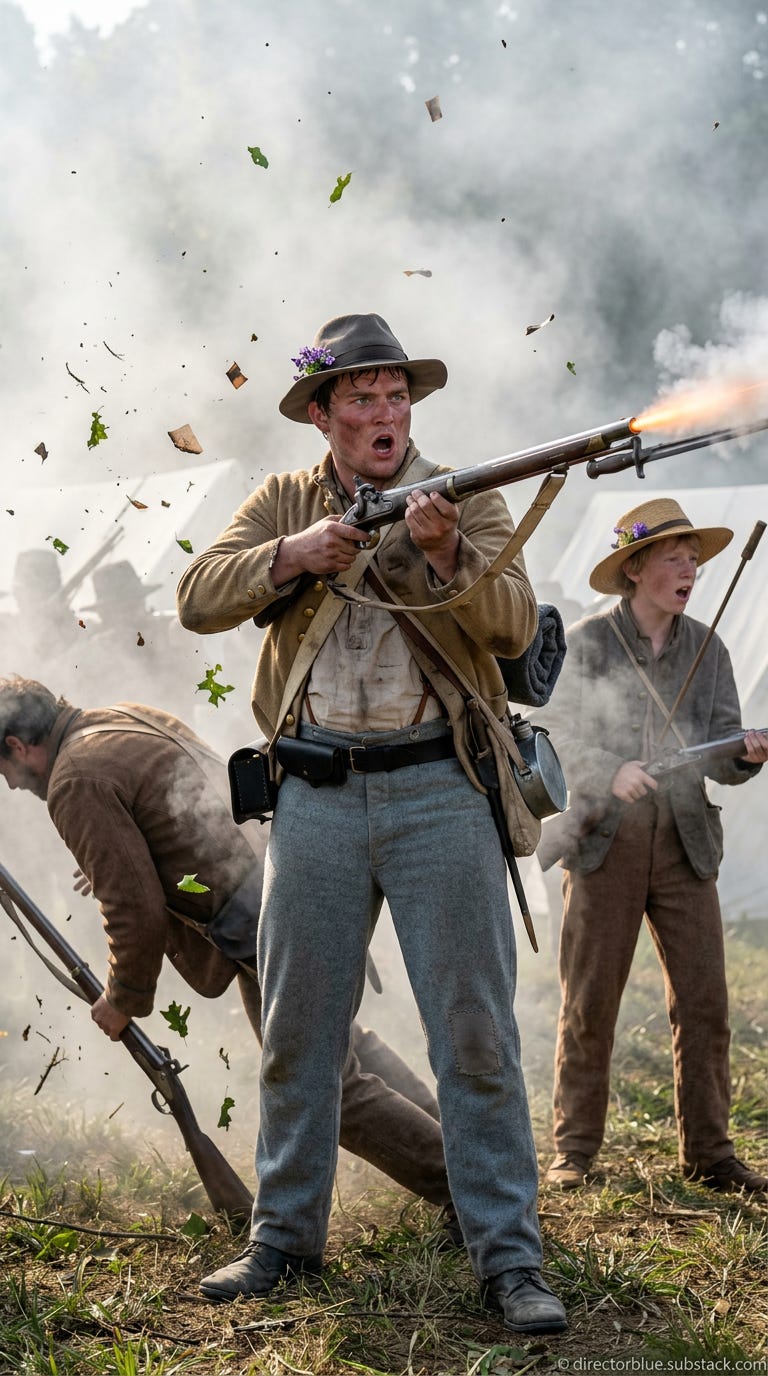
The volley comes at you like a wall falling. A sound and a pressure at the same time. Air splits past your ear with a hard flat crack you feel in your teeth. Leaves and twigs rain down. To your left a man says oh — just that, quiet, almost polite — and folds up on himself. The man in front of you drops his musket and sits down and looks at his hands. You bring your piece up, and you don’t remember aiming. The recoil kicks your shoulder like a mule. You bite the next cartridge and the powder tastes of salt and sulfur and the paper sticks to your dry tongue. Ram it. Cap it. Fire. Your face goes black with powder. Everything is smoke, and out of the smoke comes the yell — high, ragged, half scream — and you are running and yelling with them and you have no memory of deciding to.
Date/time and location: April 6, 1862 — 7:10 a.m. — overrunning a Union camp near Shiloh Church
