

Time Surfing: Experience History.
Historical Backdrop
For seven years and two months, New York City belonged to the British Army. Redcoats had taken it in September 1776, and a fire days later gutted a fifth of the town, leaving Trinity Church a burned shell and creating a slum of sailcloth-roofed ruins called Canvas Town. The city became the empire’s American headquarters and a magnet for Loyalist refugees — and for thousands of enslaved people who fled to British lines seeking the freedom promised by proclamation. Churches were turned into prisons, stables, and hospitals; American captives died by the thousands in the Sugar House jails and the prison hulks in Wallabout Bay.
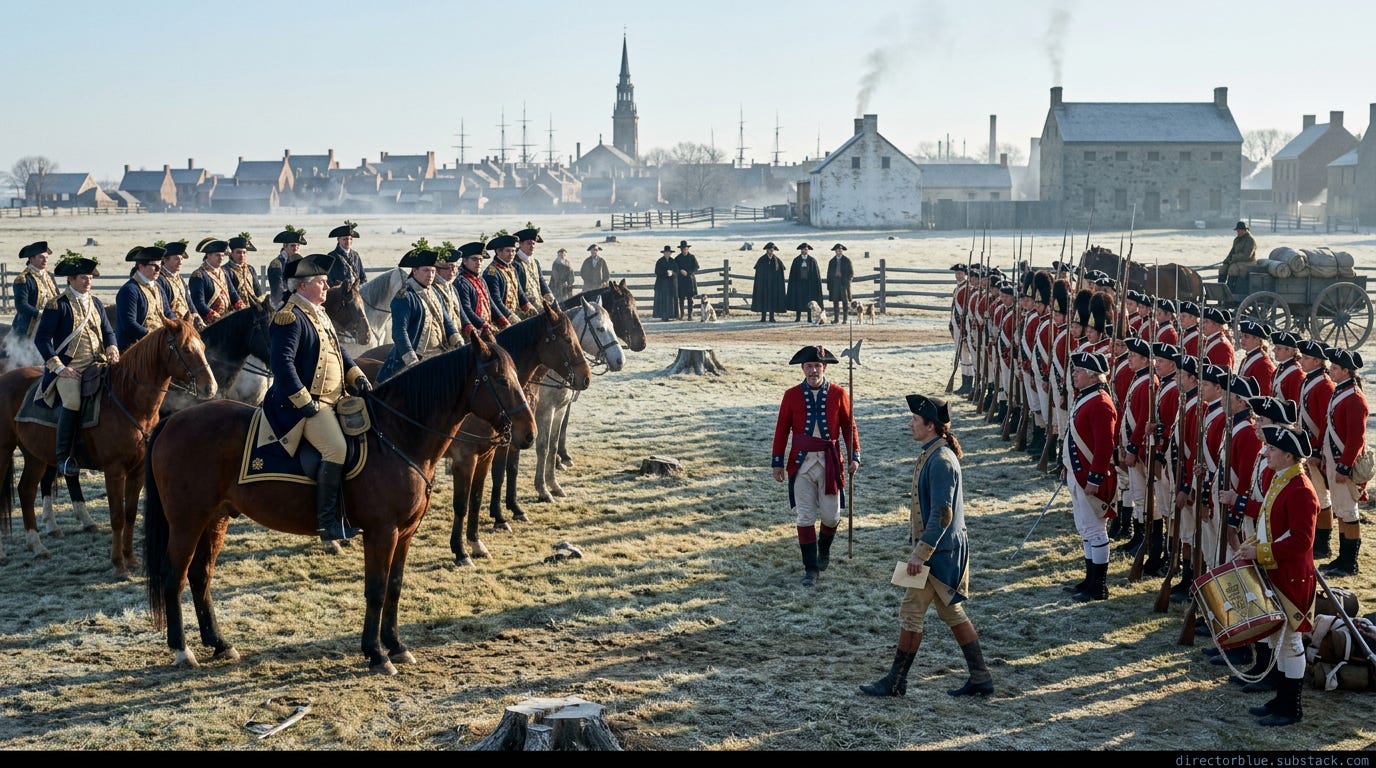
When the Treaty of Paris was signed in September 1783, Sir Guy Carleton began the largest evacuation of the war: roughly 30,000 troops and 27,000 civilians shipped out to Nova Scotia, Britain, and the Caribbean. The final handover was set for Tuesday, November 25. It was arranged almost minute by minute, so that no hour would pass with the city under no government at all. British troops would pull back to the wharves; American troops would step into each post as it emptied. At one o’clock, General George Washington and Governor George Clinton would ride down the Bowery into a city most of them had not seen since they lost it.
Date/time and location: Tuesday, November 25, 1783 — 4:50 a.m., Whitehall Slip, at the foot of Broad Street, New York City
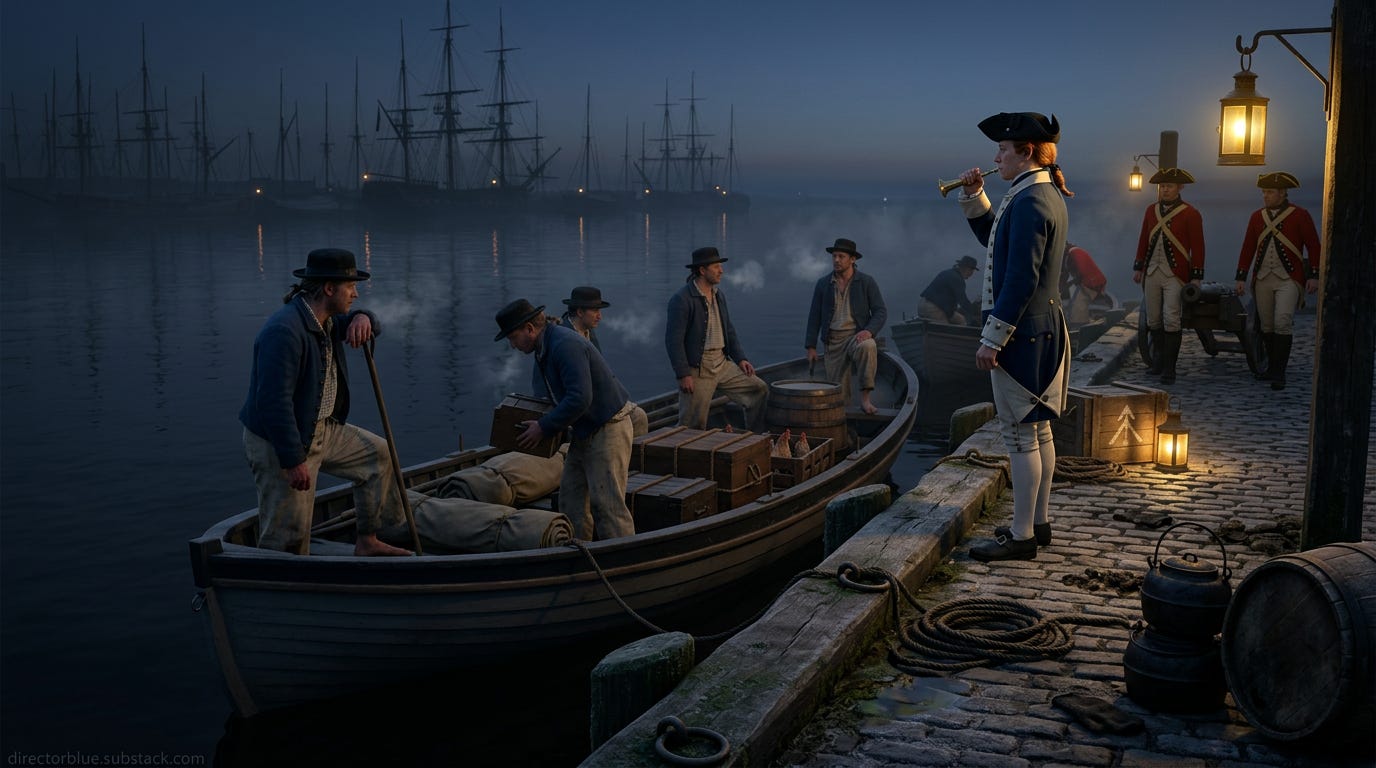
Hard frost on the cobbles and lantern light on black water. Flatboats push off loaded with camp kettles, tents, and sea chests while a bosun’s whistle cuts across the harbor, where sixty transports and warships ride at anchor with lanterns at their sterns. The smell is tar, wet rope, coal smoke, horse dung, and low-tide mud.
Date/time and location: 6:40 a.m., Queen Street (today’s Pearl Street), near Wall Street
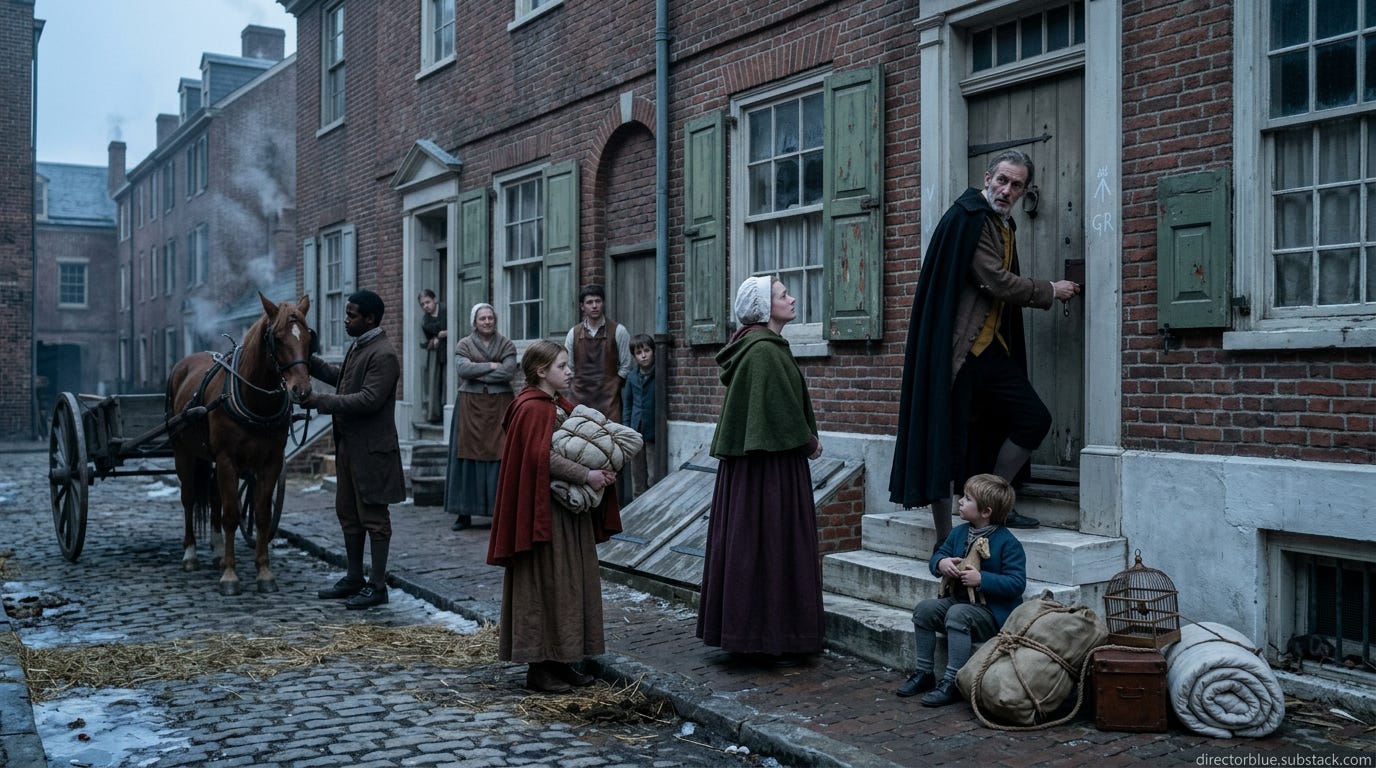
A Loyalist ship-chandler and his family lock the door of a house they will never see again. The furniture went at auction for pennies last week; what’s left is four bundles and a wooden toy horse. Neighbors watch from doorways and say nothing.
Date/time and location: 7:30 a.m., “Canvas Town,” the burned district near Broad and Water Streets
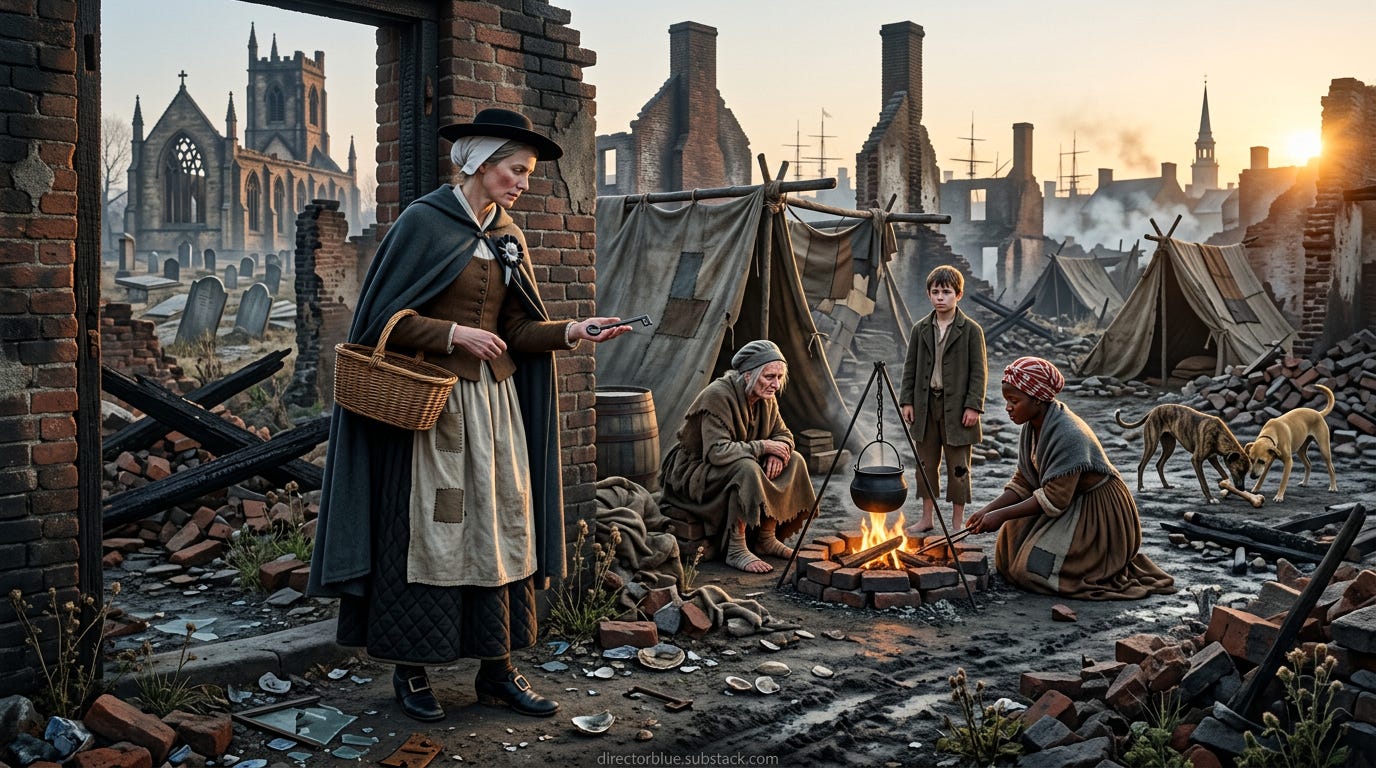
Sunrise on the ruins of the 1776 fire: roofless brick shells patched with old ship’s canvas, chimney stacks standing alone, cook fires in the rubble. A widow returned from seven years of exile stands in what used to be her front room, holding a key that fits nothing. Somewhere a dog is fighting over a bone, and the whole quarter smells of woodsmoke, urine, and wet ash.
Date/time and location: 8:45 a.m., a North River wharf near the foot of Cortlandt Street
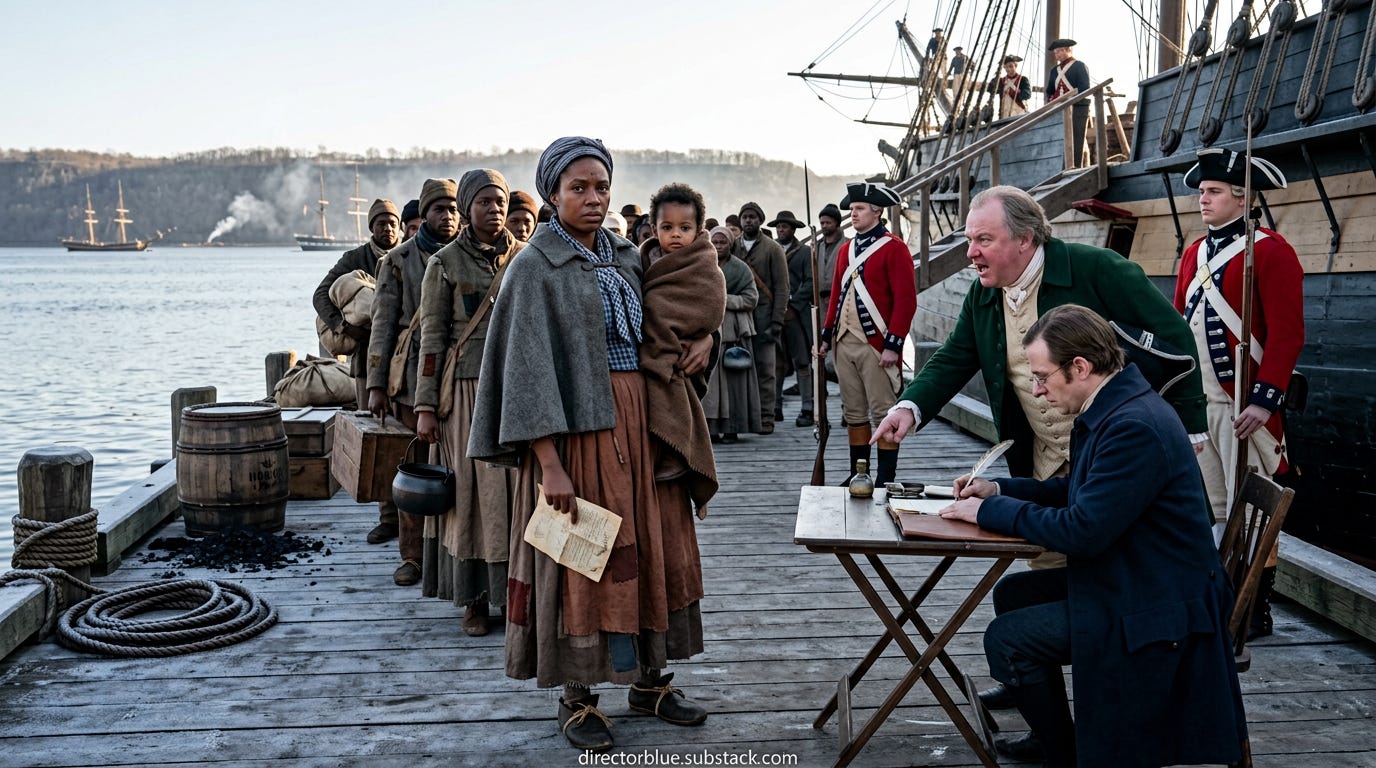
A Black Loyalist woman waits at the gangplank of a transport bound for Nova Scotia, her freedom certificate folded in her fist. A British clerk reads names off a ledger while a man in a good coat argues that one of the people in line is his property. The clerk does not look up.
Date/time and location: 9:30 a.m., the New Jail — “the Provost” — on the Common
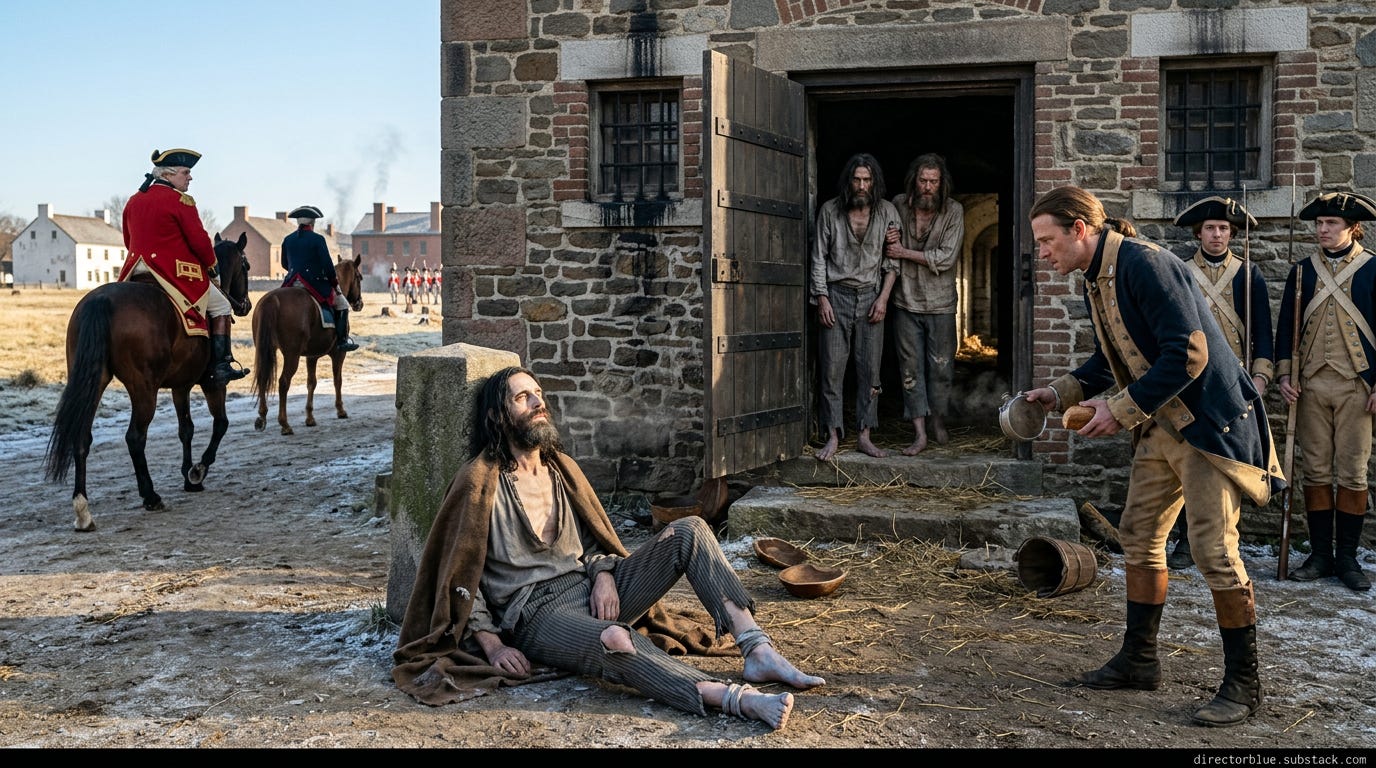
The doors of the provost prison stand open. Men who have been inside for years come out into daylight blinking, so thin their shirts hang like sails, and sit down on the frozen ground because they cannot stand. Two British jailers ride away fast toward the wharves and do not look back.
Date/time and location: 10:15 a.m., Fort George, at the foot of Broadway above the Battery
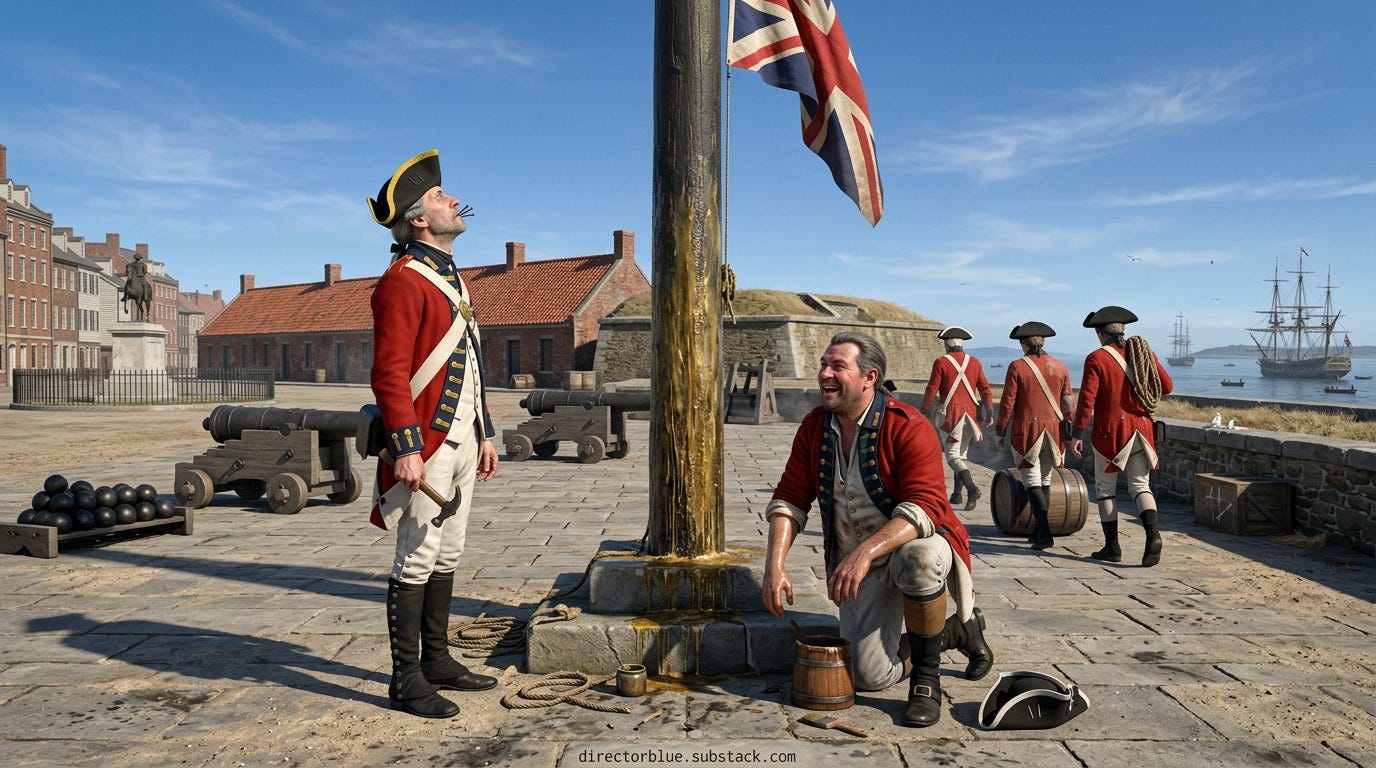
The last work of the British Army in America: nailing the King’s colors to the flagstaff, cutting away the halyards, and slathering the pole with grease from the base up. A bombardier laughs about it while he works. The idea is that the Americans will have their city, but not their flag over it.
Date/time and location: 11:00 a.m., Murray Street, a few doors off Broadway
