

Infographic: Why Most Countries Ban Mail-In Ballots
95% of Western Countries Ban Mail-in Ballots or Require Voter ID

Based on research by John R. Lott.
While American media outlets promote the view concerns about mail-in voting are “baseless,” the rest of the developed world has already rendered a verdict. From Paris to Tokyo, from Mexico City to London, democracies across the globe have either banned or greatly restricted mail-in ballots—not based on theory, but on hard experience. The data is clear: 74% of European nations prohibit domestic mail-in voting entirely, and 93% of EU countries either ban the practice or require photo identification. These restrictions didn’t emerge from partisanship; they were enacted after multiple fraud scandals threatened public trust in elections.
Which, after 2020, should sound familiar to those of us in the United States.
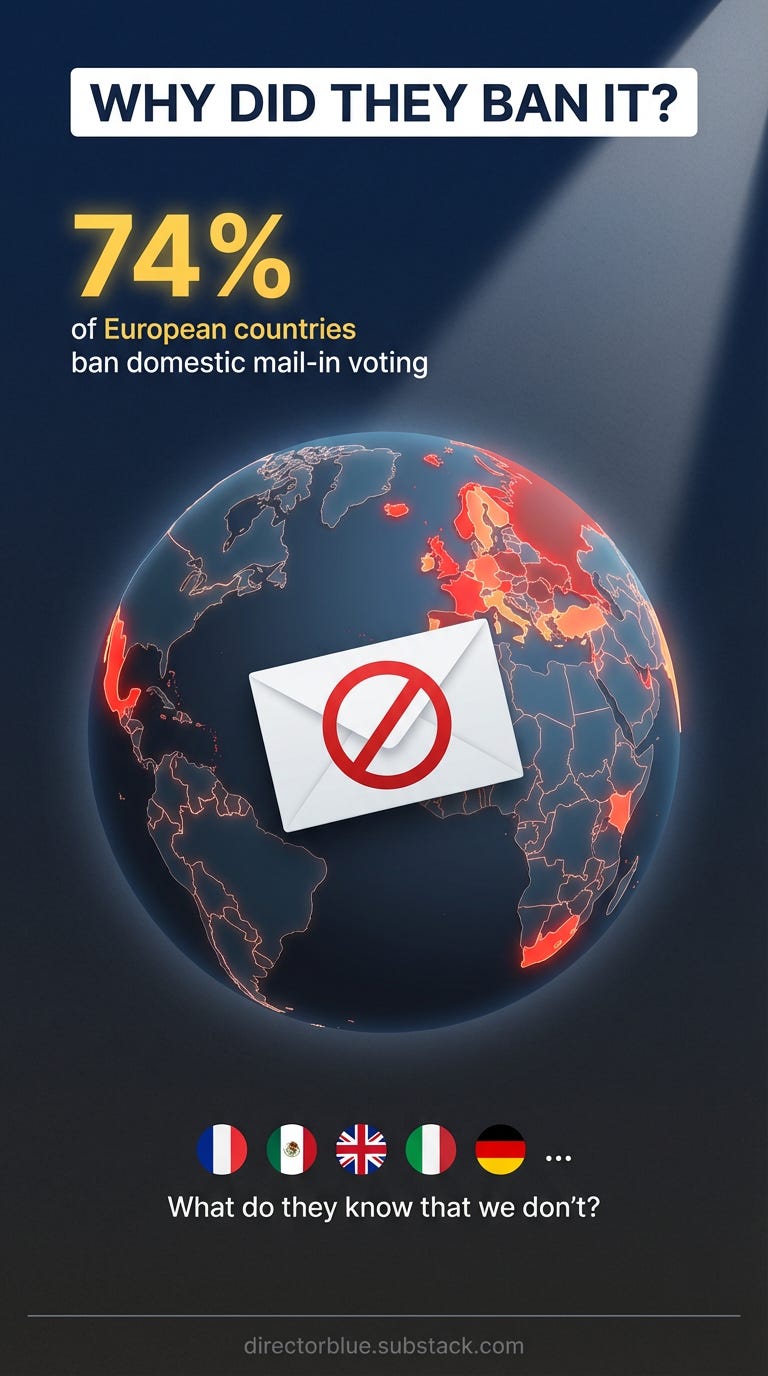
The United States stands virtually alone among developed democracies in its embrace of widespread mail-in voting. Across Europe, 74% of countries have banned the practice entirely for citizens living within their borders. The nations that do permit it almost universally require photo identification. From the OECD to the European Union, the consensus is overwhelming: mail-in ballots create unacceptable vulnerabilities. This isn’t American partisan rhetoric—it’s the settled policy of France, Germany, Italy, Japan, Mexico, and dozens of other democracies. The question Americans should be asking: why has most of the world reached this conclusion?
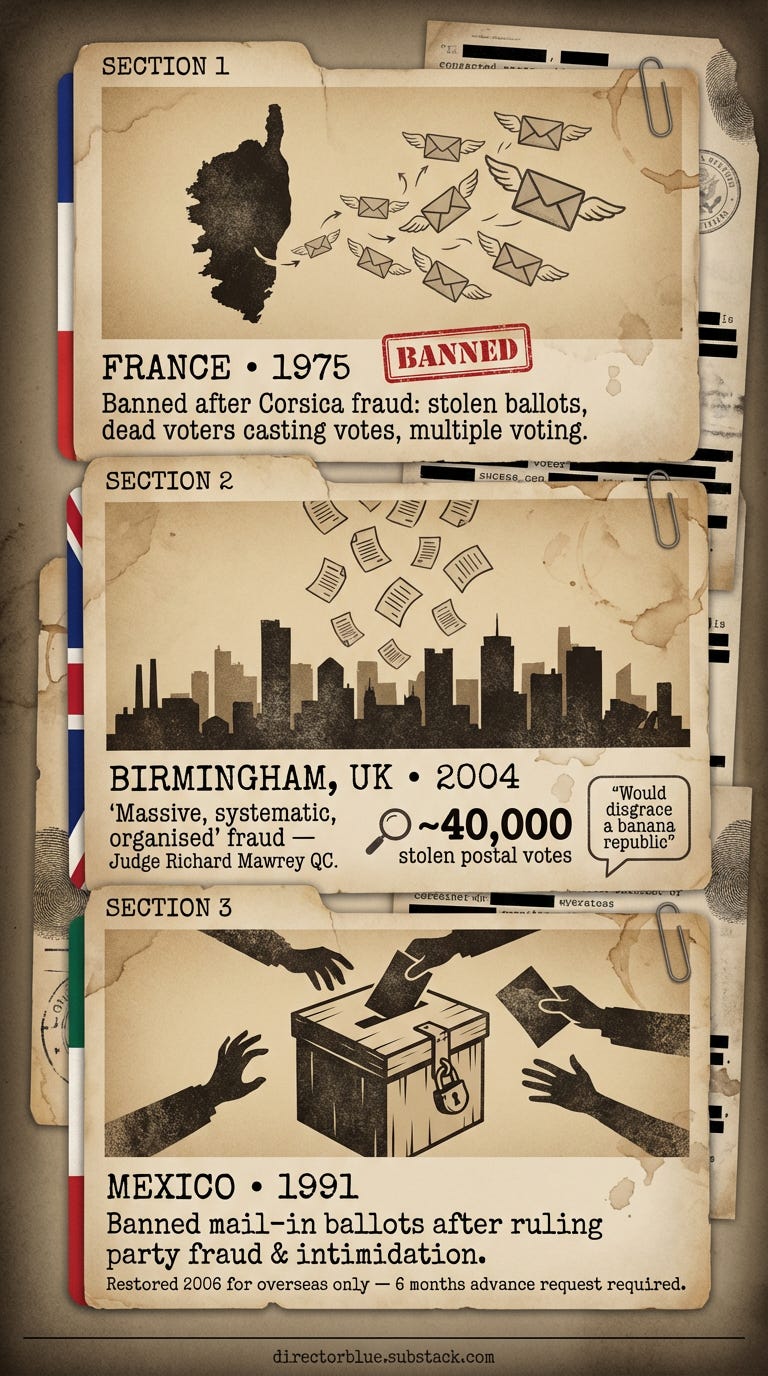
These restrictions weren’t born from theory—they emerged from crisis. France banned mail-in voting in 1975 after fraud scandals in Corsica exposed systemic abuses: stolen ballots, voters casting multiple votes, and ballots submitted in the names of the dead. Chicagoans have some familiarity with this phenomenon.
In Birmingham, England, a 2004 election was voided after a judge found “massive, systematic and organised” postal vote fraud—declaring the corruption “would disgrace a banana republic.” Approximately 40,000 postal ballots were stolen in Muslim-majority wards where Labour operatives sought to offset voter anger over the Iraq War. Mexico banned mail-in ballots in 1991 after the ruling party exploited the system for decades through fraud and intimidation. When these countries talk about election security, they speak from experience.
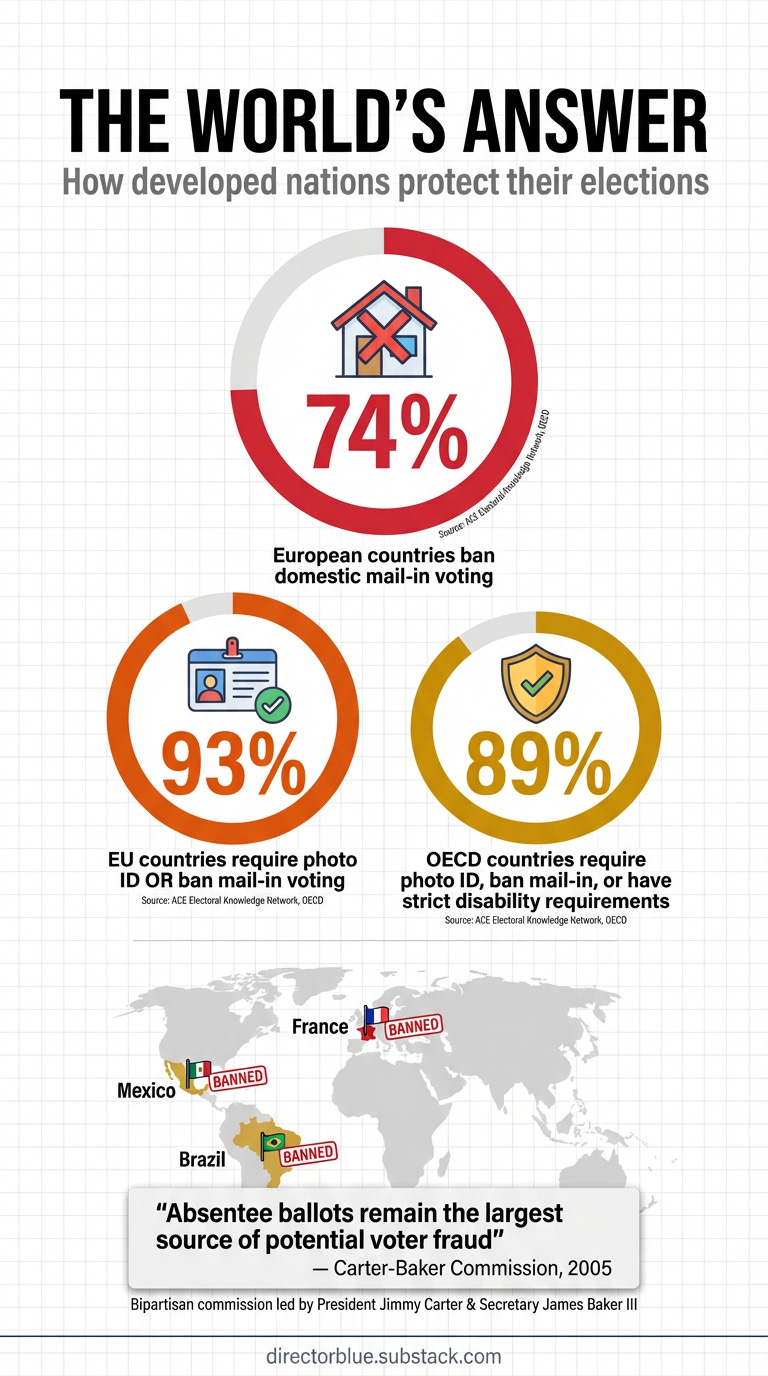
The numbers tell an unambiguous story. In the European Union, 93% of member nations either ban domestic mail-in voting or require photo identification to obtain a ballot. Across all of Europe, that figure reaches 95%. Among OECD countries—the world’s most developed economies—89% impose strict requirements: photo ID, outright bans, or limitation to disabled voters only. Even the 2005 Carter-Baker Commission, led by Democratic President Jimmy Carter and Republican Secretary of State James Baker III, concluded that “absentee ballots remain the largest source of potential voter fraud.”
The international standard is clear.
The question is whether America will meet it.
Call Sen. John Thune
The SAVE Act (Safeguard American Voter Eligibility Act) would require documentary proof of U.S. citizenship to register to vote in federal elections—a requirement common in democracies worldwide. The House passed H.R. 22 in March 2025, sending it to the Senate, where it faces the 60-vote filibuster threshold.
Scott Presler:

Senate Majority Leader John Thune (R-SD) has repeatedly pledged to protect the filibuster, calling it “a bulwark against a lot of really bad things happening.”
Gunther Eagleman:

As of January 16, 2026, the SAVE Act remains in limbo—leaving the United States without the citizenship verification requirements that most developed democracies consider fundamental to election integrity.
John Thune’s number is 1-202-224-2321 (DC) and 1-605-334-9596 (Sioux Falls). Be polite. Be firm. Pass the SAVE Act to save America.
Based on research by John R. Lott.
Enjoying these infographics? Please consider a Paid subscription with access to Subscriber-only Chat, the Time Travel Series, Spygate - and other goodies!
The Illustrated Spygate is online - and available on Kindle and in paperback!
Can’t they just nuke the filibuster, and then, God forbid, if in the future they lose their majority in an election, just vote it back in during lame duck session?
Seems like a no brainer to me.