

A Day When Science Looked Through Flesh for the First Time, 1895
Time Surfing: Graphic History
Time Surfing: Experience History Firsthand.

Historical Backdrop
On November 8, 1895, physics professor Wilhelm Conrad Röntgen, working alone in his laboratory at the Physical Institute of the University of Würzburg, discovered an invisible ray that could pass through solid matter. He called these rays “X-Strahlen” – X-rays – and spent the next six weeks investigating their properties. By December, Wilhelm had been shutting himself in his laboratory for hours at a stretch, drawn there before dawn by an idea he could not put aside. Our subject is his wife, Anna Bertha Ludwig Röntgen, a 56-year-old Dutch-born woman living a quiet domestic life in their apartment near the institute, largely unaware that her husband’s obsession would make her the unwitting subject of the world’s first medical X-ray.
December 22, 1895 — 5:20 AM — Röntgen apartment bedroom, Pleicherring, Würzburg, Bavaria, Germany

You wake alone in the dark. The bed beside you is cold; Wilhelm left before sunrise again. Frost coats the inside of the windowpane. You pull your shawl tight and light a single candle, listening to the wind rattle the shutters outside.
December 22, 1895 — 6:45 AM — Kitchen, Röntgen apartment, Würzburg

You stand at the coal stove stirring porridge. The maid, Greta, arrives stamping snow off her boots. Steam rises from the kettle. You set aside a covered dish and a wrapped loaf of bread — Wilhelm has not eaten since yesterday noon.
December 22, 1895 — 8:30 AM — Neumünster church square, Würzburg

Church bells toll across the rooftops. You walk past the church steps in the cold, breath fogging the air, clutching the food parcel. Worshippers in dark coats file toward the doors. You do not stop; your feet carry you instead toward the institute.
December 22, 1895 — 9:15 AM — Corridor, Physical Institute, Pleicherring, Würzburg
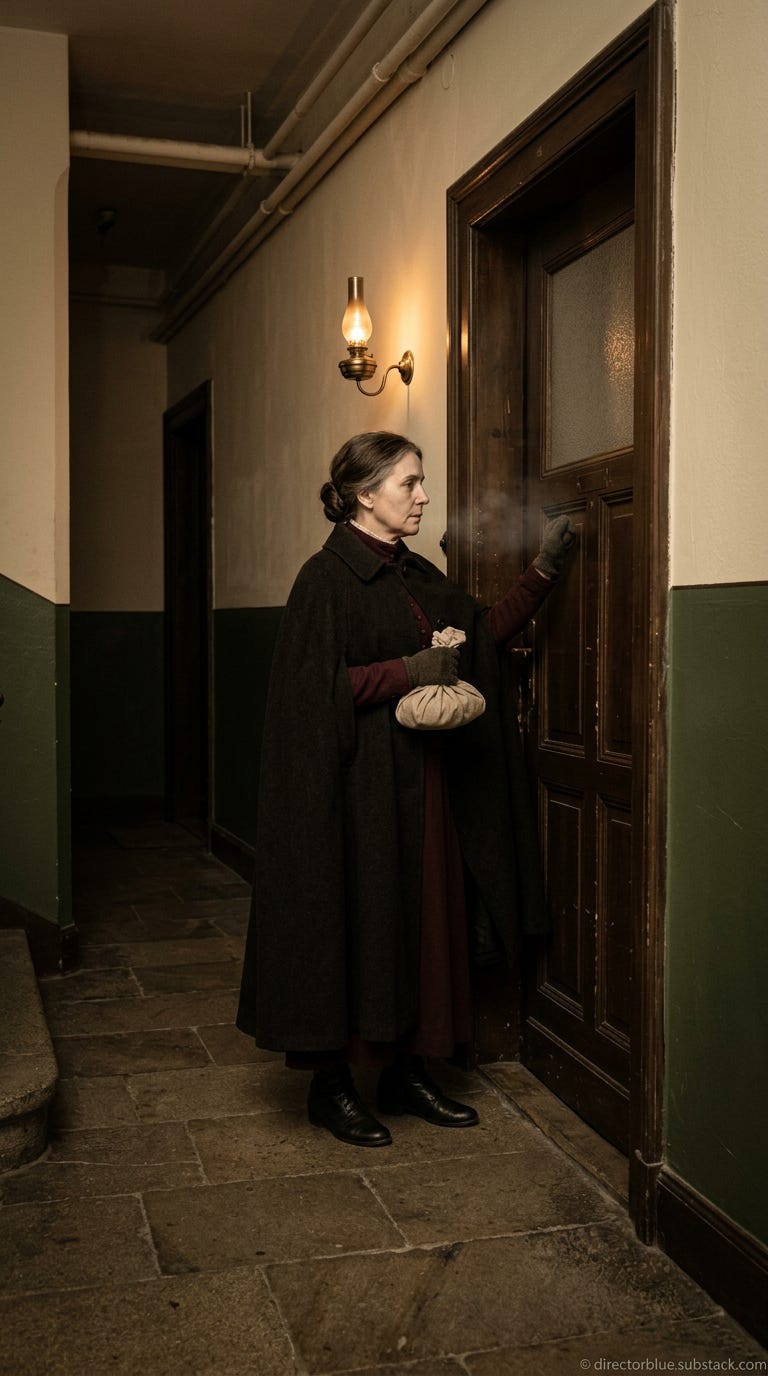
You climb the narrow stone stairwell of the institute, your boots echoing. The smell of ozone and machine oil grows stronger with each step. A gas lamp flickers along the corridor wall. You knock twice on the heavy laboratory door.
December 22, 1895 — 9:30 AM — Röntgen’s laboratory, Physical Institute, Würzburg
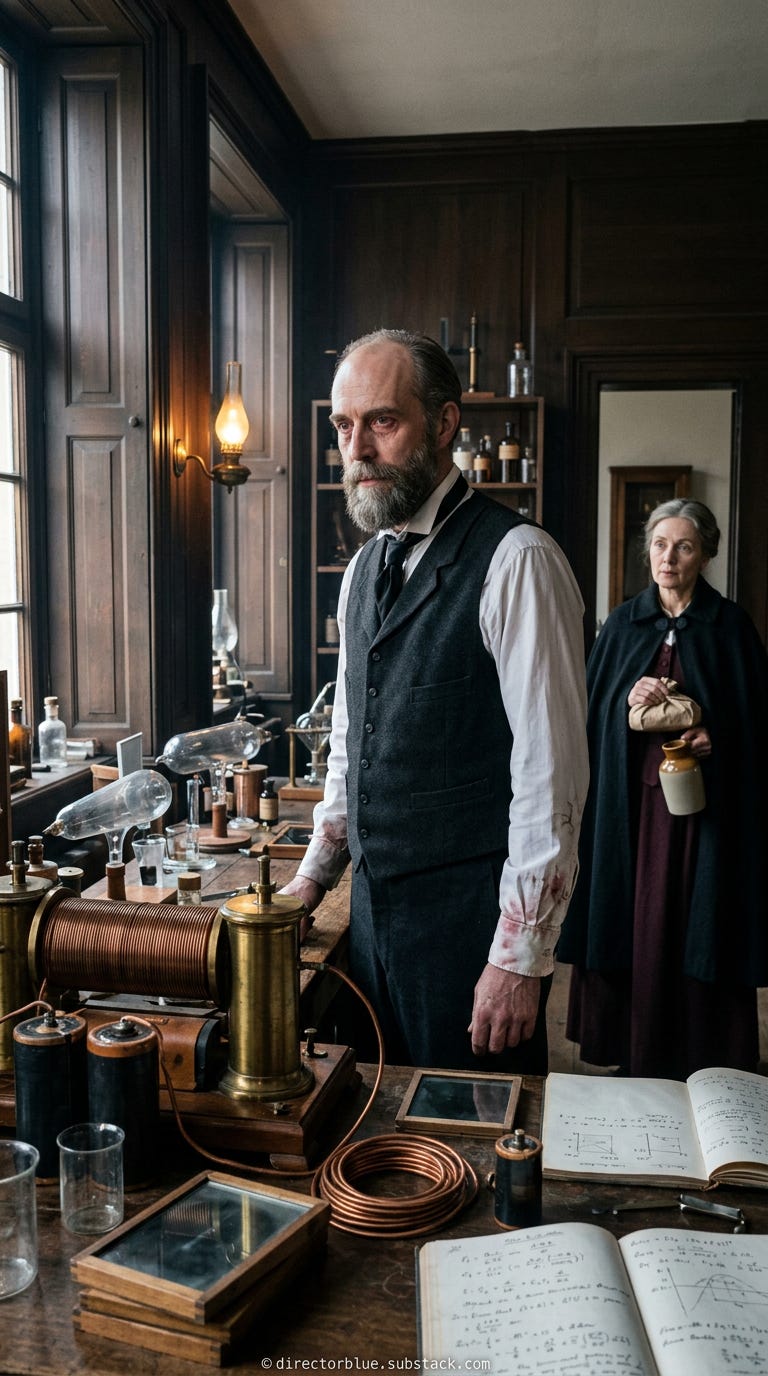
The door opens. Wilhelm stands amid a clutter of glass tubes and coiled wires, his shirt sleeves rolled, eyes bloodshot from lack of sleep. He barely looks up before gesturing you inside, already speaking of rays that pass through flesh.
December 22, 1895 — 12:15 PM — Röntgen’s laboratory, Würzburg
