

Greenland and Hypersonic Weapons - An Infographic
The Frontline of Defense

The unintentionally hilarious German media outlet DW.com — a public relations arm of the European Union — recently published an article entitled “5 graphics that show Greenland’s importance to Trump”. The graphics reflect a complete lack of interest in real issues. One of their charts, for instance, tracked the amount of ice melting in Greenland for the last 20 years.
But the critical diagram that author Matt Pearson omitted was this one.
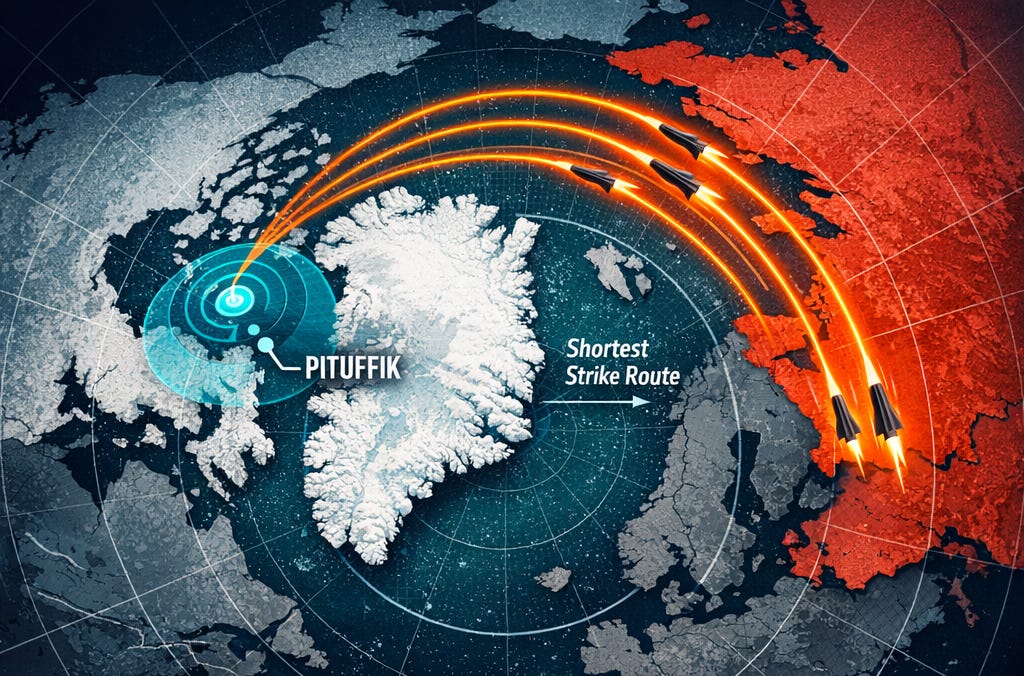
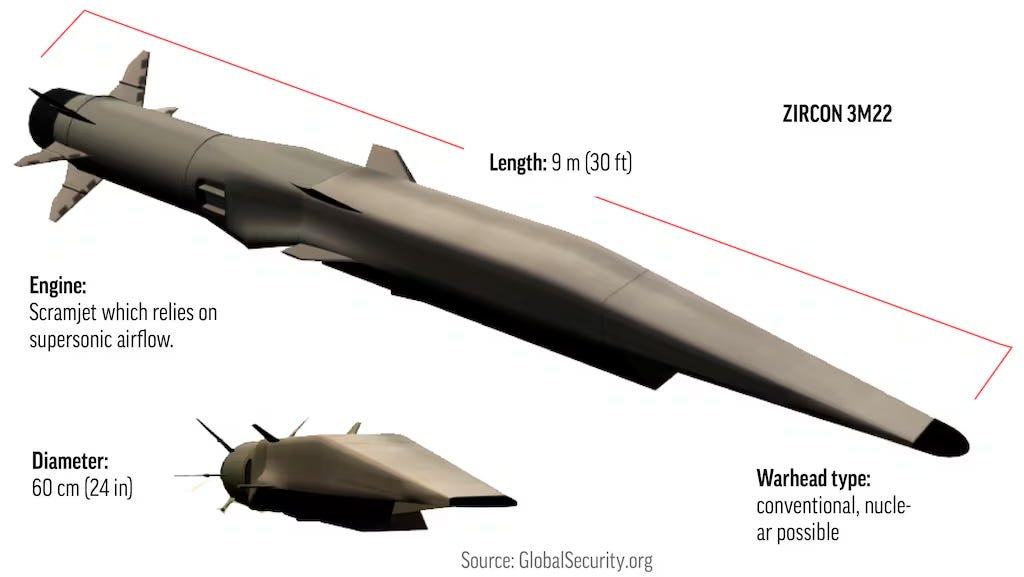
Russia’s hypersonic missile arsenal represents one of the most significant shifts in modern warfare—weapons capable of traveling at speeds exceeding Mach 5 (over 3,800 mph) while maneuvering unpredictably to evade traditional missile defense systems. Unlike conventional ballistic missiles that follow predictable arcs, hypersonic glide vehicles can change course mid-flight, giving defenders mere minutes—sometimes seconds—to detect, track, and respond. Moscow has aggressively tested these next-generation weapons from its Arctic bases, including the Avangard hypersonic glide vehicle and the Kinzhal air-launched missile, signaling a clear intent to hold American cities at risk through the polar corridor.
The threat trajectory is as chilling as the Arctic itself: the shortest path for a Russian nuclear strike on the continental United States runs directly over the North Pole and across Greenland. This isn’t Cold War nostalgia—it’s current strategic reality. As Russia reopens Soviet-era military installations and deploys hypersonic systems throughout its northern fleet, the once-frozen frontier has become the planet’s most consequential flashpoint. Traditional early warning systems designed for slower ballistic missiles are struggling to keep pace, leaving a dangerous gap in America’s defensive shield at precisely the moment adversaries are racing to exploit it.
The following infographic highlights the strategic importance of Greenland to the United States.
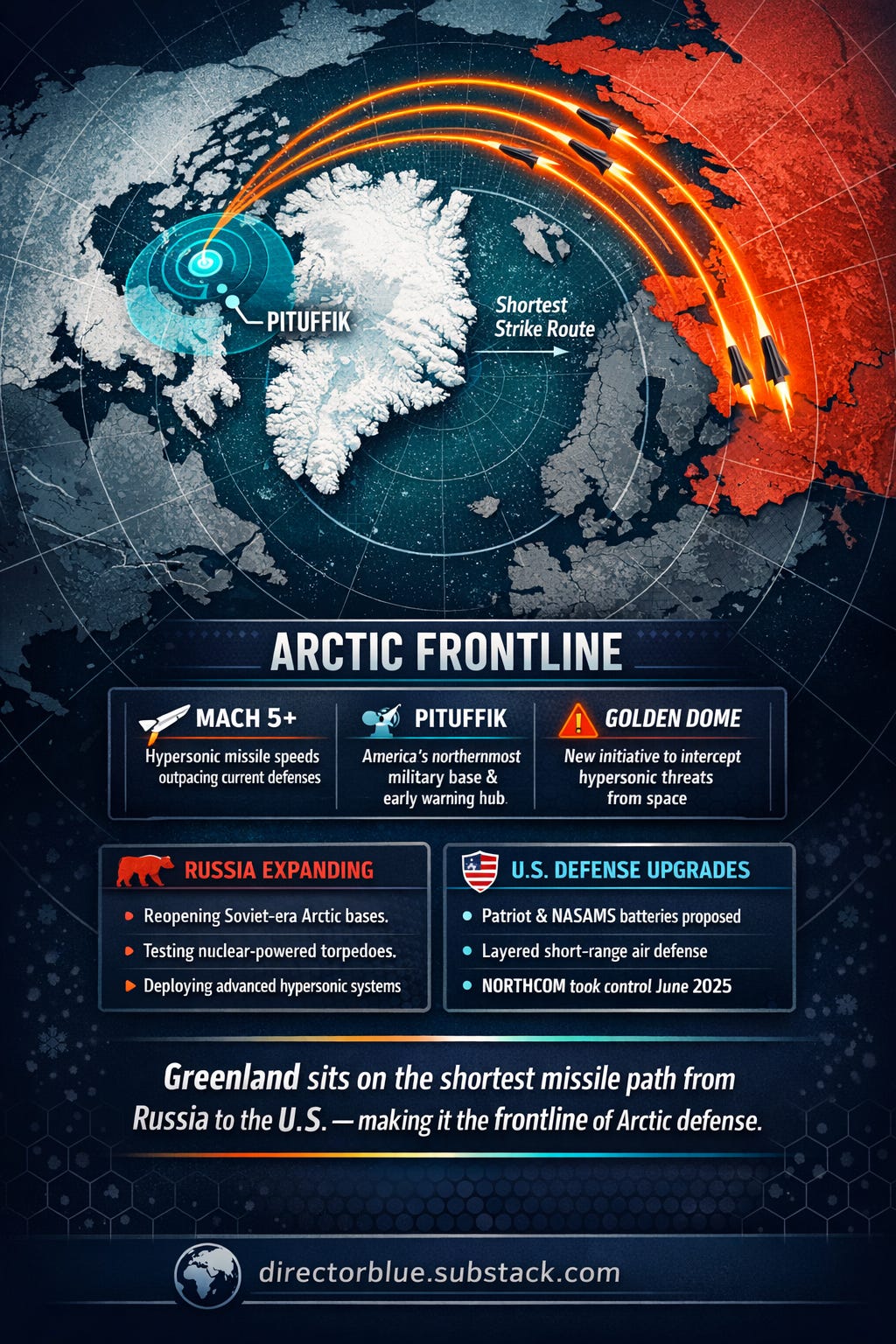
Greenland is not a Democrat punchline or a remote Arctic afterthought—it is the geographic centerpiece of American homeland defense in the 21st century. Whoever controls Greenland controls the radar arrays, sensor networks, and interceptor positions capable of detecting threats with precious additional minutes of warning time. Pituffik Space Base already serves as America’s northern watchtower, but the hypersonic era demands far more: layered air defenses, expanded tracking capabilities, and integration into the ambitious “Golden Dome” initiative. For the United States, Greenland represents the difference between seeing a threat coming and being caught blind. In the new Arctic chess match with Russia and China, this massive island isn’t just strategically important—it’s existentially essential.
The U.S. has paid for its defense since World War II. President Trump is 100% correct; the United States must control Greenland.
Enjoying these infographics? Please consider a Paid subscription with access to Subscriber-only Chat, the Time Travel Series, The Illustrated Spygate series - and other goodies!
The Illustrated Spygate is online - and available on Kindle and in paperback!
The question that needs to be posed to all the pearl-clutches over Trump’s insistence that the US control Greenland in some definitive way, especially in light of such information included in this article, the question should be this:
Who do feel you feel more comfortable with having the responsibility of protecting the Arctic airspace’s: Denmark or the US?
Case closed.
https://archive.globalpolicy.org/socecon/envronmt/weapons.htm
WTFU - there is a reason why ionospheric heater installs are located near the pole. Conventional weaponry is the least of the reasons.