

Time Surfing Washington, D.C.
A Fixed Drone View Across American History

Time Surfing is an experiment. Can we use the latest tools to see an area evolve from wilderness to the modern day? I’d love your comments and feedback! Earn rewards by Sharing this Sub; see the Leaderboard above for details!
Washington, D.C. was created to be the nation’s capital, but it did not begin as the grand ceremonial city people know today. In the late 1700s, the area was still a mix of riverbanks, farms, muddy roads, small settlements, and unfinished government buildings. Over time, wars, monuments, railroads, bridges, museums, protests, military ceremonies, and modern security reshaped the same ground. The National Mall became the clearest stage for America’s public memory, with the U.S. Capitol, Washington Monument, Lincoln Memorial, Reflecting Pool, museums, and crowds showing how the city grew from a rough federal district into a symbolic center of national life.
1. October 15, 1791 — Federal City Begins
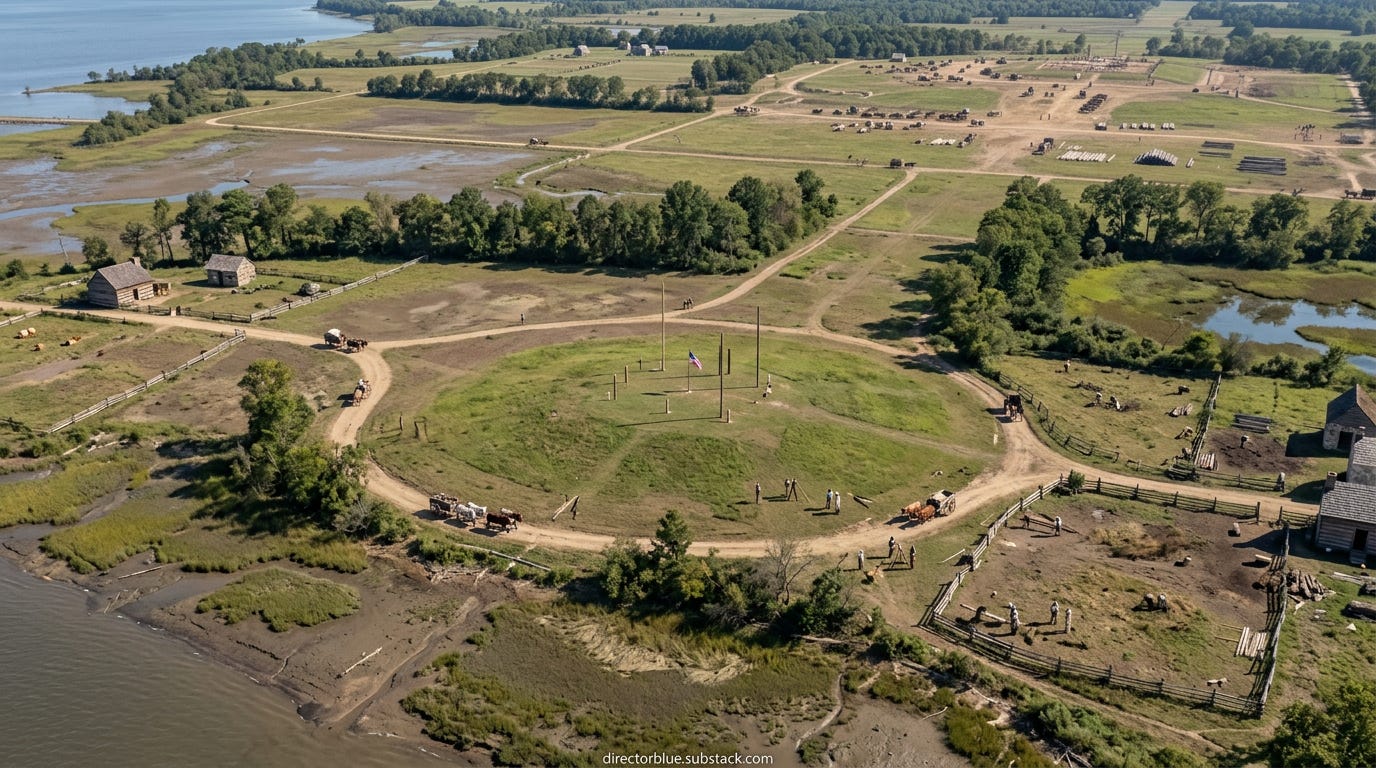
Washington, D.C. is still mostly open land, farms, riverbank, dirt roads, and early survey work. The future National Mall is not yet a formal civic space, and the future Washington Monument site is only open ground. The Potomac and Tiber Creek shape the landscape, while scattered workers, surveyors, wagons, and wooden markers show the planned capital beginning to take form.
2. August 24, 1814 — The Burning of Washington
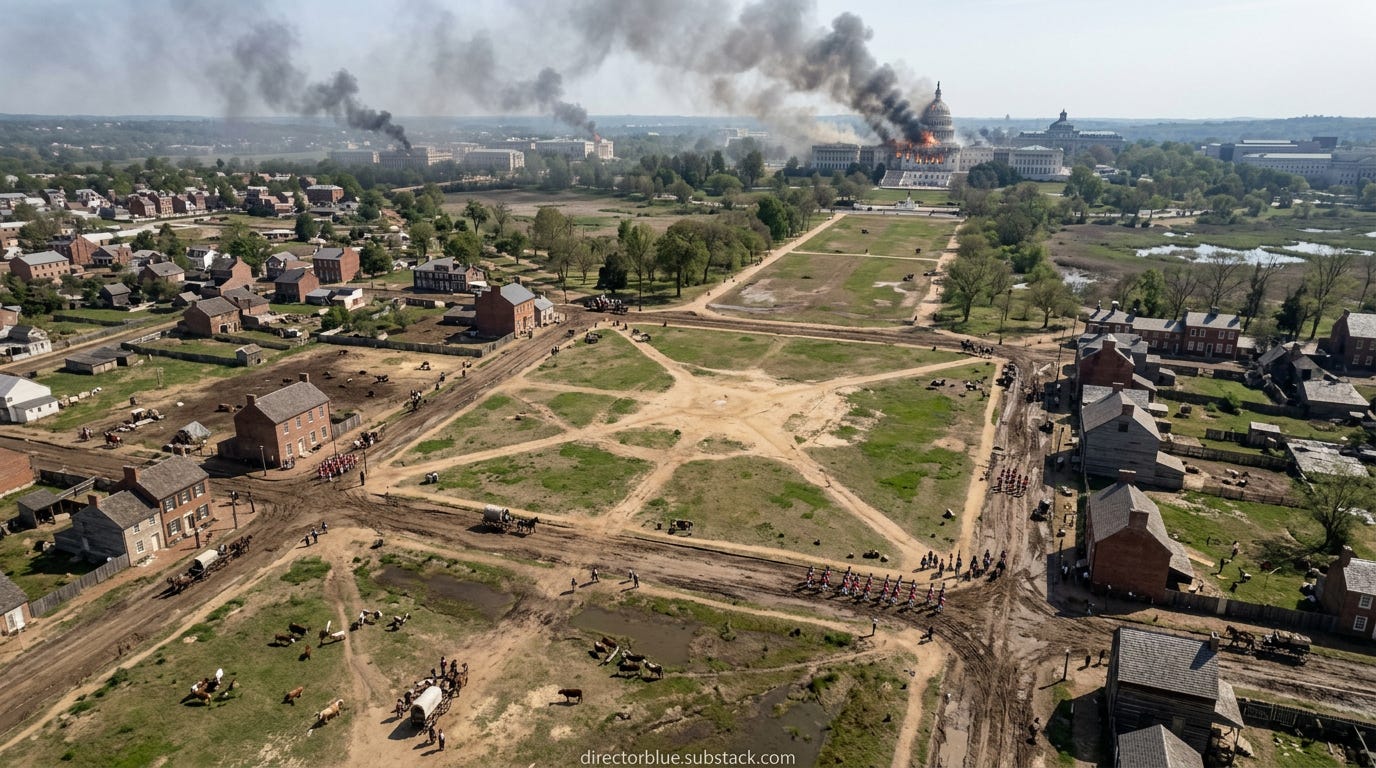
British troops have entered Washington during the War of 1812, and major public buildings are burning. From the fixed aerial view, the young capital looks raw and vulnerable. Smoke rises from the Capitol area and government buildings, while the future Washington Monument site remains empty ground in the same central position.
3. July 4, 1848 — Washington Monument Cornerstone
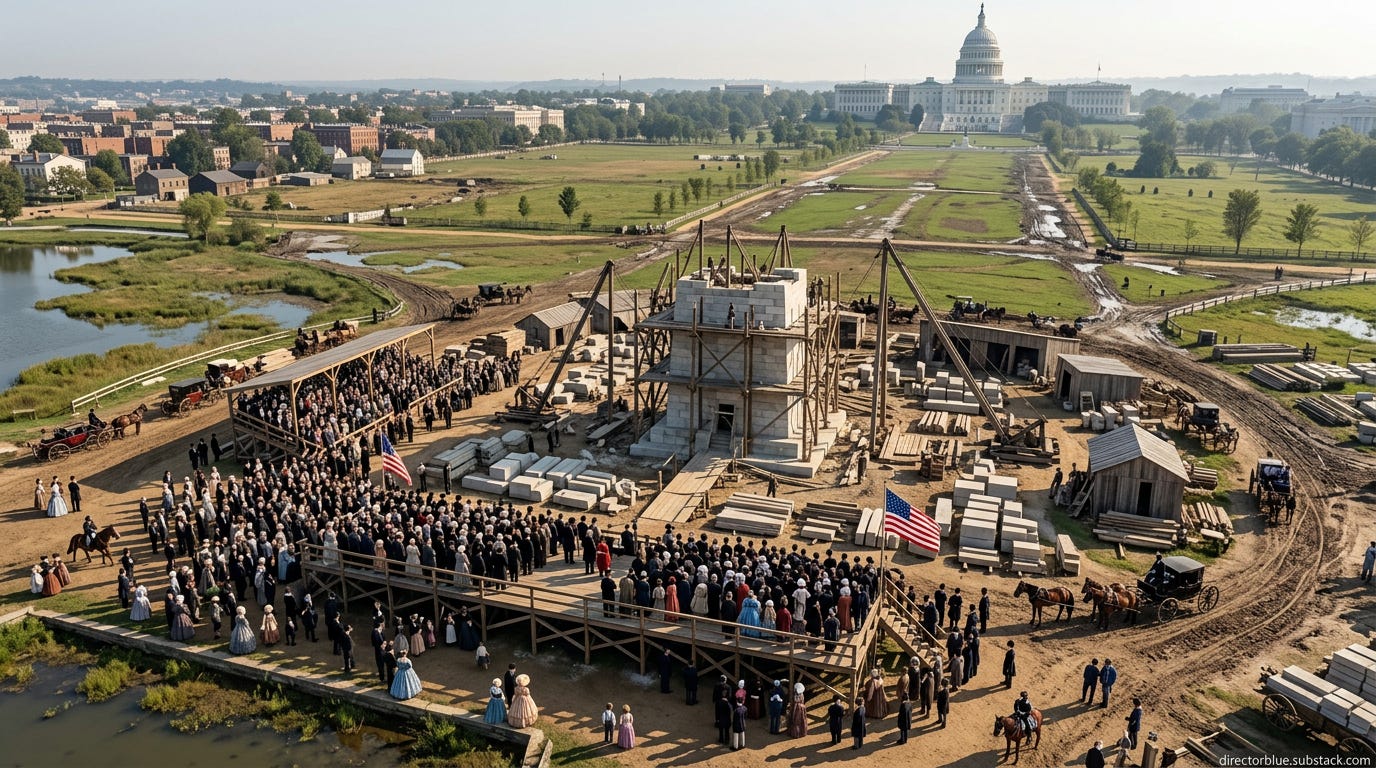
The Washington Monument’s cornerstone has been laid, turning the empty central ground into a national construction site. The Mall is still irregular and unfinished, but the city’s symbolic axis is becoming clear. The Capitol stands in the distance, while crowds and temporary structures gather around the monument foundation.
4. March 4, 1865 — Lincoln’s Second Inauguration Era
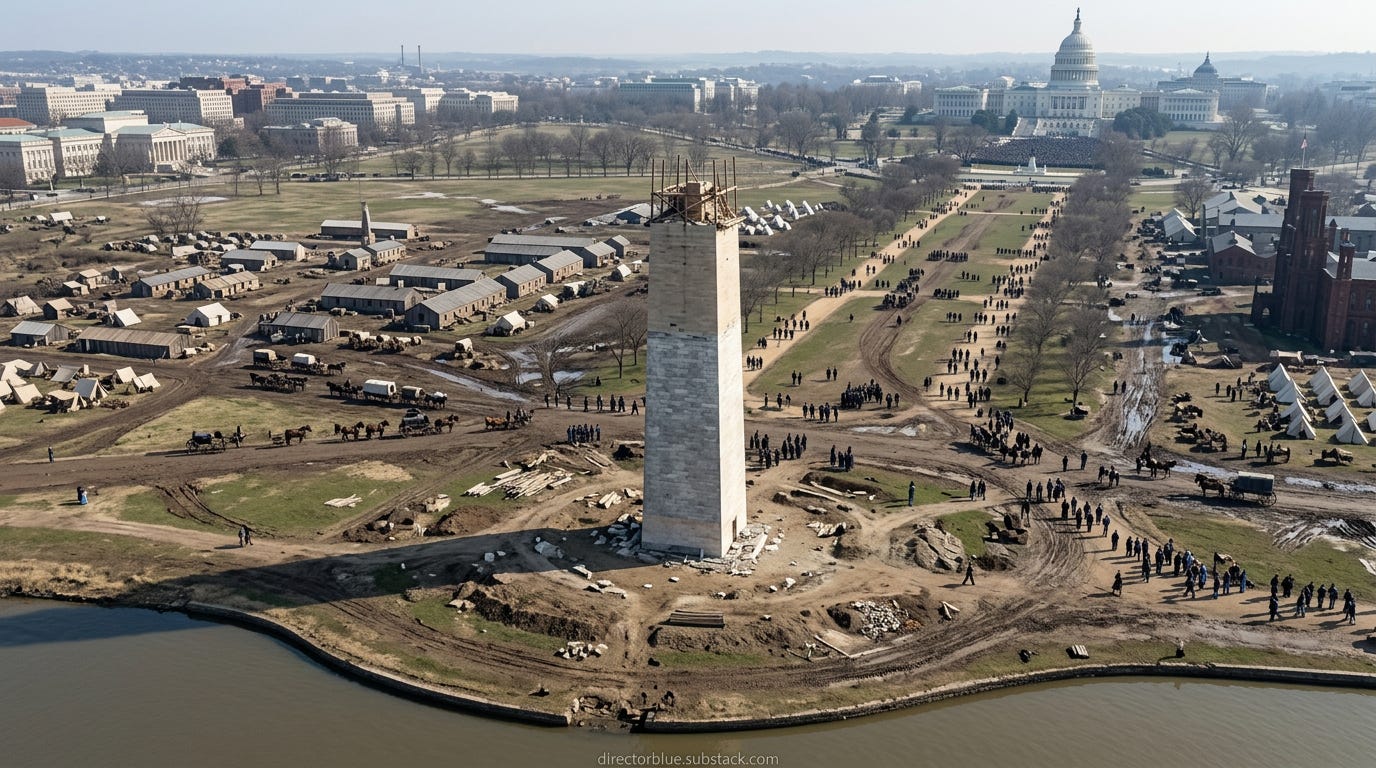
The Civil War still shadows the capital, but Washington has grown into a busy wartime city. The Washington Monument is partly built and unfinished, creating a dramatic central landmark. Camps, temporary buildings, military wagons, and crowds show a capital under strain near Lincoln’s second inauguration.
5. December 6, 1884 — Washington Monument Completed
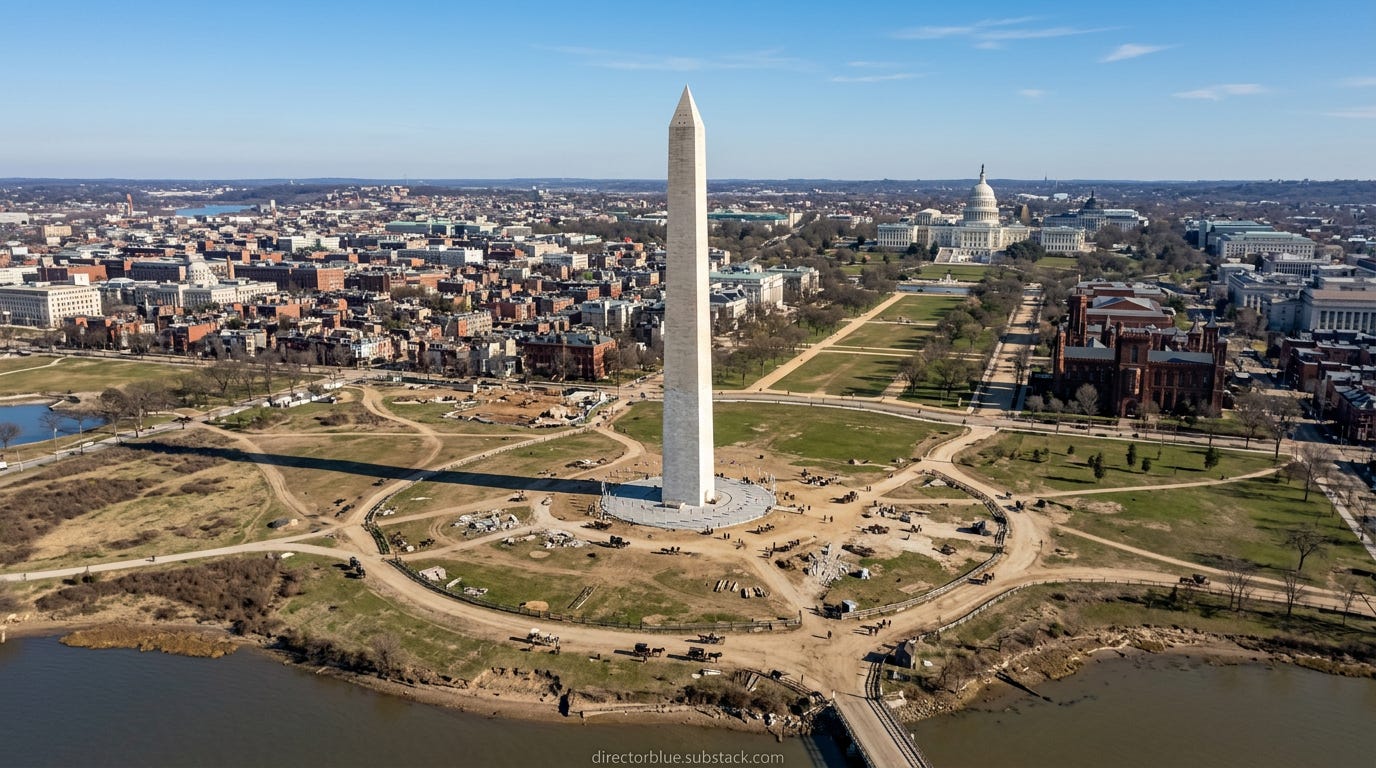
The Washington Monument has reached its full height, becoming the dominant landmark of the capital. The National Mall is still not the fully formal space of the future, but the obelisk now anchors the city. The Capitol, Smithsonian buildings, roads, trees, and civic grounds show a maturing Washington.
6. May 30, 1922 — Lincoln Memorial Dedicated
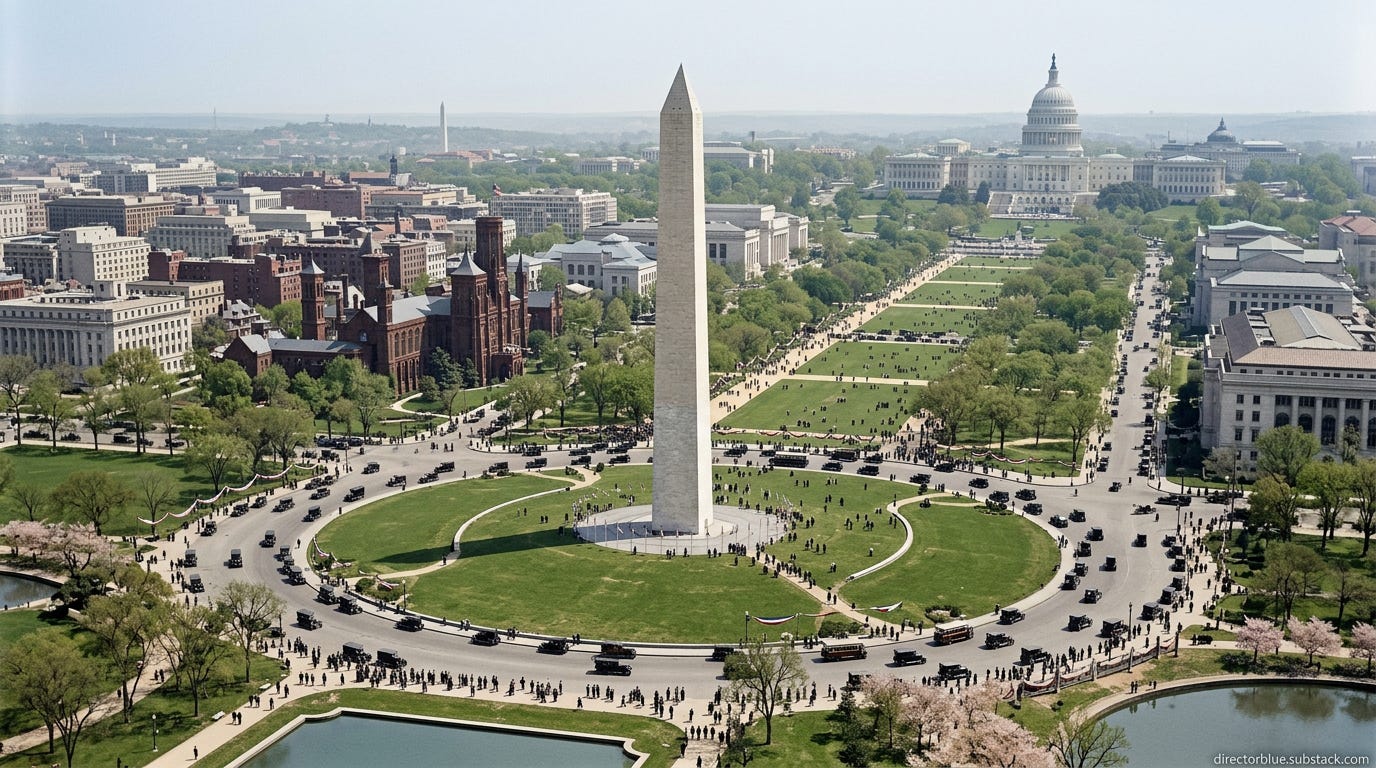
The western Mall has been transformed by the Lincoln Memorial and Reflecting Pool. The Washington Monument remains the central keystone, now visually tied to the Lincoln Memorial behind the camera axis and the Capitol ahead. The city is more formal, with automobiles, paved roads, and large dedication crowds.
7. August 28, 1963 — March on Washington
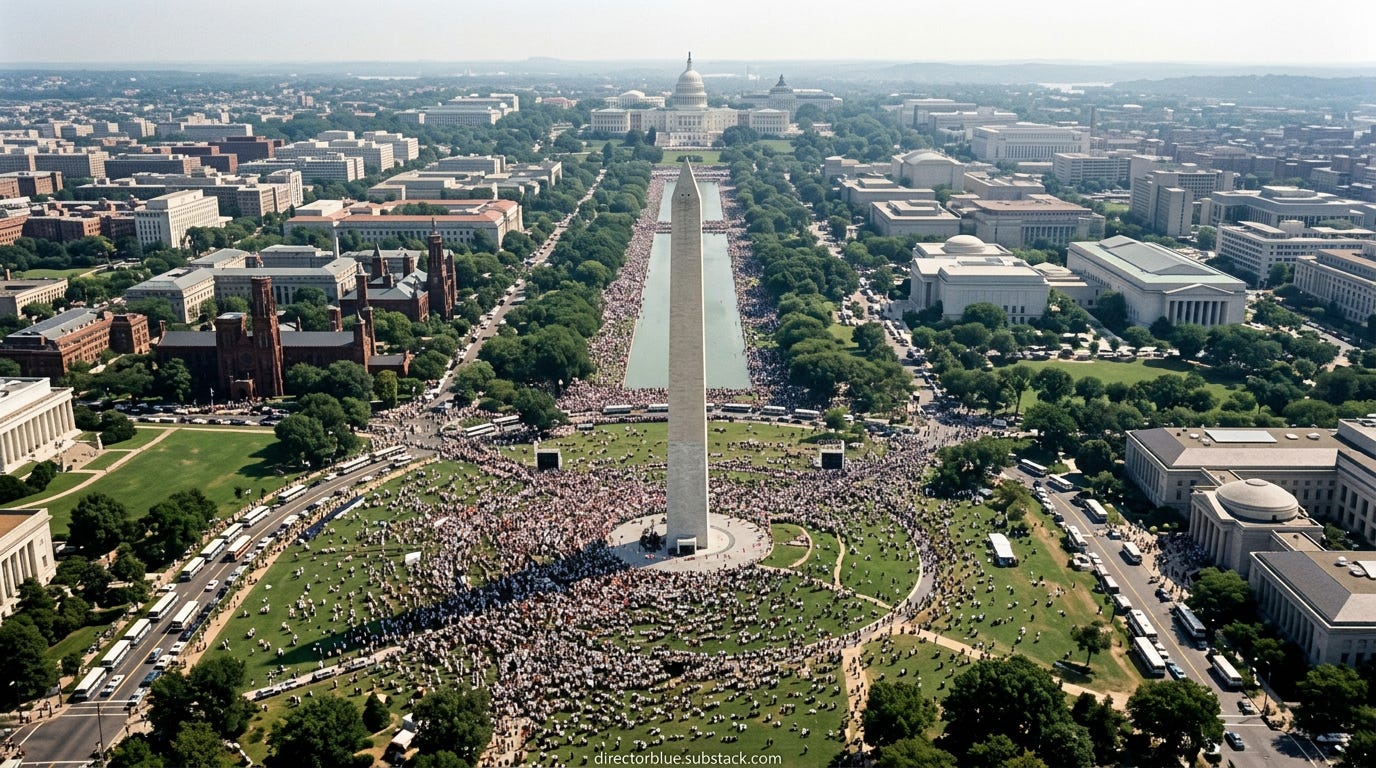
The National Mall is filled with people during the March on Washington for Jobs and Freedom. From the fixed aerial view, the Washington Monument anchors the scene while the crowds stretch along the Mall and toward the Lincoln Memorial area. The city has become a national stage for civil rights.
8. July 4, 1976 — Bicentennial on the Mall
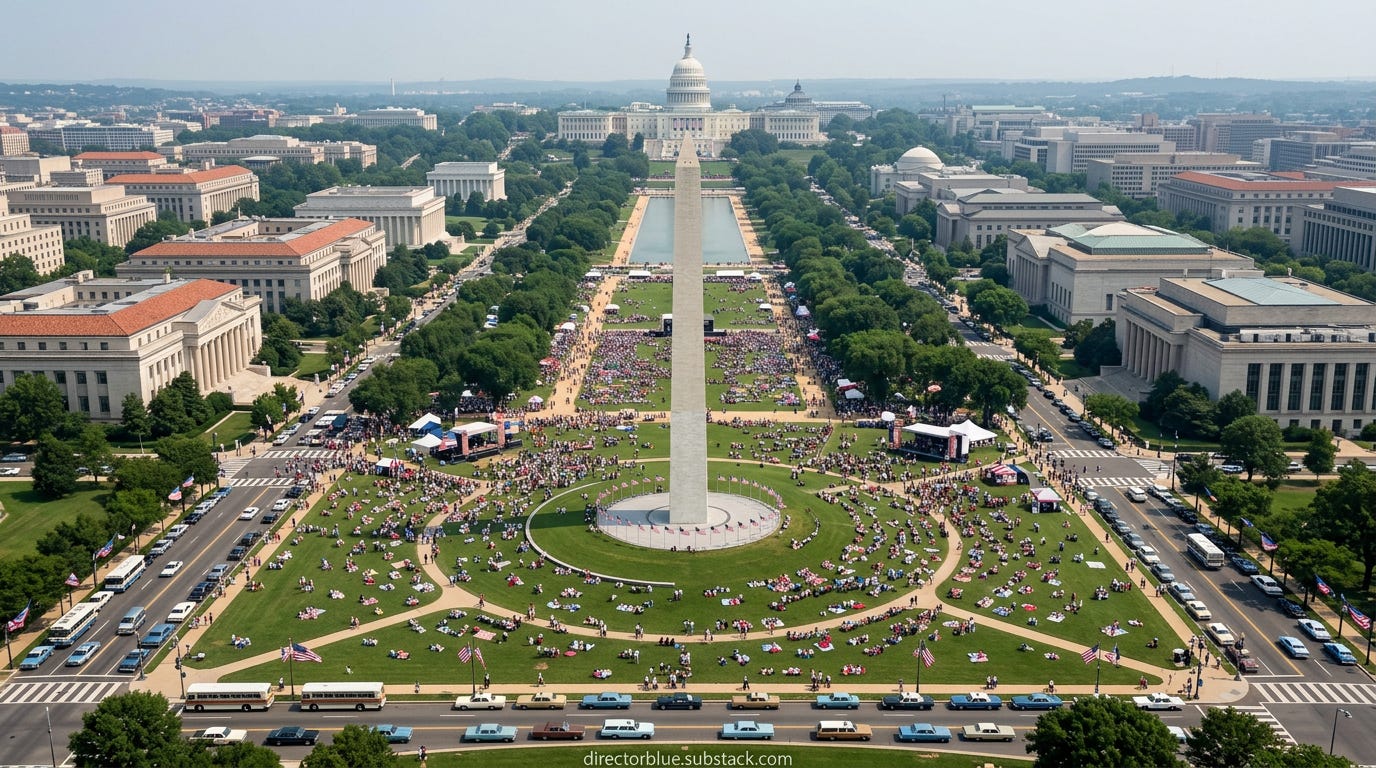
The United States celebrates its Bicentennial, and the Mall becomes a festival space. The Washington Monument remains the visual anchor, surrounded by crowds, flags, temporary event structures, and 1970s vehicles. The capital now looks fully developed as a ceremonial landscape.
9. September 12, 2001 — A Changed Capital
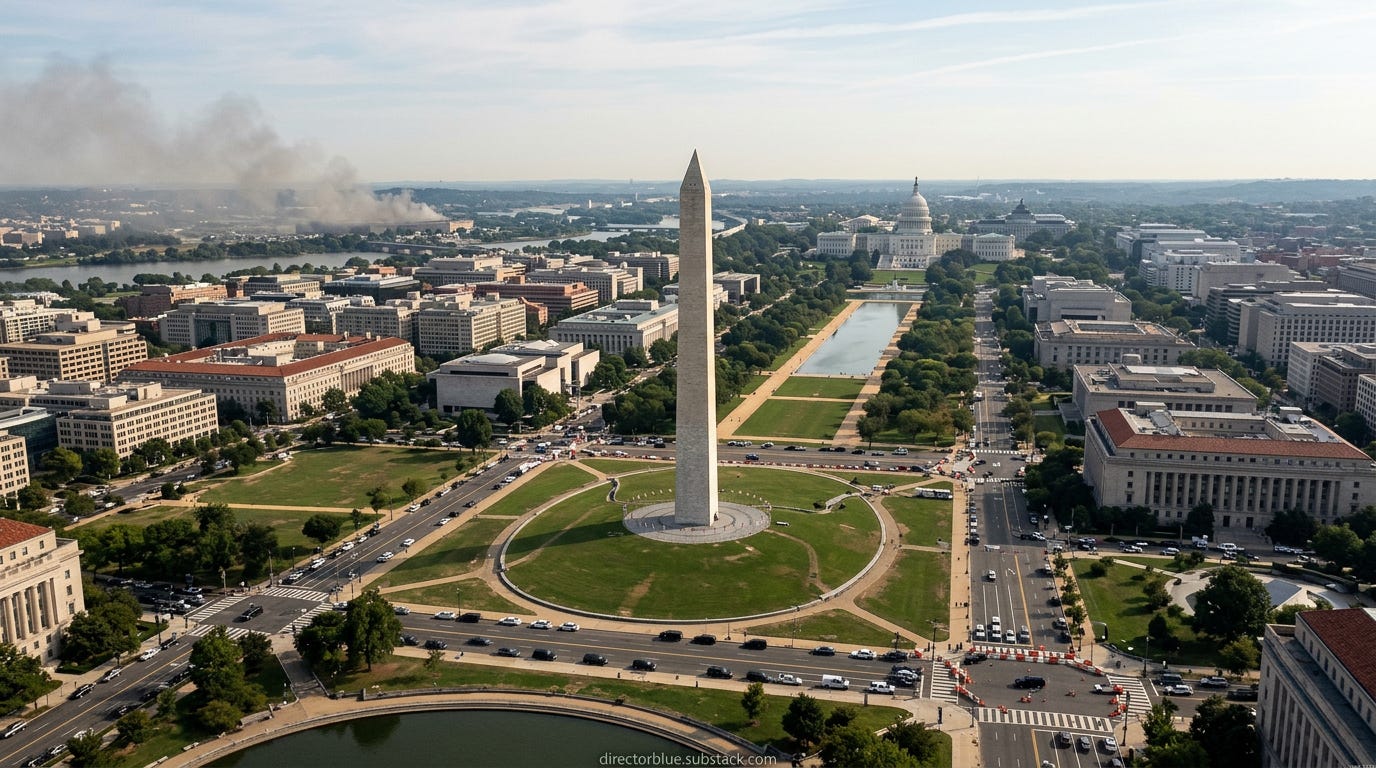
The day after the September 11 attacks, Washington is tense and altered. Smoke and emergency activity from the Pentagon area are outside the main axis but affect the atmosphere near the Potomac. The Mall is quieter, with security, road closures, and a changed sense of space around the familiar monuments.
10. January 20, 2021 — Inauguration Under Heavy Security
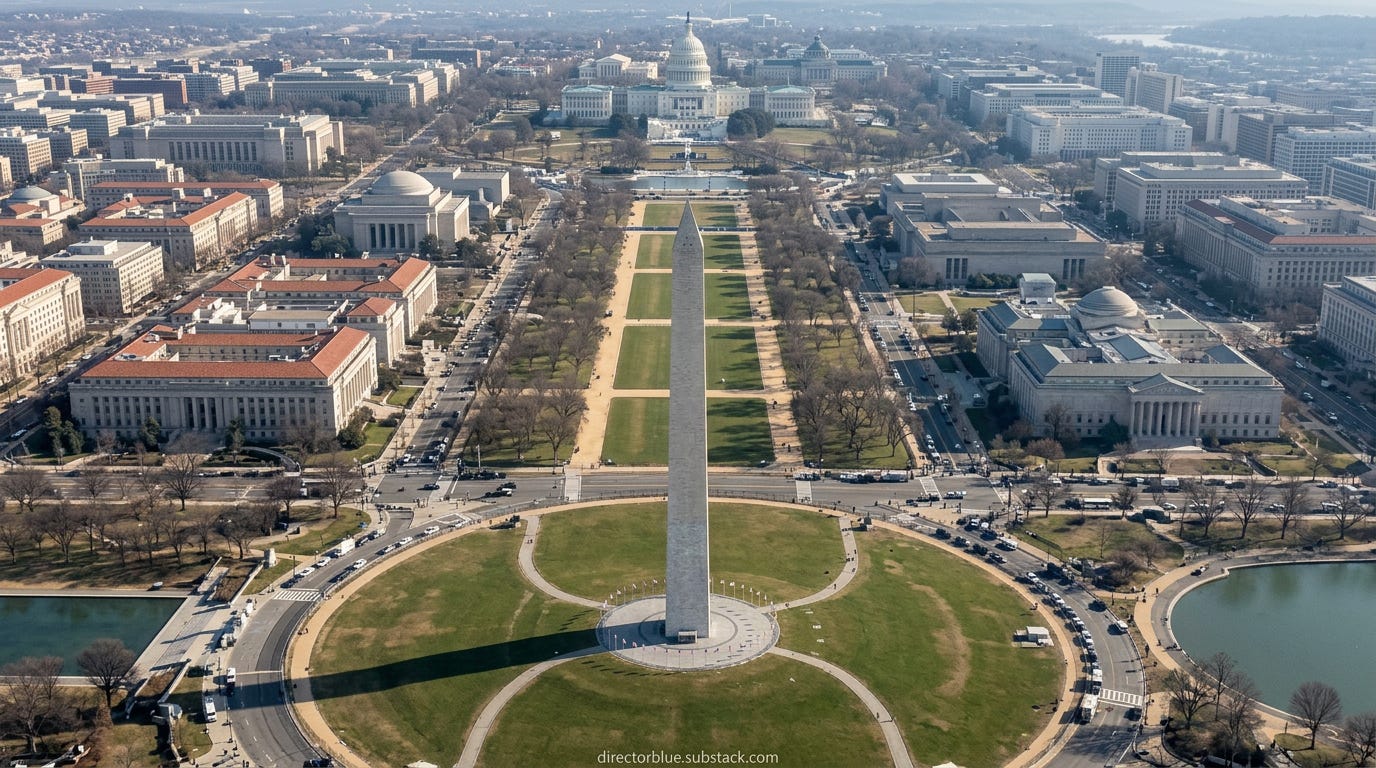
The capital is modern, highly secured, and familiar. The Washington Monument anchors the same view, while fences, security zones, National Guard presence, and reduced crowd patterns mark a tense inauguration day. The Mall’s full built form shows more than two centuries of transformation.
From the same fixed view, Washington, D.C. changes from open land into a city built for national memory. The Washington Monument site begins as a marked patch of ground, then becomes a foundation, an unfinished tower, and finally the steady center of the capital’s skyline. Around it, the Mall changes from rough fields and muddy roads into a formal public stage for war, mourning, celebration, protest, security, and ceremony. The Capitol, always held in the distance, reminds the viewer that this landscape is not just architecture; it is a record of how the country’s power, conflict, ideals, and public life have been made visible over time.
Time Surfing is an experiment.
Feedback requested: I’m no expert. Familiar with the city and its history? Throw some feedback in the comments! Let’s refine this experiment.
Earn rewards by Sharing this Sub; see the Leaderboard above for details!
Enjoying these? Subscribe now! A Paid subscription unlocks the “You are there…” Graphic Histories that are as close to time travel as you can get; the true story of Spygate - the Graphic Novel; Hunter Biden’s Illustrated Laptop From Hell and much more!
The “You are there…” Graphic History Daily Guide - relive the pivotal moments in history.

Online Graphic Novels
The true story of “Russia Collusion” - Spygate, the Graphic Novel. Also available in Paperback and on Kindle!
Hunter Biden’s exploits that led to the Ukraine Impeachment saga - a true tale illustrated like a graphic novel.